

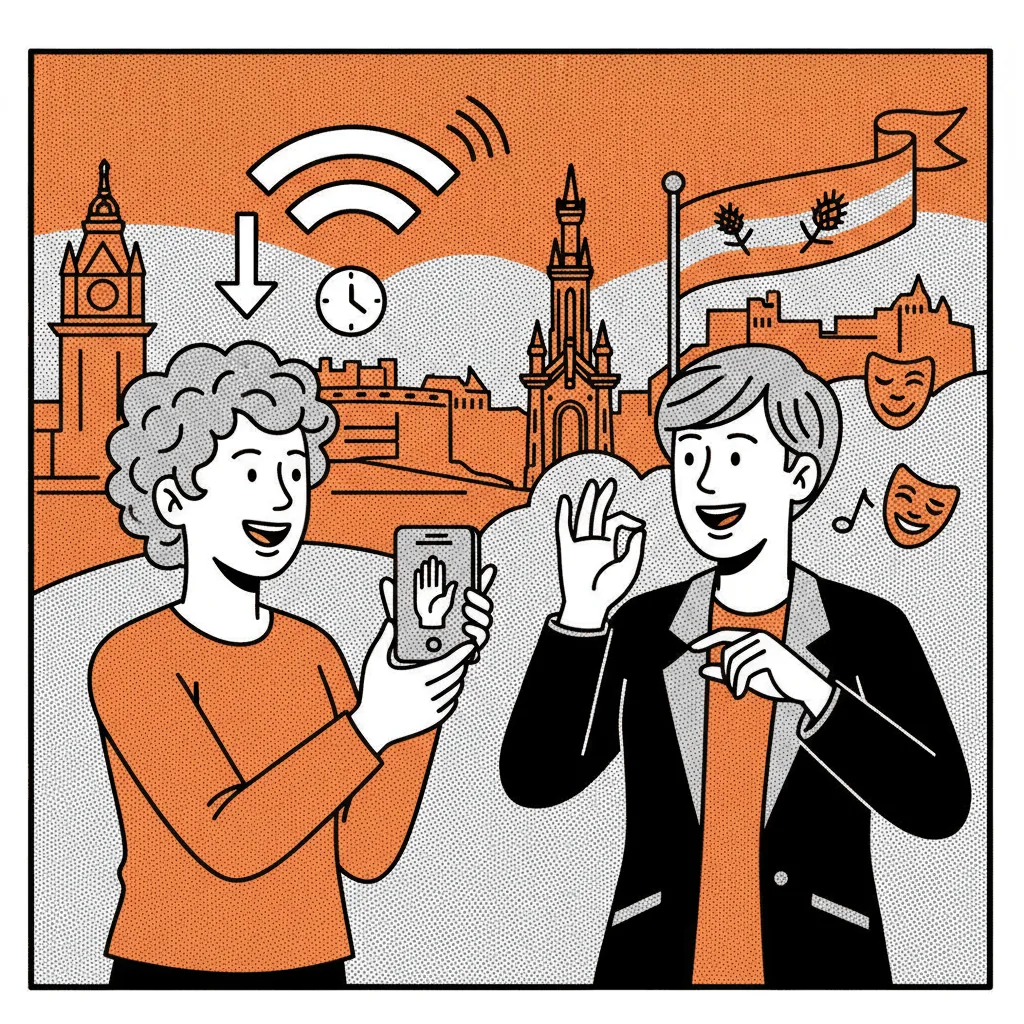
From 2026, deaf and hard-of-hearing festivalgoers can use the official Edinburgh Fringe app to request BSL interpretation at point of booking, removing what has historically been a frustrating, multi-step process that put the burden entirely on the audience member. The change was welcomed by Nathan Rollinson, who told the Edinburgh Evening News it "removes a lot of barriers and makes the performing arts feel much more accessible." That is not PR language. That is someone describing a genuine friction point being fixed.
The numbers matter here. According to the British Deaf Association, there are approximately 87,000 deaf BSL users in the UK, with a wider deaf and hard-of-hearing population of around 12 million across the country. The Edinburgh Fringe already draws over 3 million attendances across August. Even a marginal improvement in accessibility translates to meaningful additional footfall, and meaningful additional spend in the venues, bars, restaurants, and accommodation providers built around the festival economy.
This is part of a broader push across the Scottish arts sector. Creative Scotland has funded BSL access programmes across Scottish theatre and live performance for several years, and the Scottish Government's BSL National Plan commits to improving access across public life for deaf communities. The Fringe app update sits inside that policy direction, but it is the technical delivery, baking the request into the booking flow rather than burying it in a separate contact form, that makes this one actually useful.
For venues and event operators, the commercial logic is straightforward. Accessible shows sell more tickets. A show with guaranteed BSL interpretation becomes attractive not just to deaf audience members but to their families, friends, and colleagues attending together. The Access Card scheme, recognised by hundreds of UK venues, reports consistently that accessibility investment expands total group bookings rather than simply shifting audience composition. Accessibility widens the tent. It does not just reshuffle who is inside it.
The wider lesson for Edinburgh's SME community is this: accessibility features are increasingly being embedded at the infrastructure level, whether in apps, booking systems, or venue design. Businesses that wait to be dragged into compliance will find themselves behind operators who treated inclusion as a commercial advantage years earlier. The Fringe app is making BSL requests easy. The question for every event operator, tour guide, hospitality venue, or retailer running Fringe-adjacent activity this August is simple: what is the equivalent friction point in your own customer journey, and who are you currently making it hard for?