

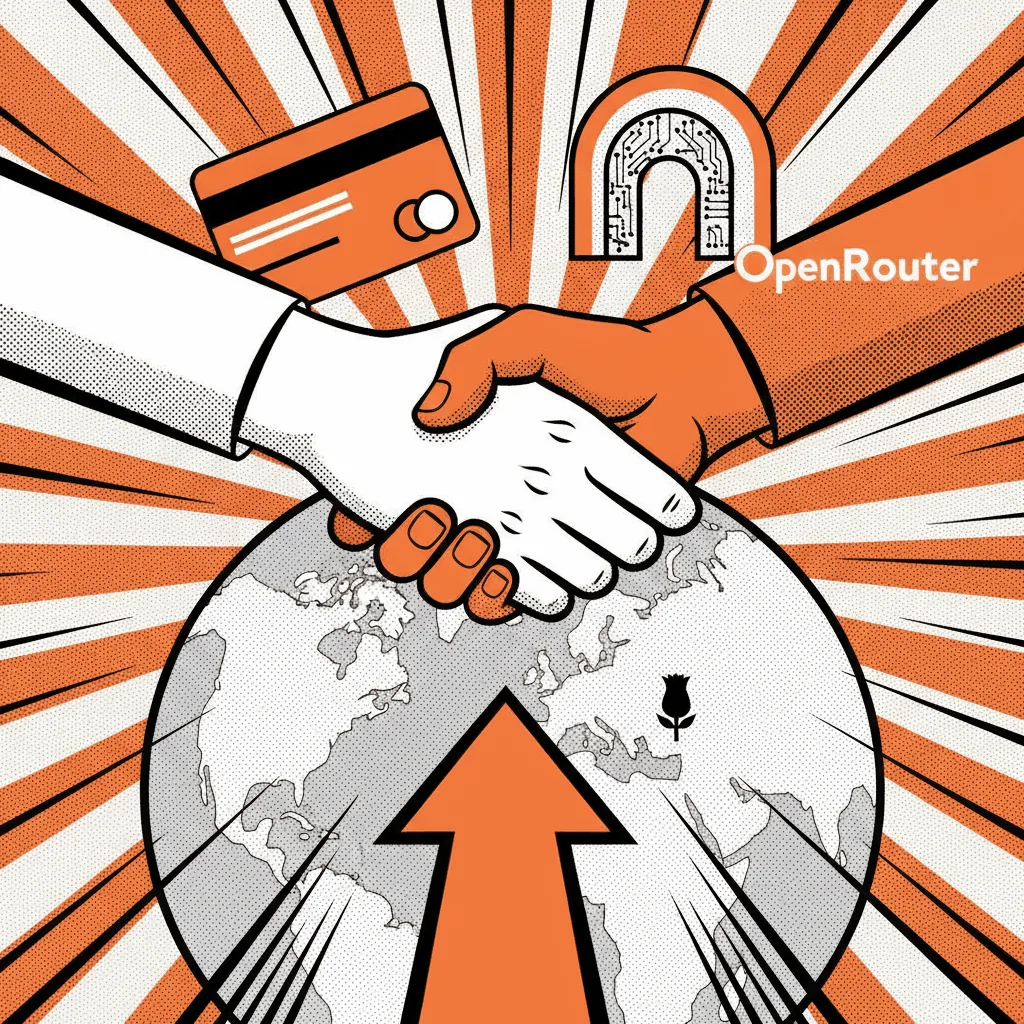
OpenRouter's CEO once described his company as "Stripe for AI", a single integration that routes requests across dozens of large language models, letting developers swap between GPT-4, Claude, Gemini, and others without rewriting their code each time. Stripe, which processed more than $1 trillion in payments in 2023 according to its own published figures, apparently liked that comparison enough to pay north of $7 billion to make it literal. The acquisition, reported by TechCrunch, would be one of the largest AI infrastructure deals of the year.
The logic is tight. Stripe built its empire on the insight that payments infrastructure, done properly, is worth more than the transactions it carries. OpenRouter is betting the same is true for AI. Right now, businesses integrating AI tools often find themselves locked into a single model provider, or scrambling to manage multiple API keys, billing relationships, and reliability risks. OpenRouter abstracts all of that away into one layer. Stripe, already trusted by millions of businesses for financial plumbing, is the obvious home for a company doing the same job in the AI stack.
For context on why $7 billion makes sense: the AI API market is growing at a rate that makes traditional software look sluggish. Research from Grand View Research projects the global AI platform market will reach $136 billion by 2030. The gateway layer, the infrastructure that sits between a business and its chosen model, is increasingly where margin and stickiness live. Whoever owns that layer owns the relationship. Stripe, which already handles billing for many AI companies, is simply moving upstream.
Scottish SMEs are more exposed to this shift than they might realise. If your business uses any AI-powered tool, whether that's a customer service chatbot, an automated invoicing system, a marketing copy generator, or a scheduling assistant, there is almost certainly an API gateway sitting somewhere in that chain. The Stripe-OpenRouter combination would mean your AI spend and your payment processing could eventually converge on a single platform, with unified billing, compliance reporting, and model management. The Scottish Government's Digital Strategy explicitly encourages SMEs to build AI into their operations; understanding what the infrastructure beneath those tools actually looks like is part of that maturity.
There is a broader read here too. When a payments company of Stripe's scale bets $7 billion on AI routing infrastructure, it is not speculating. It is responding to commercial demand it can already see in its own transaction data. UK businesses adopting AI tools grew by 68 percent between 2022 and 2024, according to the Office for National Statistics. Scottish SMEs have strong adoption numbers within that trend, particularly in professional services and healthcare admin. The Stripe-OpenRouter deal is the infrastructure catching up with the behaviour your competitors are already showing.