

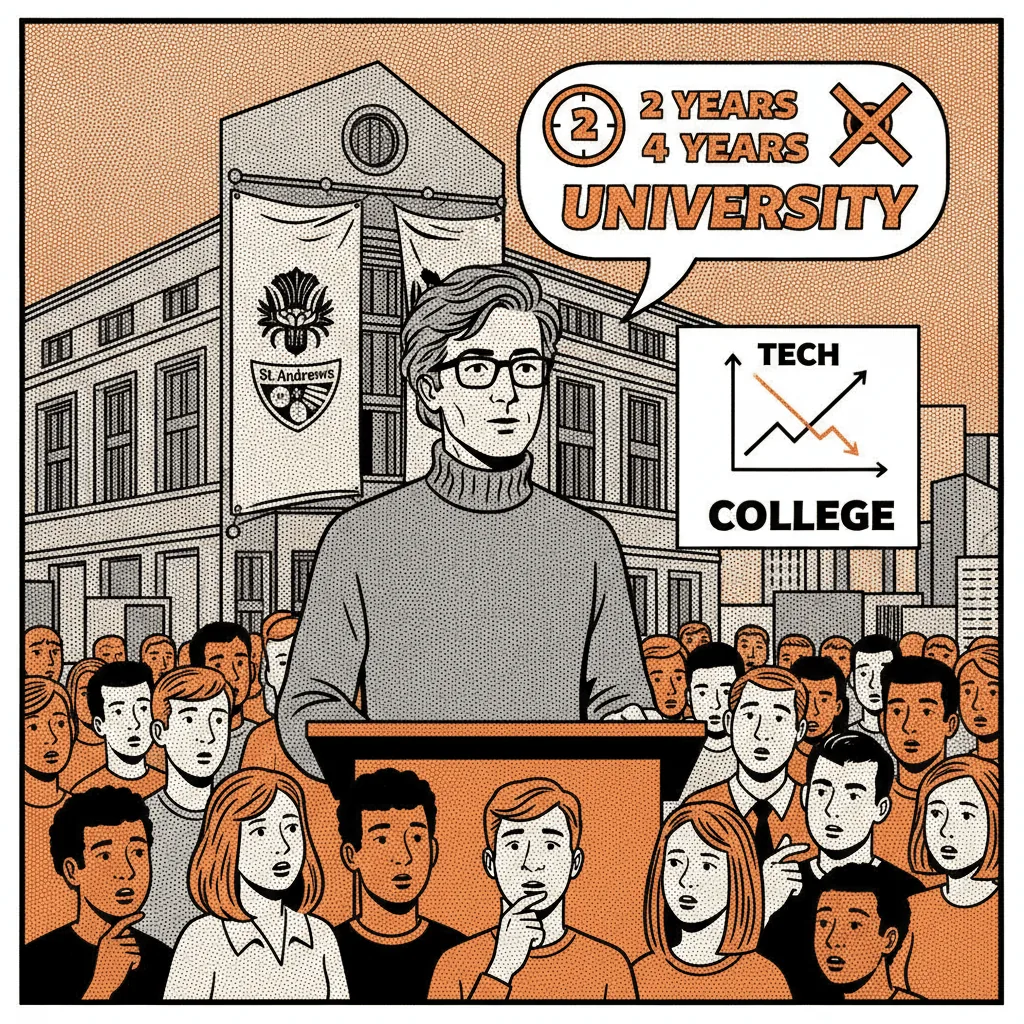
Sam Altman, CEO of OpenAI, used a summit of technology interns last week to question one of education's most entrenched assumptions: that four years of university is the right preparation for a working life. Two years, he said, was the exact right amount of time for him. The implication for the rest of the room was pointed. These are people competing for roles that AI is already beginning to do faster and cheaper than any graduate could on day one.
This is not idle Silicon Valley provocation. Entry-level hiring in technology, finance, and professional services is contracting in the United States, and the same pressure is building here. According to research published by the Institute of Student Employers in 2024, UK graduate vacancy growth slowed sharply, with employers in technology and business services reporting the steepest pullback. The reasons are not purely economic. Automation tools are absorbing the tasks that used to justify hiring a cohort of junior analysts or associate developers every autumn.
For Scottish educators and employers, the question this raises is uncomfortable but necessary. The Scottish Credit and Qualifications Framework already supports a range of routes into work, from Higher National Certificates through to degree apprenticeships, and Skills Development Scotland has been quietly expanding vocational pathways for years. But the cultural weight of the four-year degree, and the institutional incentives that sustain it, are still enormous. Universities Scotland reported that over 230,000 students were enrolled in Scottish higher education in the most recent academic year. A significant proportion of those students are training for roles that will look very different by the time they graduate.
Altman's point is not that education is worthless. It is that the currency of a credential is shifting. What a graduate can demonstrate they can do, build, and adapt to is now worth more than the certificate itself. The University of Edinburgh's Bayes Centre and similar innovation hubs across Scotland are already operating on this logic, prioritising applied research and industry partnership over purely academic attainment. That model is moving faster than the undergraduate timetable can track.
For Scottish SME owners hiring in 2025, this creates a genuine opportunity. The candidate who left after two years and has spent the last eighteen months building tools, running projects, and working with AI systems may be sharper and more deployable than the one who spent four years in a lecture hall. Business Gateway Scotland and Scottish Enterprise both offer support for employers designing modern apprenticeships and structured work-based learning programmes. The infrastructure to build an alternative pipeline already exists. The question is whether employers are ready to use it, and whether school leavers and their families are ready to trust it.