

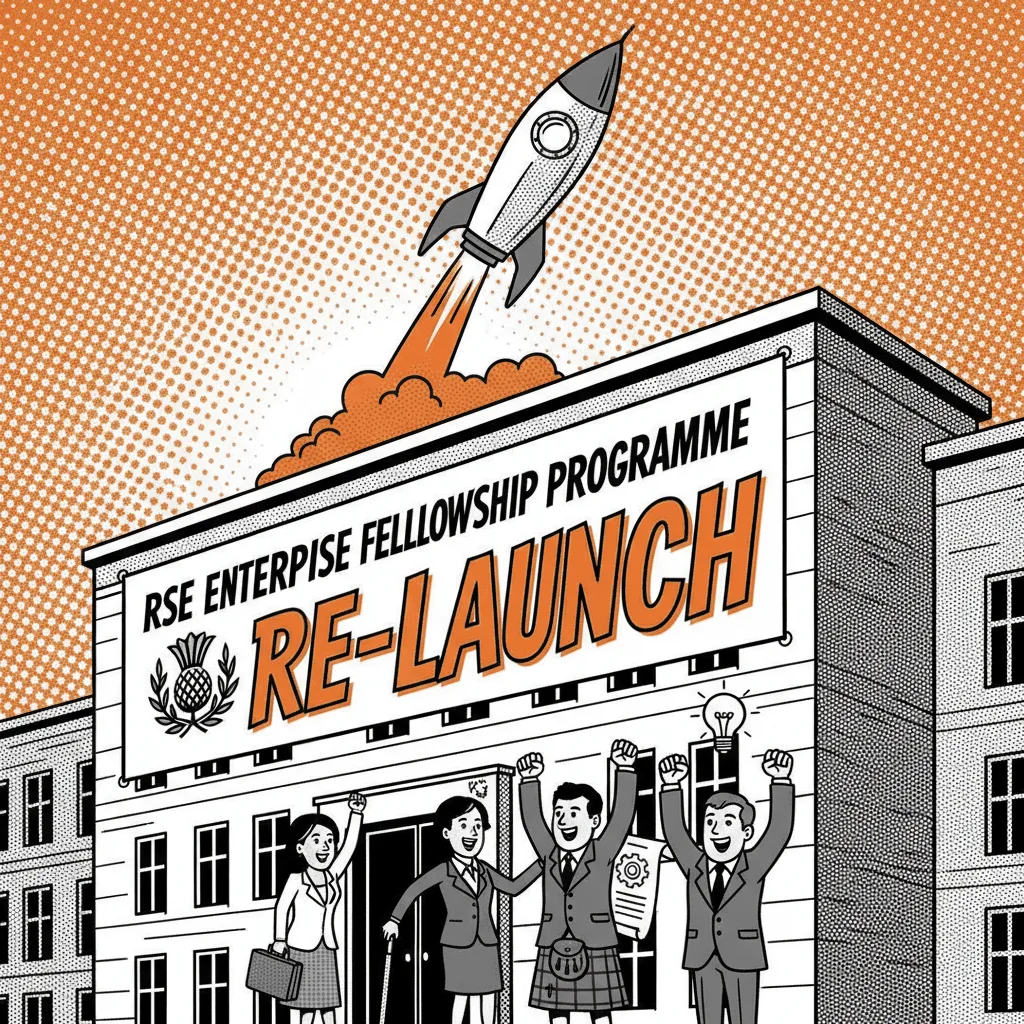
The Royal Society of Edinburgh (RSE), Scotland's national academy of science and letters, has re-opened its Enterprise Fellowship programme after a period of restructuring. The fellowship is one of the few programmes in Scotland that combines serious funding with hands-on mentorship, business training, and access to a network built over three centuries. For founders working at the intersection of research and commercial opportunity, it is difficult to overstate what this represents.
The RSE Enterprise Fellowship has historically provided fellows with a salary stipend, access to intellectual property support, and a year-long programme designed to take an idea from proof-of-concept to investor-ready. Past fellows have gone on to found companies in life sciences, clean technology, advanced manufacturing, and digital health. According to the RSE, the programme has supported the creation of dozens of Scottish companies since its inception, many of which continue to trade and employ people across the country today.
Scotland's innovation pipeline has genuine depth. The University of Edinburgh, Heriot-Watt, and Strathclyde between them produce thousands of postgraduate researchers each year, many of whom have commercial ideas that never find a route to market for want of structured support. Scottish Enterprise's most recent annual report highlighted commercialisation of research as one of the key levers for growing Scotland's high-value economy, and Business Gateway has consistently pointed to mentorship and structured training as the factors that most improve survival rates for early-stage ventures. The RSE programme sits at the top of that stack.
The re-launch also arrives at a moment of genuine momentum for Scottish startups. Scottish EDGE, Techscaler, and the Scottish National Investment Bank have collectively deployed tens of millions of pounds into early-stage Scottish businesses over the past three years. The RSE fellowship is not a grant in the conventional sense; it is a structured twelve-month commitment that takes a founder seriously and expects the same in return. That rigour is, frankly, the point. It filters for ambition and separates people who have an idea from people ready to build a company around one.
If you are an SME owner who came up through a research background, or if you employ someone who has, the fellowship is worth examining closely. It is also worth flagging to any university contacts, sector colleagues, or clients operating in deep tech, life sciences, or green energy. Scotland needs more research to make the leap into commercial reality. This programme exists precisely to close that gap, and its return is genuinely good news for the Scottish business ecosystem.