

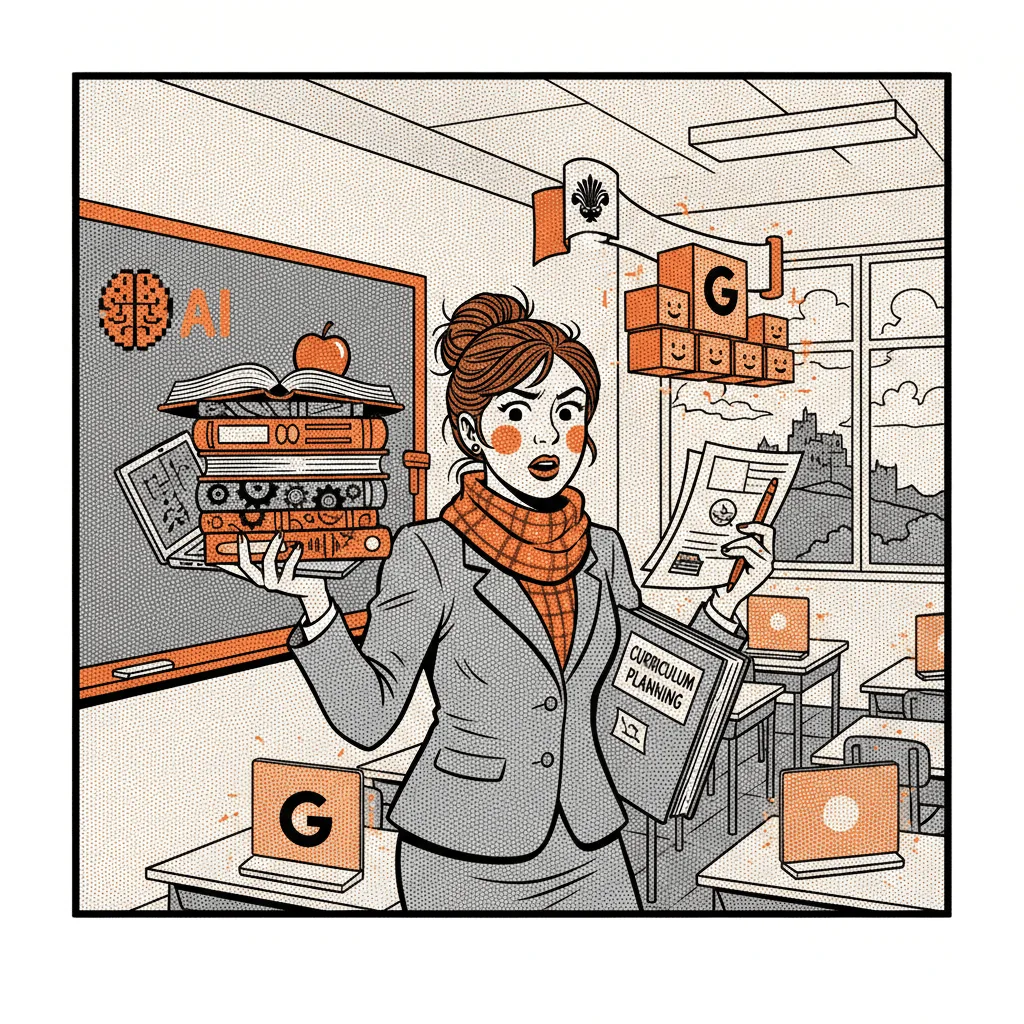
Google has launched a structured AI professional development programme aimed specifically at teachers, built around what it calls a snackable and stackable model. Short, self-contained modules that can be completed in under an hour, which then build on each other over time. No block-release days. No supply cover to arrange. No waiting until the next INSET. Just a teacher, a lunch break, and a genuine shot at getting confident with AI tools before their pupils overtake them entirely.
The timing matters. According to the Scottish Government's Digital Learning and Teaching Strategy, Scotland has committed to ensuring every learner benefits from digital technologies, but teacher confidence has lagged behind hardware investment for years. A 2024 survey by Education Scotland found that fewer than one in three teachers felt adequately trained to use AI tools in a classroom context. The gap between ambition and classroom reality is wide, and it is almost entirely a training problem.
The Google AI Educator Series targets that problem directly. According to EdTech Magazine, the programme is designed around the reality that educators are already running at capacity. Curriculum planning, marking, pastoral care, admin: the idea that a teacher will voluntarily carve out a full day for professional development is largely fiction. The snackable format acknowledges that, and works with it rather than against it. Modules cover practical ground: how to use AI to plan lessons, how to assess AI-generated student work, how to explain AI ethics to a secondary class without the lesson collapsing into a debate about robots.
For Scottish schools specifically, this kind of accessible CPD is not a nice-to-have. The Organisation for Economic Co-operation and Development's 2023 education report flagged teacher professional development in emerging technologies as a structural weakness across the UK, noting that ad hoc training rarely produces lasting behavioural change in classrooms. Stackable credentialing, where each module counts toward a recognised qualification or portfolio, is identified as significantly more effective. Google's model follows that logic. Teachers can start where they are, move at their own pace, and end up with something they can point to.
There is a broader opportunity here for Scotland that goes beyond the individual classroom. Local authorities and school leadership teams looking to build coherent AI literacy across their staff could use Google's free series as a backbone, layering in Scottish Qualifications Authority context, Education Scotland guidance, and local curriculum needs on top. It is a starting infrastructure, not a finished product. That is the point. The schools that move on this now will not be scrambling to catch up in two years when AI in the curriculum stops being a conversation and starts being an expectation.