

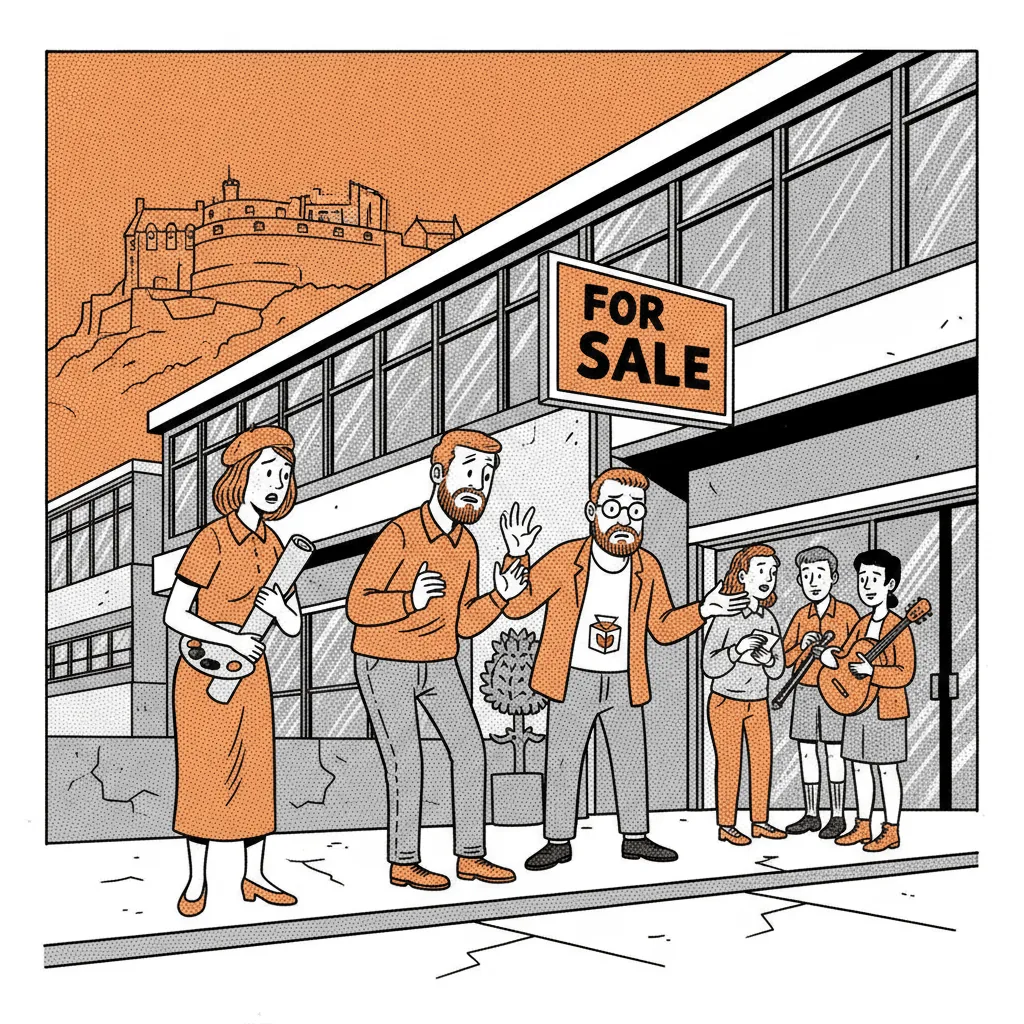
St Margaret's House on Easter Road has spent nearly two decades doing something Edinburgh desperately needs and chronically undervalues: keeping creative people in the city. Since 2008, the building has operated as a base for artists, charities, and community groups, offering the kind of affordable, flexible workspace that the open market simply does not provide. Now, building owner The Caledonian Trust has confirmed it is in discussions that point towards a sale, and the tenants, by all accounts, are the last consideration in that conversation.
The human cost is straightforward. Artists who have built studios, networks, and livelihoods around this address are now facing the prospect of leaving Edinburgh entirely. Not relocating across town. Leaving. That is what happens when affordable creative workspace disappears in a city where commercial property rates have climbed steadily and the Festival premium distorts what landlords believe buildings are worth. According to research published by the Creative Industries Federation, affordable workspace is among the single biggest barriers to creative sector growth in UK cities outside London, and Edinburgh, for all its cultural reputation, is no exception.
This is not a new problem, but it is an accelerating one. The Scottish Government's own Culture Strategy, published in 2019 and refreshed since, identifies affordable creative space as essential infrastructure, not a luxury. Creative Scotland has flagged the loss of studio and rehearsal space in Scottish cities as a structural threat to the sector's pipeline. When the buildings go, the people go. When the people go, the culture that makes Edinburgh worth visiting, and worth living in, thins out quietly, year by year, until someone notices the Festival is full of visiting acts and the city has stopped producing its own.
The Caledonian Trust has a commercial obligation to its shareholders, and that is not in dispute. What is in dispute is whether Edinburgh City Council, Creative Scotland, or any of the bodies tasked with protecting the city's cultural infrastructure will move quickly enough to matter. Community Asset Transfer legislation exists in Scotland precisely for moments like this, it allows organisations and community groups to apply to purchase or lease publicly owned assets at below market value. St Margaret's House is privately owned, which complicates that route, but it does not close it. Where there is political will and a credible tenant consortium, deals get structured. The question is whether anyone with the authority to act treats this as urgent.
For the businesses, sole traders, and organisations currently inside St Margaret's House, the clock is already running. The creative economy is not a soft concern sitting at the edge of Edinburgh's economic story; it employs tens of thousands, anchors tourism, and feeds the supply chains of hospitality, technology, and events. Losing a hub like this is not a cultural loss in isolation. It is a business infrastructure loss. And Edinburgh has precious few buildings left that do what St Margaret's House does.