

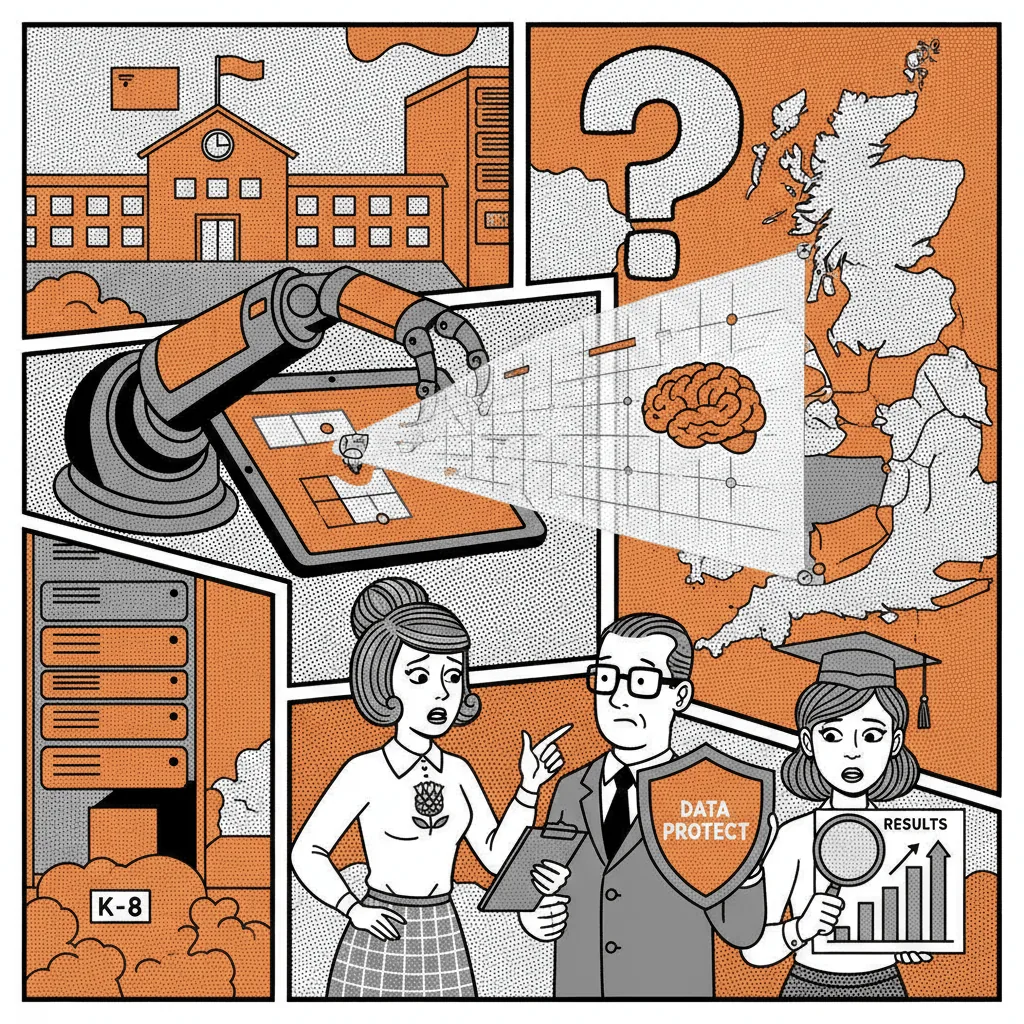
American school districts are discovering something that Scottish local authorities would do well to note: buying an AI teaching system is easy. Knowing whether it actually works is considerably harder. A detailed examination by AI Business of K-8 AI instruction deployments found that district technology leaders are scrambling to evaluate external evidence, negotiate data protection terms, and build results-based contracts into procurement, usually after the fact, when the system is already live and the budget is spent.
The core problem is one of evidence. Many AI EdTech vendors sell on promise and demo, not on peer-reviewed outcomes. The Education Endowment Foundation, which independently evaluates what works in UK classrooms, has consistently found that technology interventions carry a high risk of weak or null effects when deployed without proper teacher integration and baseline measurement. Scotland's own Education Scotland directorate has published guidance urging schools to demand outcome data before committing to digital tools, yet procurement decisions frequently prioritise price and feature lists over proof of learning gain.
Data protection is the second pressure point. AI tutoring platforms are, by design, data-hungry. They learn from student behaviour, track performance over time, and often route that data through US-based servers, which creates immediate complications under UK GDPR and the specific protections that apply to children's data under the Information Commissioner's Office guidance. Scottish councils signing multi-year EdTech contracts need data processing agreements that are explicit about where student data lives, who can access it, and what happens to it if the vendor is acquired or goes under. These are not hypotheticals: edtech consolidation is running at pace, and several platforms used in UK schools have changed ownership in the last two years.
The third question is contractual. AI Business found that few districts in the US had secured results-based contracts before scaling AI teaching systems. That means they paid regardless of whether attainment improved. The Scottish Government's Procurement Reform Act gives public bodies genuine leverage here: milestone-linked payments and outcome clauses are legally straightforward to include and commercially reasonable to demand. A vendor confident in its product should have no objection. One that resists an outcomes clause is telling you something important.
None of this is an argument against AI in Scottish classrooms. The opposite, in fact. Research from the University of Edinburgh's Moray House School of Education points to real gains in personalised learning when AI tools are properly integrated and teacher-led. The attainment gap between Scotland's most and least deprived pupils, which the Scottish Government has made a flagship priority, is exactly the kind of stubborn, complex problem where well-implemented adaptive learning technology can make a material difference. But that potential is only realised when procurement is rigorous, not when a council signs a three-year deal on the strength of a vendor's sales deck.
The practical model is already visible in how some NHS boards have started approaching health tech procurement: phased pilots with defined success metrics, mandatory data protection impact assessments, and contractual break clauses tied to outcomes at six months. Scottish councils buying AI teaching systems could adopt the same framework tomorrow. The tools to do this properly already exist. What's needed is the will to use them before signing, not after.