

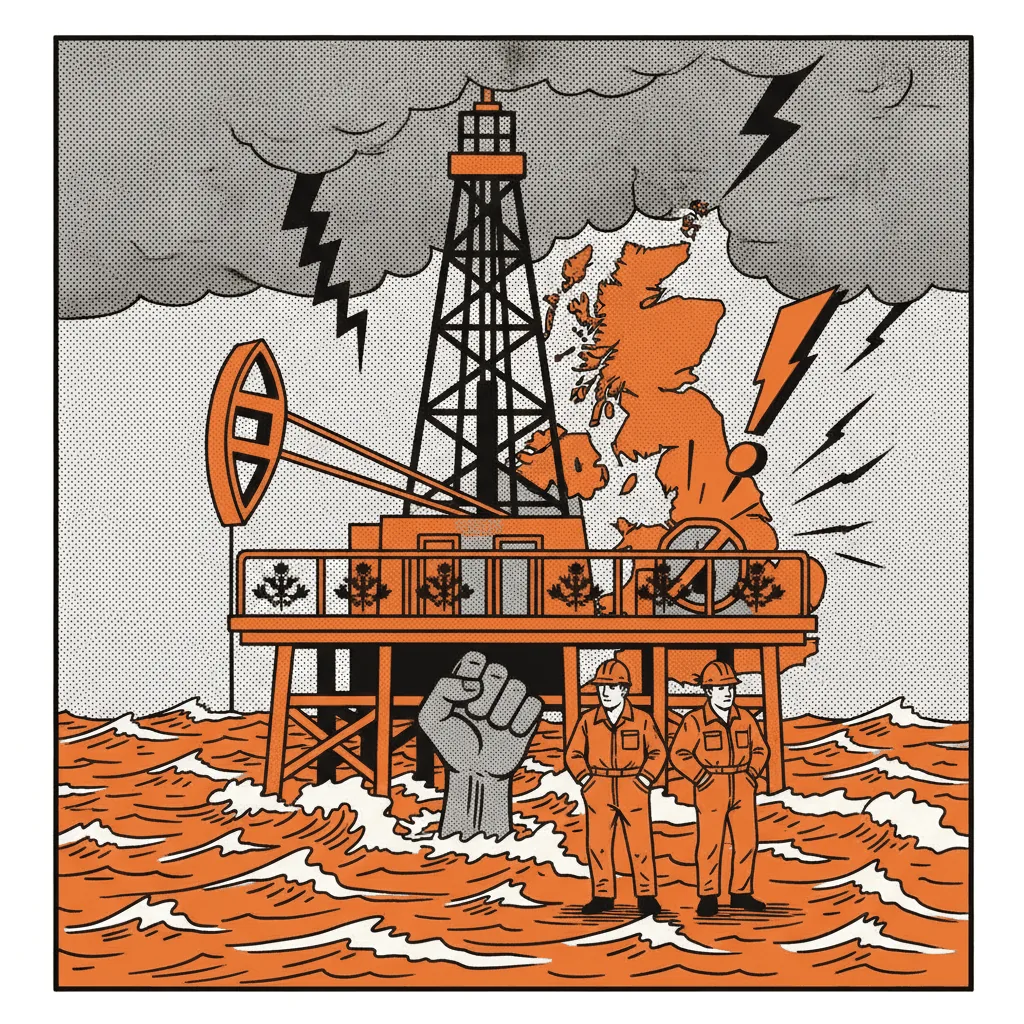
Workers across North Sea oil and gas installations are threatening strike action in a dispute that industry sources say could cause severe disruption to UK fuel supplies. The timing matters: fuel prices are already volatile, inflation has only partially retreated from its recent highs, and many Scottish SMEs have spent the past two years trying to rebuild margins battered by energy and transport costs. A North Sea shutdown, even a partial one, would land in that bruised context.
The precise impact of any strike would depend heavily on its duration and which assets are affected, but the risk is systemic rather than isolated. The UK draws a significant share of its domestic oil and gas from North Sea fields, and disruption at source creates ripple effects downstream: refinery throughput, road fuel availability, and heating oil supply for businesses and homes not connected to the gas grid. According to the Office for National Statistics, small businesses in transport, construction, and food services spend a disproportionate share of their operating costs on fuel compared to larger enterprises, which means they absorb supply shocks faster and with less cushion.
Owners of the major assets involved have declined to speculate publicly on the scale of any impact, which is its own kind of signal. When operators stay quiet, it usually means the situation is live and the range of outcomes is wide. The Unite union, which represents many offshore workers, has been in a prolonged dispute over pay and conditions, a pattern that the Scottish Trades Union Congress has noted reflects broader cost-of-living pressures hitting workers at every level of the energy supply chain.
For Scottish businesses, the geography makes this sharper. Scotland is closer to the source, but that proximity does not insulate local operators from price movements set by global commodity markets. Hauliers running out of Aberdeen, Edinburgh, or Glasgow, farms in Aberdeenshire dependent on red diesel, and construction firms pricing jobs across the Highlands all operate on fuel cost assumptions baked into contracts months in advance. A significant supply disruption would not just raise the pump price, it would expose every fixed-price agreement signed before the disruption began.
The broader structural point, which The Loop has made before, is that Scotland's dependence on fossil fuel supply chains for everyday business operations is a vulnerability that renewable energy infrastructure could eventually reduce. Scotland's renewable capacity is already substantial, enough, in principle, to power far more of its commercial transport and heating than it currently does. The Scottish Government's Energy Strategy and Just Transition Plan sets out a path toward that, but the transition takes time, and in the meantime the North Sea dispute is a reminder of where the exposure still sits.