

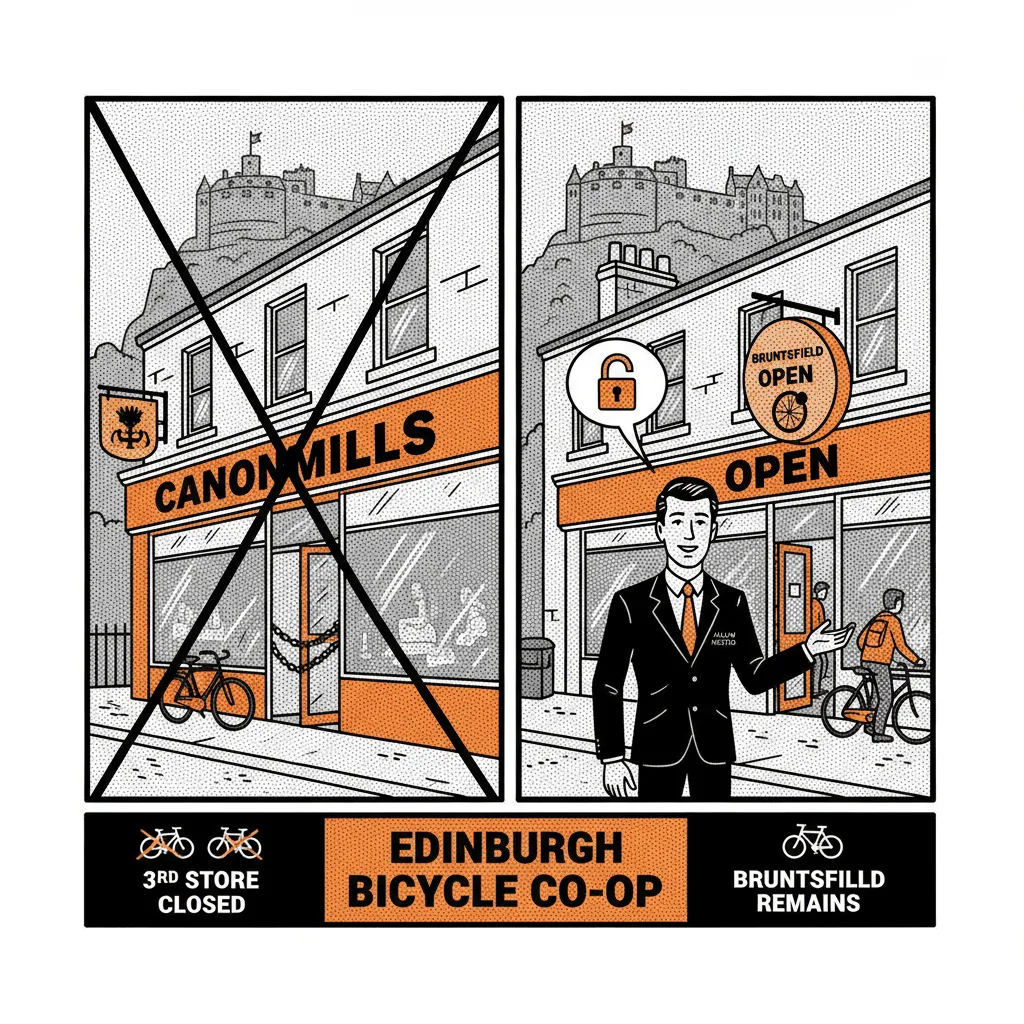
Edinburgh Bicycle Cooperative, one of the city's most recognisable independent retail names, closed its Canonmills branch last month. It is the third store the co-operative has closed in recent years. According to accounts filed for 2024, the business employs 74 people and posted a turnover of £6.7 million, figures that underline this is not a small operation struggling quietly in a back street. This is a meaningful Edinburgh employer contracting in plain sight.
Managing Director Alan Nestor issued a statement confirming that the Bruntsfield shop will remain open, offering some reassurance to staff and loyal customers. But the direction of travel is hard to ignore. Three closures at a business of this size and heritage suggests the trading environment for specialist, high-footfall retail in Edinburgh is genuinely difficult, not just awkward. The co-operative model, which distributes both risk and ownership across its membership, has historically offered more resilience than a sole-trader retail setup. When even that structure is shedding locations, the underlying pressure is real.
The picture fits a broader pattern. According to the Scottish Retail Consortium's most recent Scottish Retail Sales Monitor, retail sales across Scotland have faced sustained pressure from reduced consumer discretionary spending, with non-food categories, which includes leisure and sporting goods, among the hardest hit. The British Retail Consortium has separately reported that operating costs for physical retail, including energy, rates, and wage inflation, rose sharply across 2023 and 2024, squeezing margin at the very moment consumer confidence softened.
For Edinburgh specifically, the footfall geography matters. Canonmills sits north of the city centre, a neighbourhood that has seen significant residential growth but where retail anchors remain thin. Bruntsfield, by contrast, has a dense, loyal, high-spend local population and a street-level retail culture that continues to draw traffic. The decision to retain Bruntsfield and close Canonmills reads less like panic and more like a considered consolidation around the strongest performing asset, which is exactly what a well-run business should do under pressure.
The wider lesson for Edinburgh's independent retail sector is worth naming directly. A specialist, community-rooted, co-operatively owned business with nearly £7 million in annual turnover is not immune to the cost and footfall pressures reshaping the high street. According to the Local Data Company's UK Retail Vacancy Tracker, Edinburgh city centre vacancy rates have remained elevated post-pandemic, and business rates relief measures introduced by the Scottish Government, while helpful, have not fully offset the structural shift in how people shop. Any Edinburgh SME operating a physical space should be running the numbers on their location performance now, not waiting for a crisis to make the call for them.