

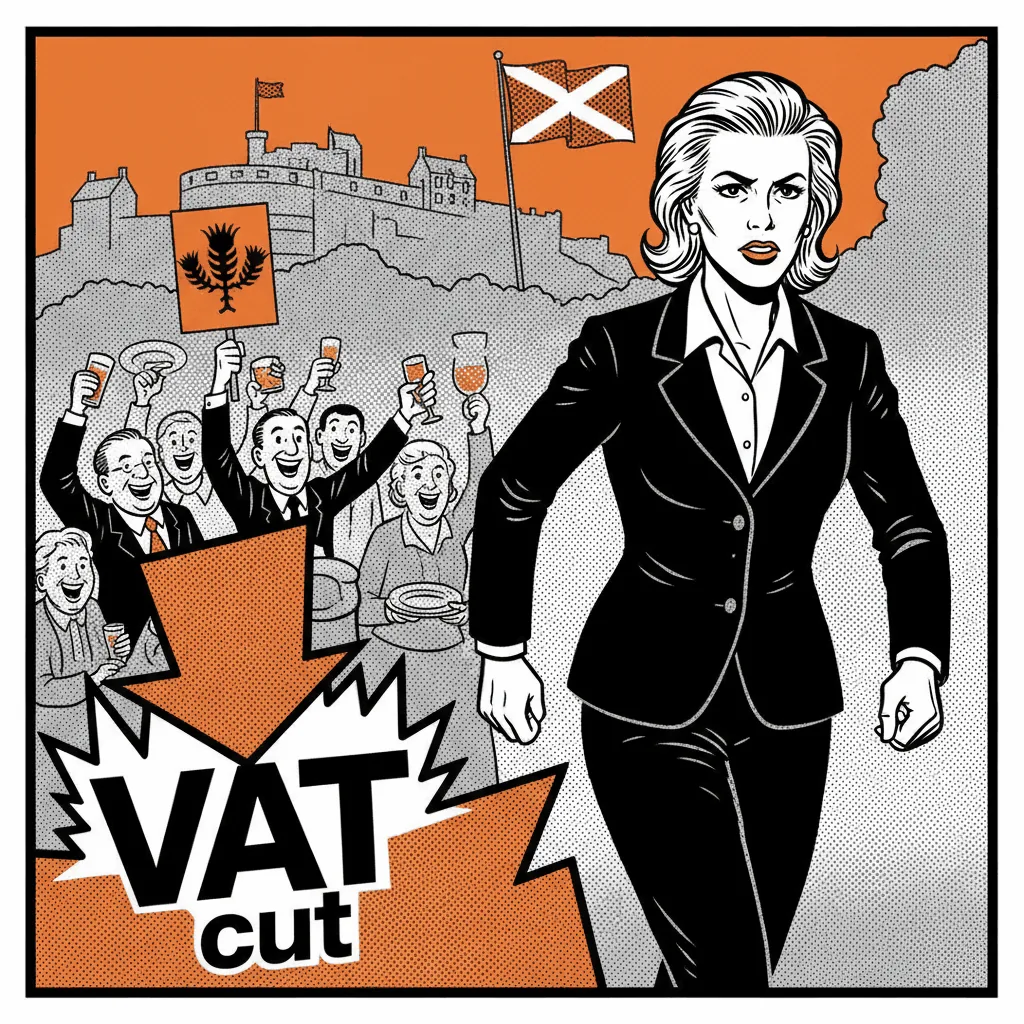
Scotland's Tourism Minister Joe Gilruth has publicly backed calls for a cut to VAT on hospitality services, aligning the Scottish Government with a campaign that trade bodies including UKHospitality have been running hard since the pandemic-era 5% temporary rate was scrapped in 2022. VAT on hospitality currently sits at 20%, the same standard rate applied to most goods and services, which the industry argues is structurally uncompetitive against European counterparts where reduced rates of 10% or lower are common.
The timing matters. Edinburgh's hospitality sector is carrying real weight right now. The city draws more than 15 million visitors annually, according to VisitScotland figures, and hospitality accounts for a significant share of Edinburgh's private-sector employment. But operators are being squeezed from multiple directions: energy costs remain elevated, staff wages have risen with minimum wage increases, and food inflation, while easing, has not reversed. A 20% VAT rate on top of that leaves margins that are, in many cases, structurally unviable.
UKHospitality has consistently argued that a permanent reduced VAT rate of 12.5% would protect existing jobs, allow businesses to reinvest, and ultimately generate more tax revenue through growth rather than less. Research published by the British Hospitality Association before its merger with UKHospitality estimated that the temporary 5% rate created or saved around 180,000 jobs across the UK. The case is not ideological; it is arithmetic.
Gilruth's backing gives the campaign something it has lacked from Scottish voices: ministerial-level support with a public platform. VAT is reserved to Westminster, which means Holyrood cannot cut it unilaterally. What Scottish Government ministers can do is apply political pressure on the UK Treasury and make clear that hospitality in Scotland is being disproportionately hurt. Scotland's seasonal economy, with a shorter peak trading window than southern England, makes the margin compression more acute. A bad August can undo a year's work for a small restaurant or guesthouse operator.
The UK Government has shown limited appetite so far for revisiting hospitality VAT, with Treasury officials pointing to the fiscal cost of a permanent reduced rate. But the political calculus is shifting. With local elections and a general election cycle in view, and with hospitality businesses closing at rates that make headlines in every constituency, the argument that a VAT cut pays for itself through growth is gaining traction. Whether that translates into a Budget announcement is another matter entirely; but Gilruth's endorsement means the Scottish hospitality sector now has a clear and senior voice making its case at government level.