

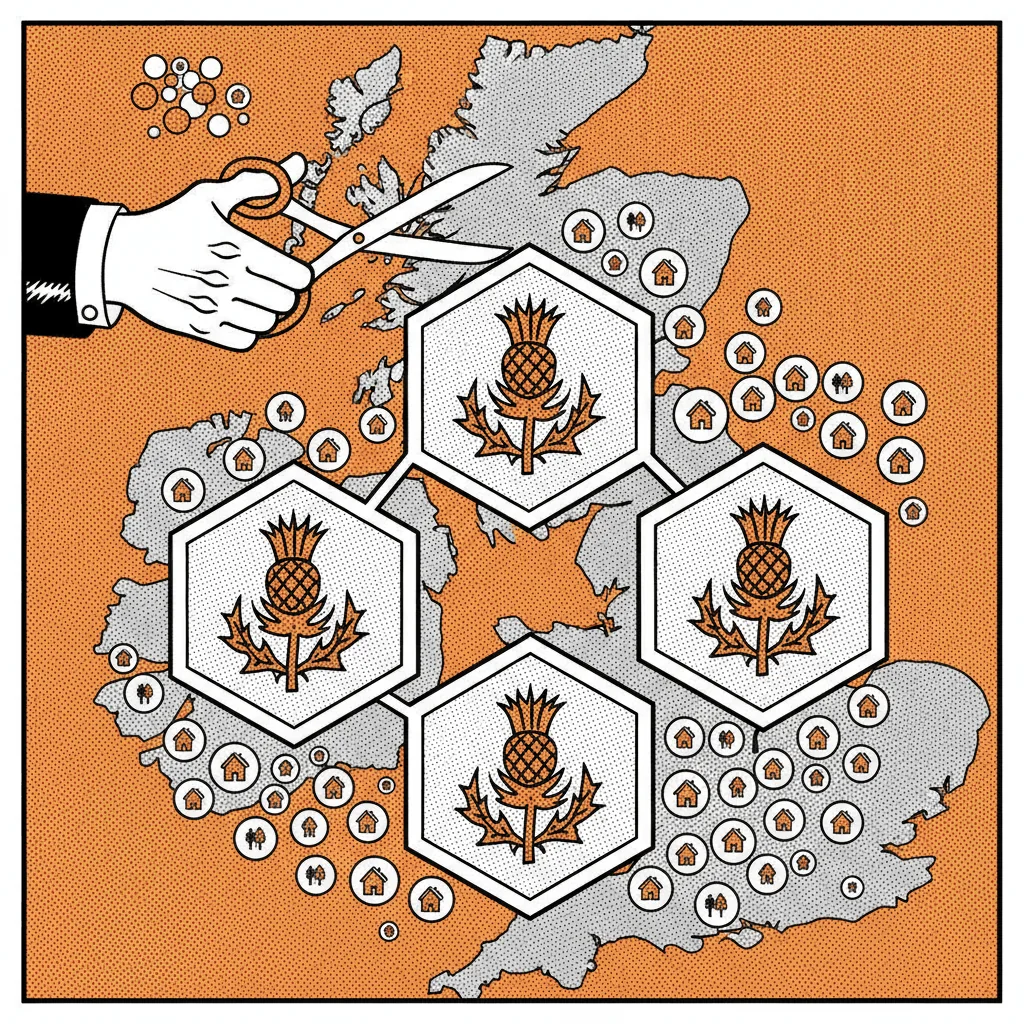
Scotland could have as few as six regional councils within the next parliamentary cycle, according to proposals being examined by the Scottish Government. The BBC Scotland report, citing government sources familiar with the reform agenda, outlines a two-tier model: a small number of large regional authorities handling strategic functions, supported by more than 100 community bodies dealing with hyper-local matters. The current patchwork of 32 councils, some dating back to the 1996 Local Government etc. (Scotland) Act reorganisation, would be swept away.
The implications for Scottish SMEs are immediate and structural. Public procurement in Scotland is worth an estimated £13 billion annually, according to the Scottish Government's own procurement statistics. That spending currently flows through 32 separate commissioning bodies, each with its own frameworks, preferred supplier lists, relationships, and processes. Consolidate those into six regional authorities and you create six very large, very powerful buyers. For businesses already on council frameworks, the question becomes urgent: does your relationship survive the merger?
Planning is the other pressure point. Scotland's development planning system is already under reform through the Planning (Scotland) Act 2019, which introduced national planning framework changes that took effect from 2022. A council consolidation layered on top of that creates fresh uncertainty around local development plans, planning officers' priorities, and where decisions actually land. The Federation of Small Businesses Scotland has previously flagged planning delays as one of the top friction points for member businesses. Fewer, larger councils could mean faster strategic decisions, or it could mean a more remote process with less access for smaller operators.
For Edinburgh SMEs specifically, the picture is complicated. Edinburgh City Council is one of Scotland's largest and most commercially active local authorities. It runs significant procurement programmes across construction, digital, professional services, and social care. Any regional consolidation that absorbs Edinburgh into a broader Lothians or Central Belt authority changes the dynamics of who you need to know, what frameworks apply, and which officers hold budget sign-off. The University of Edinburgh's Centre for Public Policy has noted in previous research that council mergers in comparable jurisdictions typically create a twelve to thirty-six month period of procurement paralysis as new structures bed in.
The community council tier is the underreported part of this story. Over 100 local bodies sitting beneath the regional authorities could actually increase the number of entry points for genuinely local businesses, particularly in rural Scotland. Highlands and Islands Enterprise has long argued that hyper-local economic development bodies, properly resourced, can deliver more responsive support than a distant regional authority. If those community bodies carry any real spending power or planning influence, the reform could open doors for smaller operators who currently struggle to get traction with large councils.
Timelines remain uncertain. The Scottish Government has not published a formal consultation paper as of writing, and any legislation would require parliamentary time. But the direction of travel is clear enough to act on now. Businesses that depend on public sector income should be mapping their council relationships, checking framework expiry dates, and speaking to Business Gateway or their local chamber about how other businesses are preparing. The window between announcement and implementation is where the smart money moves.