

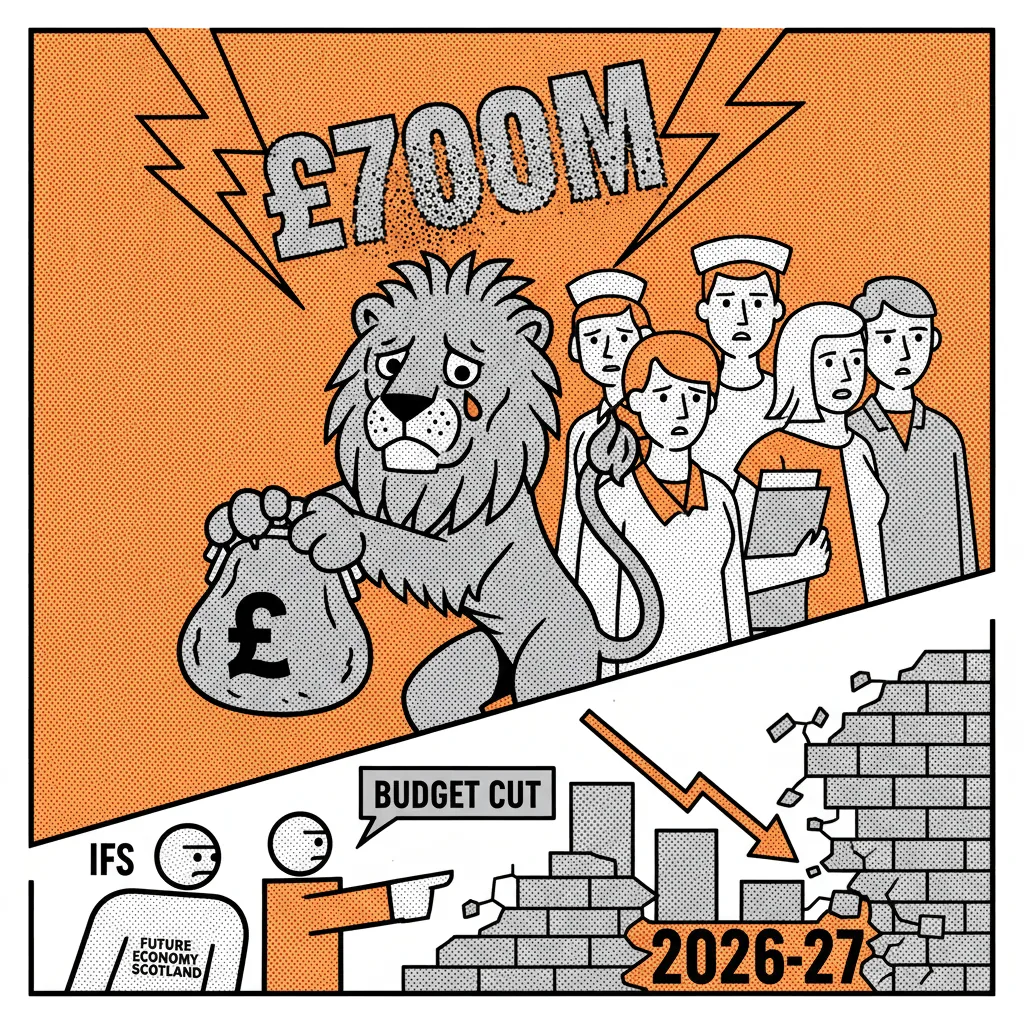
The numbers are blunt. The Scottish Government is heading into 2026-27 facing a £700 million gap between what it spends and what it receives, and according to the Institute for Fiscal Studies, the most probable outcome is cuts to frontline public services. That is not a political opinion. That is a fiscal forecast from one of the most credible economic research bodies in the UK.
Future Economy Scotland, a progressive economic think tank, has echoed the warning, noting that without significant structural reform or new revenue levers, the Scottish Government will have little choice but to reduce the services that cost the most to run. Health, education, and local government sit at the top of that list. Combined, they account for the vast majority of the devolved budget, which means any meaningful saving comes from there or nowhere.
The context matters here. Scotland's block grant from Westminster has been squeezed in real terms, while demand for public services, particularly in health and social care, has increased sharply since the pandemic. The Scottish Fiscal Commission has previously flagged the structural nature of this pressure, describing it as a long-term challenge rather than a one-year anomaly. What was a warning is now a forecast with a price tag attached.
For Scottish SMEs, the commercial implications are direct. Businesses that hold public sector contracts, supply NHS boards, deliver services to local authorities, or depend on public institutions as anchor clients need to be doing scenario planning now, not in 2026. Procurement freezes, contract rebids at lower value, delayed payments during budget reviews, and outright cancellations are all realistic outcomes when a government is cutting £700 million from its books. According to the Scottish Government's own procurement data, public contracts support thousands of Scottish SMEs across construction, IT, professional services, and health supply chains.
There is also a secondary effect that receives less attention. When public sector jobs are cut or when NHS and council staff face pay freezes, the local consumer economy feels it. Edinburgh and other Scottish cities have significant concentrations of public sector workers. Their disposable income, their confidence, and their spending patterns shape the trading environment for every café, accountant, freelancer, and retailer operating nearby. A £700 million cut does not stay inside a government spreadsheet. It moves through the economy, and small businesses are rarely insulated from that movement.
The timing creates urgency. Scottish Government spending reviews and budget consultations for 2026-27 will begin to take shape in the coming months. That is the window in which lobbying, evidence submission, and relationship-building with procurement officers actually makes a difference. After the decisions are made, the conversation is over.