

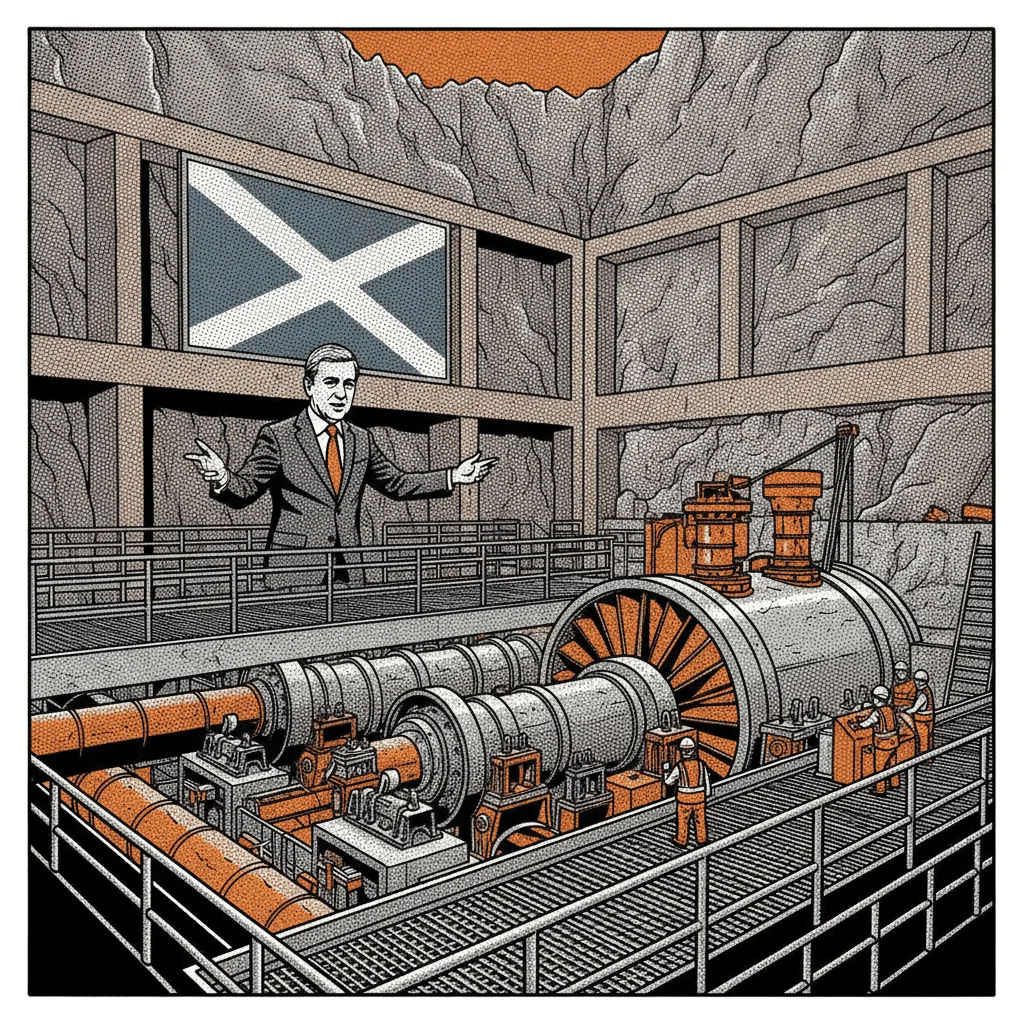
Cruachan has been quietly remarkable since 1965. The world's first large-scale reversible pumped storage hydro facility, it sits inside a hollowed-out mountain in Argyll, generating electricity when demand spikes and storing surplus power by pumping water back uphill when demand falls. It is, in engineering terms, a giant rechargeable battery made of granite and loch water. The £80 million upgrade now underway at the Drax Group site is not glamorous in the way that offshore wind farms photograph well, but it is arguably more strategically important.
Pumped storage hydro is the critical piece that makes the rest of Scotland's renewable energy ambitions coherent. Wind and solar generate power when conditions allow, not necessarily when businesses and homes need it. Storage infrastructure like Cruachan is what bridges that gap and keeps the grid stable. According to Scottish Renewables, Scotland already generates the equivalent of well over 100 percent of its annual electricity demand from renewables in good wind years, but storage capacity has not kept pace with generation. Cruachan's upgraded plant directly addresses that shortfall.
John Swinney's visit is not purely symbolic. The Scottish Government has been vocal about pumped storage hydro as a strategic national asset, and Highlands and Islands Enterprise has identified energy infrastructure investment as a core pillar of the region's economic development. The Cruachan project sits at the intersection of both: a private-sector capital commitment of £80 million deploying into a remote Scottish location, with supply chain and skills consequences for Argyll and beyond. Drax has confirmed the refurbishment programme supports skilled engineering roles on site throughout the project duration.
For businesses watching Scotland's net-zero supply chain, the Cruachan investment is a data point worth tracking. The UK Government's own Climate Change Committee has noted that Britain needs to roughly triple its long-duration electricity storage capacity by 2035 to support a decarbonised grid. Scotland, with its geography, its existing hydro heritage, and its renewable energy surplus, is positioned to provide a substantial share of that capacity. That means more projects, more procurement, and more contract opportunities in civil engineering, electrical systems, environmental services, and project management flowing into Scottish businesses over the coming decade.
There is also a direct line between grid stability and energy cost predictability for SMEs. Businesses across Edinburgh and Scotland have absorbed brutal energy price volatility over the past three years. A more resilient, better-buffered national grid, underpinned by investments like Cruachan, does not eliminate price exposure overnight, but it reduces the frequency and severity of the spikes that have hammered margins across hospitality, manufacturing, and care sectors. The business case for backing Scotland's storage infrastructure is not abstract. It shows up on energy bills.