

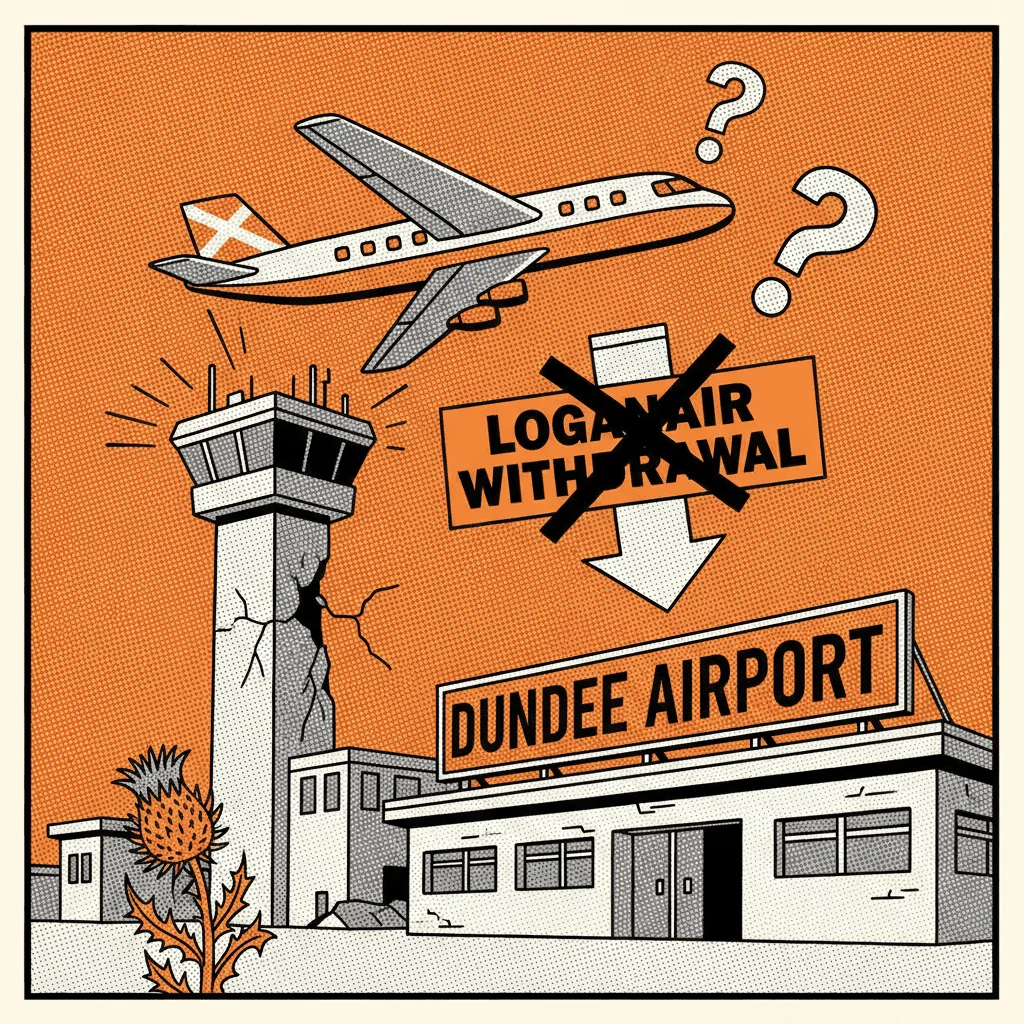
Loganair has confirmed it is pulling its scheduled services from Dundee Airport, effectively ending the city's access to the UK's domestic air network. The airline, which operates as the de facto lifeline carrier across much of rural and island Scotland, had been running routes including Dundee to London Stansted. With its departure, the airport faces an existential question: can it survive without a scheduled operator, and who, if anyone, comes next?
Dundee Airport is owned by Dundee City Council and has long been propped up by a combination of public subsidy and the goodwill of a single airline. That model was always fragile. According to the Civil Aviation Authority's airport statistics, Dundee handled just over 30,000 passengers in 2023, a fraction of what Edinburgh and Glasgow process weekly. Low footfall means low revenue, which means thin commercial margins for any carrier willing to take the risk. Loganair took that risk for years. Now it has decided the numbers no longer work.
The implications stretch well beyond Dundee city limits. Regional connectivity is one of the primary tools Scottish Enterprise and Highlands and Islands Enterprise cite when making the case for Scotland as a business destination. The Scottish Government's National Transport Strategy explicitly frames reliable regional air links as an economic necessity, not a luxury. Losing Dundee's airport would cut off a catchment area covering Tayside, Angus, and parts of Fife from the speed advantage that air travel provides for time-sensitive business travel and client meetings.
Transport academic research from the University of the Highlands and Islands has consistently shown that in regions with limited high-speed rail access, air connectivity has a measurable effect on inward investment decisions. Dundee is not on the East Coast Main Line in any meaningful commercial sense for short-haul business trips. The three-hour train journey to London Kings Cross is a half-day commitment each way. For an SME owner closing a deal or a consultant billing by the hour, that difference is not trivial, it is the difference between taking a meeting and not taking it.
The wider concern is precedent. If Dundee Airport becomes unviable without a subsidy structure that no commercial operator will accept, the same pressure will arrive at Inverness, Campbeltown, and other smaller Scottish airports that rely on single-operator goodwill and public subsidy to function. Westminster's record on funding Public Service Obligation routes, the mechanism that forces carriers to operate otherwise uncommercial regional services, has been inconsistent. Scotland has repeatedly made the case for greater devolved control over PSO decisions. That argument just got louder.
Dundee City Council has said it will explore all options to secure the airport's future. What that means in practice is unclear. A new operator would need to see a credible passenger demand case that Loganair, with its deep knowledge of Scottish markets, has apparently decided does not exist at current volumes. A fully subsidised public service model is possible but politically complex in a period of council budget pressure. The most likely short-term outcome is a period of uncertainty that will itself suppress business confidence in the region, because uncertainty is its own economic cost.