

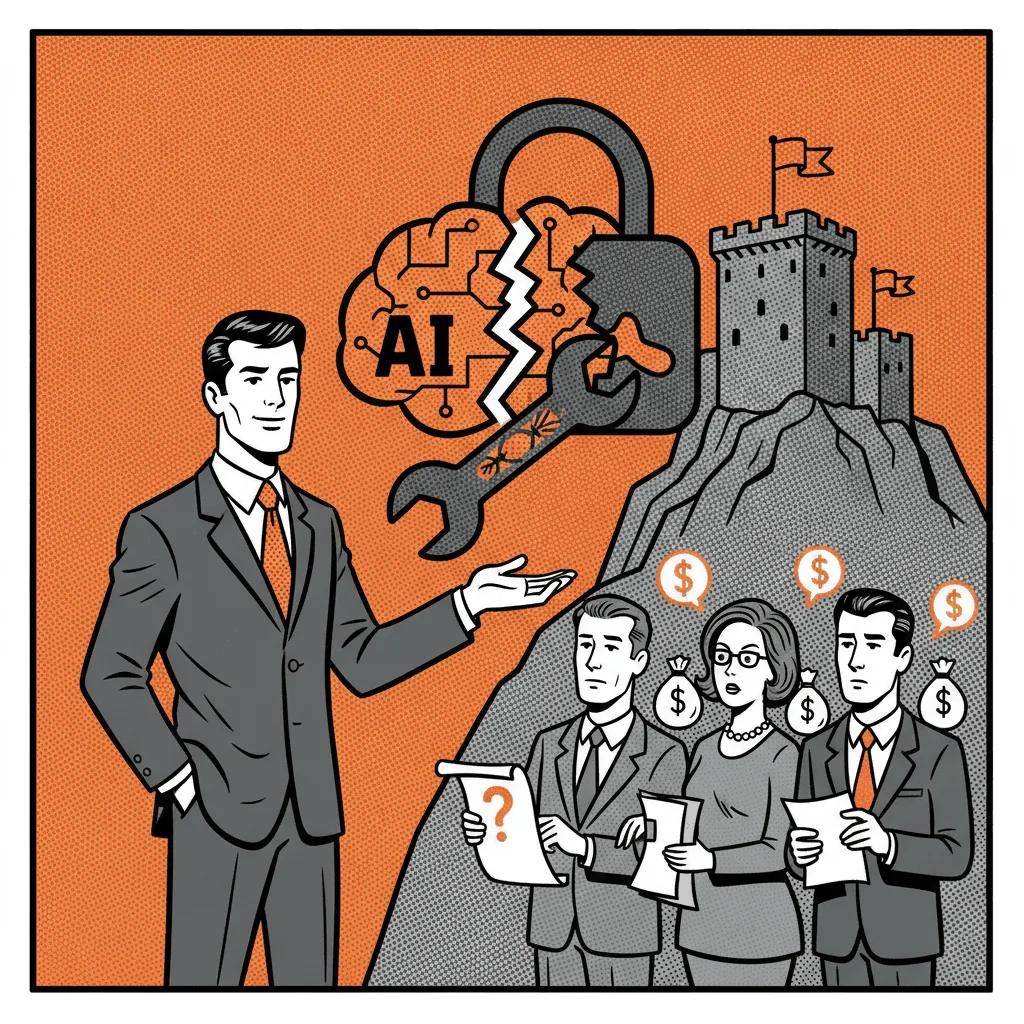
AI can produce a business plan in twelve minutes that would have taken a consultant three days. The formatting is clean, the structure is sound, the market-sizing section hits all the right notes. And investors can spot it from the first paragraph. Not because it's wrong, but because it reads like no one is home. The voice is confident but empty. The vision is present but not felt. That gap between competent and convincing is now the single most important thing a Scottish founder needs to close.
According to research from the British Business Bank, UK investors consistently cite founder credibility and narrative clarity as the two leading factors in early-stage funding decisions, ahead of the financials. What AI produces by default is the opposite: technically defensible numbers wrapped in prose that could belong to any startup in any sector in any country. The specificity that makes an investor lean forward, the 'why this person, why this market, why now', is precisely what a language model cannot fabricate, because it doesn't know you, your customers, or your corner of the Edinburgh market.
The fix is not to throw out the AI output. It's to treat it as scaffolding, not the building. Start by feeding the model your actual story: real customer quotes, specific acquisition costs from your first ninety days, the moment you realised the problem was worth solving. According to the Kauffman Foundation's research on investor psychology, concrete and personal detail activates trust in a way that generic market analysis simply cannot. Once you've loaded the AI with your specific data and experience, ask it to rewrite each section from that evidence base, not from its training data. The difference in output is significant.
Scottish founders have a particular edge here that most aren't using. Scottish Enterprise, Highlands and Islands Enterprise, and Business Gateway hold granular economic data on Scottish sectors, tourism, life sciences, food and drink, fintech, that London-centric AI outputs will never surface. If your plan cites the Scottish Government's figures on the country's 4.5 billion pound food and drink export target, or HIE's projections for rural digital infrastructure investment, you're anchoring your pitch in something specific and credible. That's local intelligence a model won't generate unprompted. You have to bring it.
The deeper issue is voice. Investors back people. AI, by its nature, averages across millions of documents and produces prose that sounds like a sensible blend of everything, which means it sounds like no one in particular. The practical solution is a two-pass approach: let the AI draft structure and analysis, then rewrite every paragraph in your own voice, with your own word choices, your own risk acknowledgements, your own statement of what you'll do differently if the first model fails. That vulnerability and specificity, the stuff a language model is trained to smooth away, is exactly what experienced investors are looking for. It's the signal that a real person with a real plan is behind the deck.
None of this diminishes what AI brings to the table. For a solo founder or a two-person team in Edinburgh who can't afford a £5,000 consultant, AI is the great equaliser. It gets you to a professional starting point in hours. But reaching investors requires the one thing AI can't manufacture: evidence that you know something the model doesn't. Your customers, your numbers, your market relationships, your story. Feed all of that in. Then refine. Then make it sound like you.