

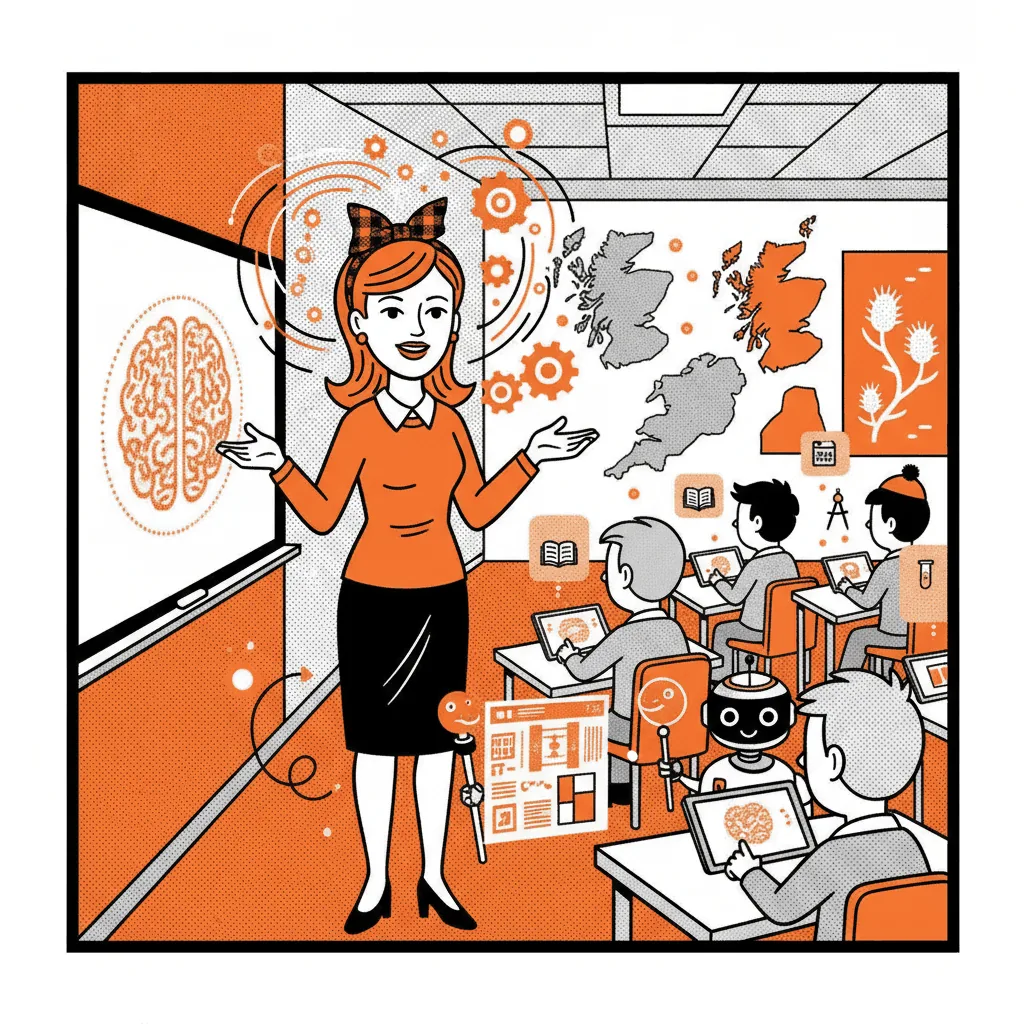
The next wave of classroom AI won't be a chatbot. It won't sit in a tab, waiting for someone to type a question. Ambient AI, as the education technology sector is now calling it, is designed to fade into the room itself, tracking engagement, adjusting pacing, flagging when a student is lost, and surfacing insights for teachers without interrupting the lesson. Narmeen Makhani, founder of AIxecute, a strategic advisory firm focused on AI adoption, describes it plainly: ambient AI "fades into the environment rather than sitting in a visible tool waiting for someone to type a prompt." That is a meaningful distinction, and not just a marketing one.
Traditional AI in education has largely been transactional. A student asks a question; a tool answers it. A teacher uploads a lesson plan; a platform suggests improvements. Useful, but still reliant on someone doing the asking. Ambient AI flips that model. Sensors, cameras, audio analysis, and real-time data feeds allow the system to infer what's happening in a room and respond accordingly. Think automatic adjustments to display brightness and noise levels, passive monitoring of whether pupils are engaged or drifting, or alerts to a teacher that three students in the back row haven't followed the last four instructions. No prompting required.
For Scottish schools, where the attainment gap between pupils in the most and least deprived areas remains one of the most stubborn policy problems in education, the implications are significant. The Scottish Government's National Improvement Framework has made closing that gap a central commitment, and according to Education Scotland's own review of digital learning, schools with stronger technology integration consistently show better early identification of pupils who need support. Ambient AI takes that identification from "end of term" to "end of period." A teacher who might otherwise miss a struggling student in a class of thirty gets a quiet nudge on a tablet. That is the difference ambient AI is being designed to make.
Research from the OECD's 2023 report on AI in education cautions that the promise of adaptive and ambient learning technologies must be matched with robust data governance and clear consent frameworks, particularly where minors are involved. That is not a reason to hesitate; it is a reason to prepare. Scottish councils and school IT teams that begin drafting ambient AI data policies now will be in a far stronger position when procurement decisions land on the desk. The technology is already in pilots across parts of the United States and Scandinavia. It will reach Scottish classrooms. The question is whether schools arrive ready or scrambling.
For EdTech-adjacent SMEs serving Scottish schools, this is an opening, not a threat. Companies building classroom analytics tools, wellbeing monitoring platforms, or teacher-facing dashboards are operating in exactly the space ambient AI is moving into. Scottish Enterprise's Digital Growth Programme offers funded support for SMEs developing tech products for public sector markets, including education. If you build software that talks to schools, ambient AI is the architecture your next product cycle should be thinking around. The room is the interface now. Everything else is catching up.