

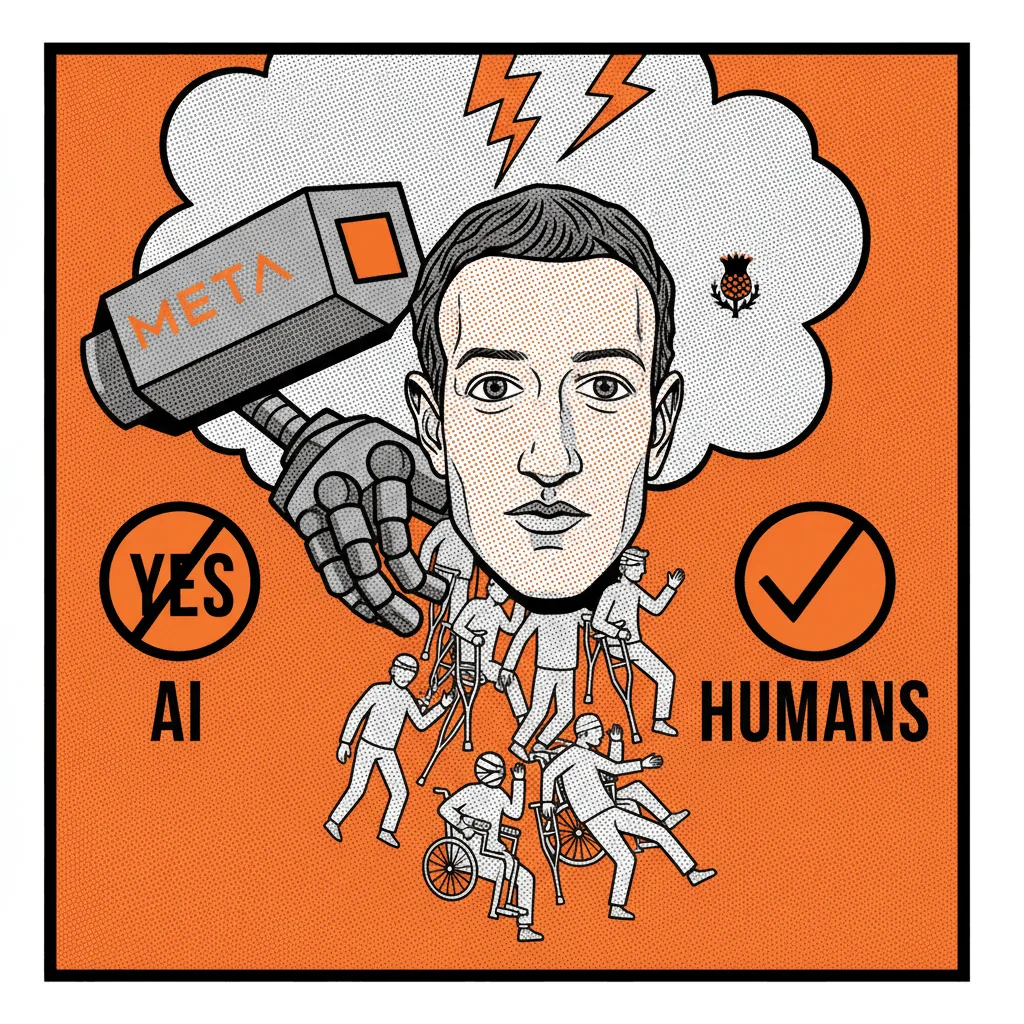
Meta is facing a lawsuit alleging that its 2025 layoffs were not managed by human judgement at all, but by an AI system that selected workers for redundancy, with disabled employees and those on medical leave disproportionately affected. The company denies it used AI to make termination decisions, but the case is now in the courts and the employment law community is paying close attention. Whatever the outcome, the lawsuit sets a precedent that any employer using AI in HR processes cannot afford to ignore.
The legal exposure here is significant. Under UK law, specifically the Equality Act 2010, employers are already prohibited from treating disabled workers less favourably or failing to make reasonable adjustments. If an AI system is doing the shortlisting, the scoring, or the ranking, and it produces a discriminatory outcome, the employer carries the liability regardless of whether a human signed off the final decision. The Information Commissioner's Office has been explicit on this: automated decisions that significantly affect individuals must be subject to meaningful human oversight, and employees have the right to challenge them. Delegating to the machine does not delegate the responsibility.
Research from the Trades Union Congress published in 2024 found that one in seven workers in the UK had already experienced some form of AI-assisted management, from automated scheduling to performance monitoring. That figure is rising. The same report found that most workers had no idea an algorithm was influencing decisions about them, and that few employers had put governance frameworks in place. For small businesses, where HR is often handled by a founder or office manager rather than a dedicated team, the risk of sleepwalking into this territory is real.
Scotland's business support bodies have been vocal about the opportunity AI presents for SMEs, and rightly so. Scottish Enterprise and Business Gateway both champion digital adoption, and AI-assisted tools for recruitment, performance management, and workforce planning are increasingly accessible and affordable. The point is not to avoid these tools. It is to use them correctly. An AI recruitment filter that screens CVs is useful. An AI system that ranks employees for redundancy without documented human review is a liability. The distinction matters enormously, and right now most small employers are not drawing that line clearly enough.
Employment lawyers in Scotland are already flagging this area. Thompsons Solicitors, one of Scotland's leading employment law firms, has noted that AI in the workplace is an emerging frontier in discrimination claims, and that tribunals will increasingly scrutinise whether employers can demonstrate genuine human decision-making rather than rubber-stamping an algorithmic output. The Meta case, whatever its outcome, will accelerate that scrutiny. Any employer who cannot show that a person reviewed, understood, and took responsibility for an AI-assisted decision is exposed. That is the new baseline, and it applies to a ten-person business in Leith just as much as it applies to a tech giant in Menlo Park.