

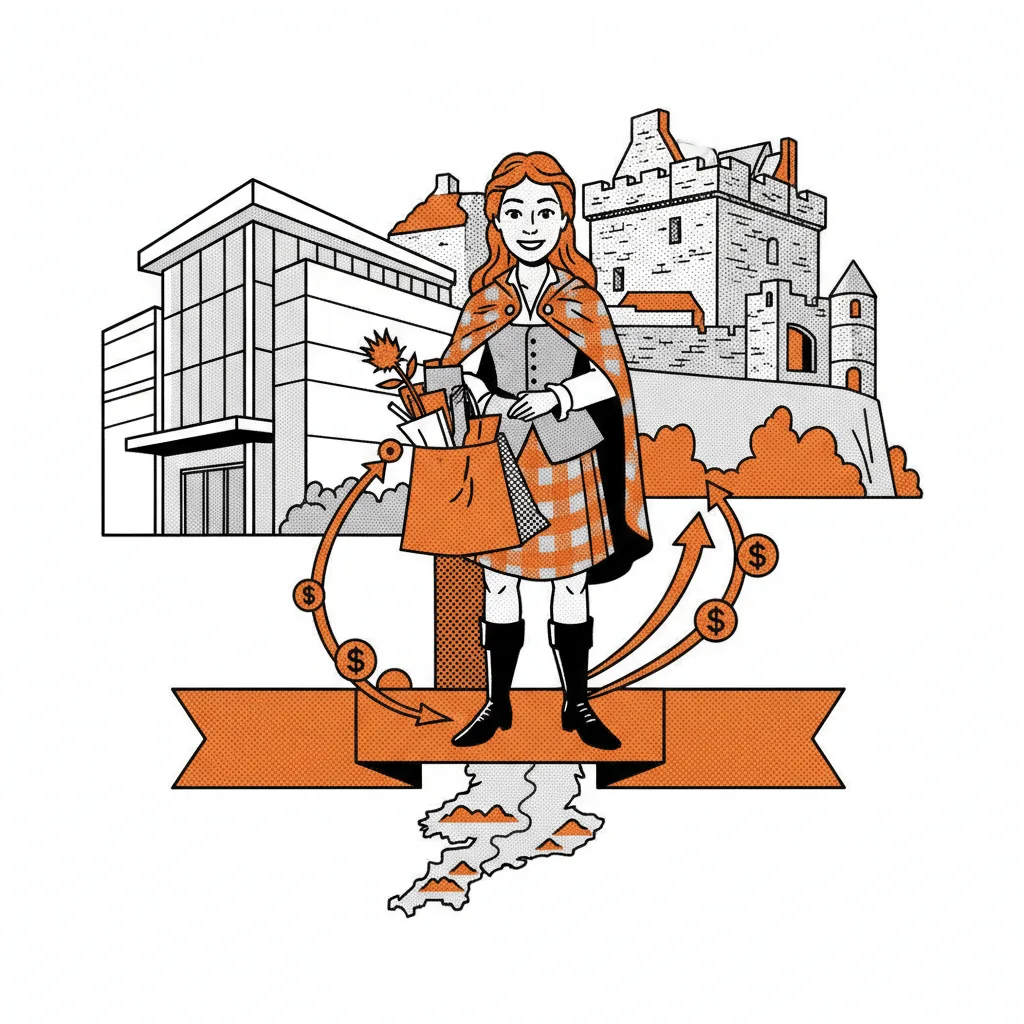
West Lothian's tourism economy has grown to nearly £300 million, with two unlikely bedfellows driving the number: the global Outlander fanbase making pilgrimages to filming locations across the region, and footfall at the Livingston Designer Outlet drawing shoppers who stay, eat, and spend. The figures, reported by the Edinburgh Evening News, represent a meaningful shift in how a post-industrial Scottish council area is positioning itself for economic growth.
Outlander, the Starz and Sony Pictures Television drama based on Diana Gabaldon's novels, has been generating tourism traffic to Scottish locations since its 2014 debut. VisitScotland has previously estimated that the show contributes tens of millions of pounds annually to the Scottish visitor economy, with sites like Lallybroch (Midhope Castle) and Linlithgow Palace drawing visitors from North America, Europe, and beyond who would not otherwise have Scotland on their itinerary. West Lothian sits at the heart of that geography.
The retail dimension is equally instructive. Livingston Designer Outlet is one of Scotland's busiest shopping destinations, and its gravity extends well beyond the local catchment area. According to Scottish Government economic data, day-visitor spend in Scotland averages around £40 per head, but visitors with a cultural or destination reason to travel consistently outspend that benchmark. The combination of a screen-tourism draw and a high-quality retail offer gives West Lothian two distinct reasons to visit, which compounds dwell time and spend.
The broader pattern matters here. Scotland's Year of Stories in 2022 demonstrated what the Scottish Government and VisitScotland have argued for years: narrative drives tourism. Stories, characters, and places people feel emotionally connected to generate visits that no amount of generic destination marketing can replicate. West Lothian did not manufacture Outlander, but it did have the infrastructure, castles, landscapes, hospitality businesses, to capture the value when it arrived. Business Gateway's tourism development resources make exactly this point: the asset is rarely the problem; the packaging and promotion of it usually is.
For Scottish SMEs, the case is clear. Cultural and screen tourism is not a niche; it is a proven demand driver that flows to places with a story attached. The question is whether local businesses, accommodation providers, food and drink operators, experience designers, independent retailers, are positioned to intercept that spend when visitors arrive. West Lothian's £300 million figure did not happen because of one big investment. It happened because a region had something people wanted to find, and enough businesses ready to serve them when they did.