

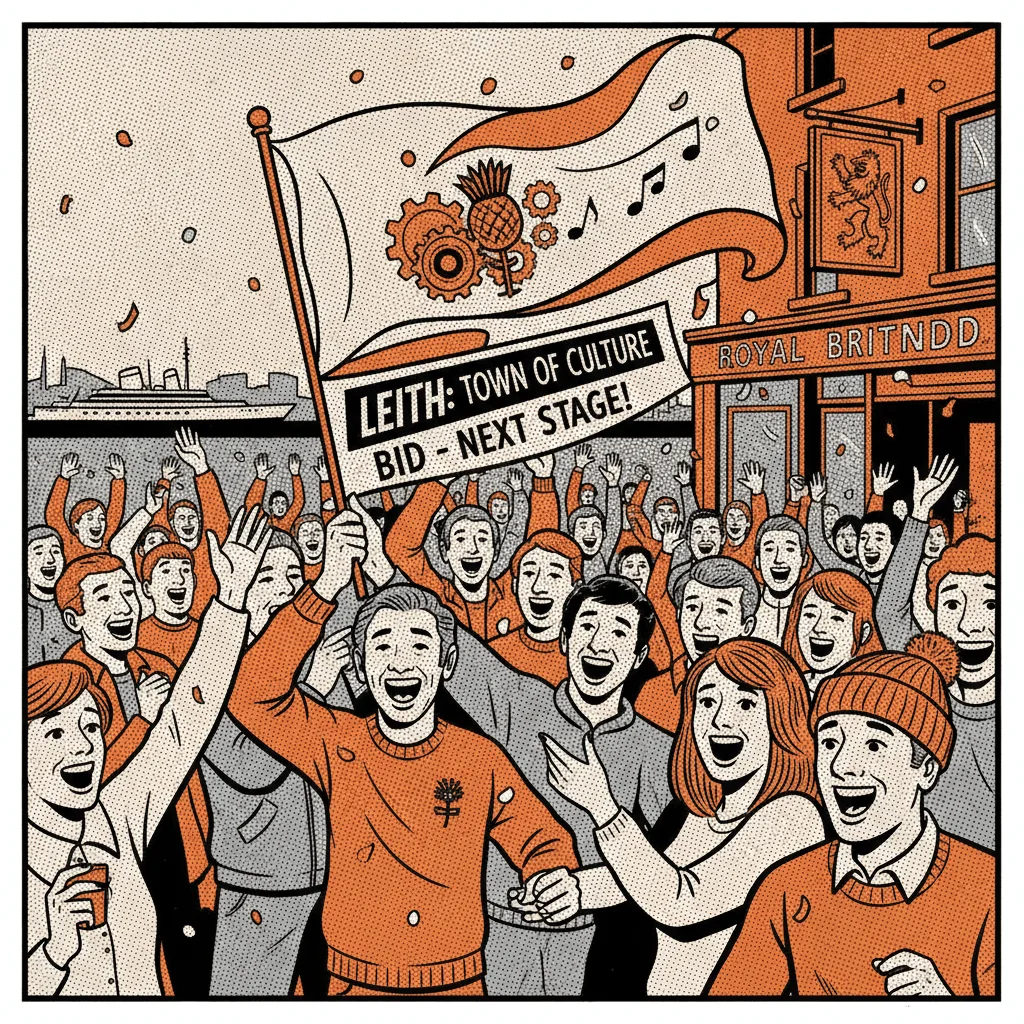
Leith is one of fifteen towns across the UK to be awarded £60,000 in development funding through the Town of Culture 2028 competition, run with UK Government backing. The shortlist was announced on Thursday evening, whittled down from a pool of almost 400 applications. That Leith made it through is not a surprise to anyone who has spent time there, but it is a significant moment, and one with real money attached.
The Town of Culture programme is modelled on the logic that proved itself with UK City of Culture: that concentrated cultural investment transforms a place's economic trajectory. Hull's year as City of Culture in 2017 generated an estimated £300 million in economic impact, according to figures from the University of Hull's independent evaluation. Coventry's 2021 tenure drew over 750 events and materially shifted inward investment interest. The model works, and Leith's community knows it.
Leith's bid is built on something the neighbourhood already has in abundance: a distinct identity that sits apart from Edinburgh's tourist-facing centre. The waterfront, the independent food and drink scene, the arts venues, the long maritime history, and a working-class cultural confidence that does not perform itself for visitors, these are the raw materials of a compelling case. According to Creative Scotland, Scotland's creative economy contributes over £4 billion annually to Scottish GDP, and Leith sits at the sharp end of that sector in Edinburgh.
The £60,000 is development funding, not a final prize. The fifteen shortlisted towns will now use that money to build their full bids ahead of the winner announcement. For Leith, that means a window of several months where community organisations, businesses, and cultural institutions need to get their voices, their projects, and their proposals into the room. The bid development process is exactly the kind of moment where a well-placed local business, a creative practitioner, or a venue owner can shape what happens next, if they move quickly.
The Scottish Government's commitment to place-based cultural investment aligns neatly with what a Town of Culture designation could deliver for Leith. Business Gateway Edinburgh and Creative Scotland both offer support for organisations looking to engage with cultural funding programmes, and any Leith-based business with a community, arts, or events dimension should be speaking to their local networks now. This competition will reward organised, joined-up voices, not last-minute submissions from isolated operators.