

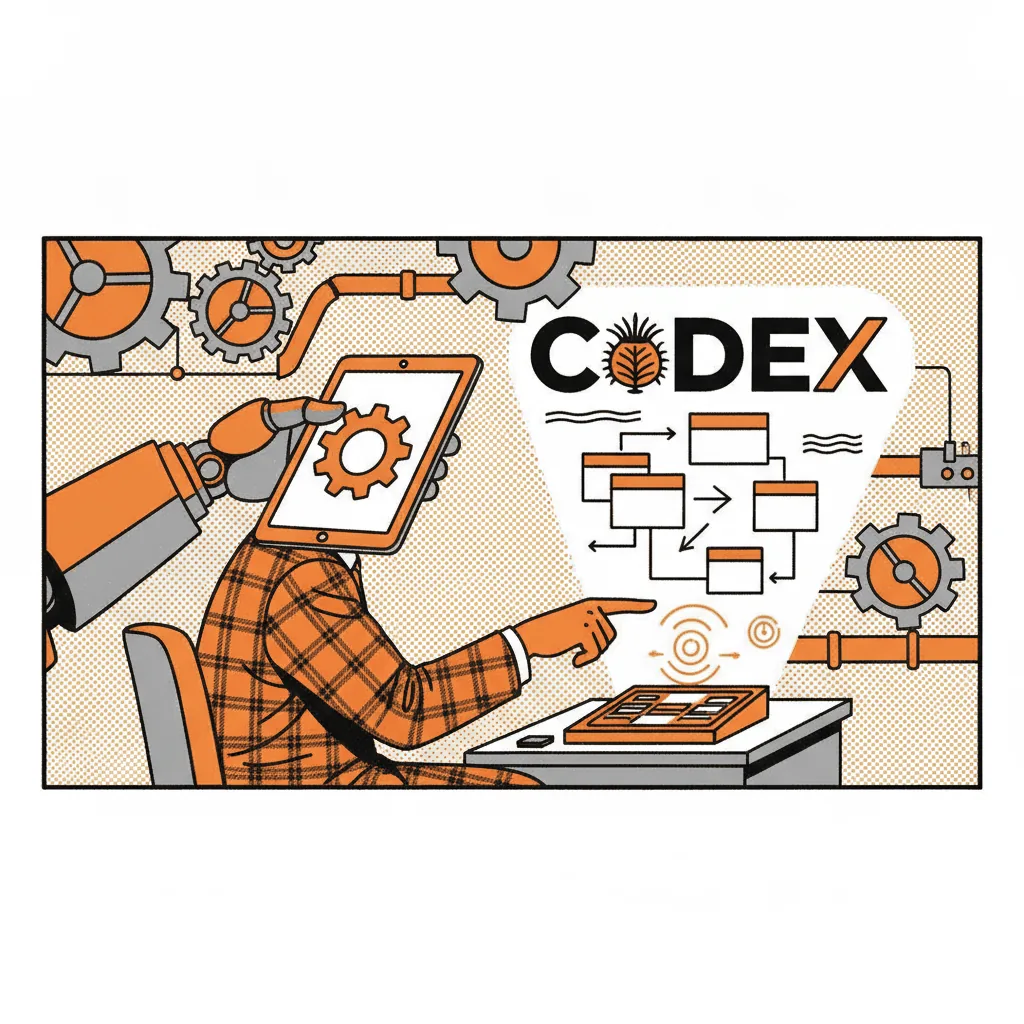
The headline number from OpenAI's announcement is simple but worth sitting with: Codex can now run autonomous workflows for hours, unsupervised, completing tasks that previously required a developer, an analyst, or an ops manager sitting at a screen. OpenAI is pitching this not as a coding tool but as a work agent, something that operates independently on your behalf and reports back when it is done. That is a meaningful shift in what AI can actually do for a small business.
Codex started life as OpenAI's code-generation model. The rebranded version is considerably more ambitious. According to reporting by Ars Technica, it is designed to handle entire workflows, not just isolated prompts, and can collaborate with users in real time or run solo tasks in the background. Think of it as the difference between a calculator and an accountant: one answers when asked, the other gets on with it. For a solopreneur juggling client work, admin, invoicing, and business development simultaneously, that distinction matters enormously.
The productivity research backs this up. A 2024 study from the MIT Sloan Management Review found that AI tools, when deployed on complex knowledge tasks, can reduce task completion time by up to 40 percent for skilled workers. McKinsey's Global Institute estimates that roughly 60 to 70 percent of employee time is spent on tasks that existing AI tools could already automate in whole or in part. The gap between what is technically possible and what most small businesses are actually doing with AI remains vast. Tools like the new Codex are starting to close it.
For Scottish SMEs, this lands at a useful moment. Business Gateway and Scottish Enterprise have both been pushing digital adoption hard, with the Scottish Government's Digital Strategy explicitly targeting productivity gains for small and medium businesses as a route to closing Scotland's output gap with the broader UK economy. The tools are arriving faster than the policy can track them. A sole trader in Leith or a two-person consultancy in the West End does not need to wait for a government programme to start using autonomous AI agents. They can start today, with a ChatGPT Plus subscription and a clear brief.
The practical applications for a small business are not theoretical. A marketing agency could set Codex running on a competitor analysis brief overnight and wake to a structured report. A healthcare administrator could deploy it to triage and categorise a backlog of patient feedback forms. An Edinburgh-based recruiter could use it to screen CVs, draft first-pass summaries, and flag anomalies across a hundred applications while they take a client call. The bottleneck is rarely the tool. It is knowing what to hand over and how to brief it clearly. That is the skill worth building now, before the tools get even more capable, which they will.