

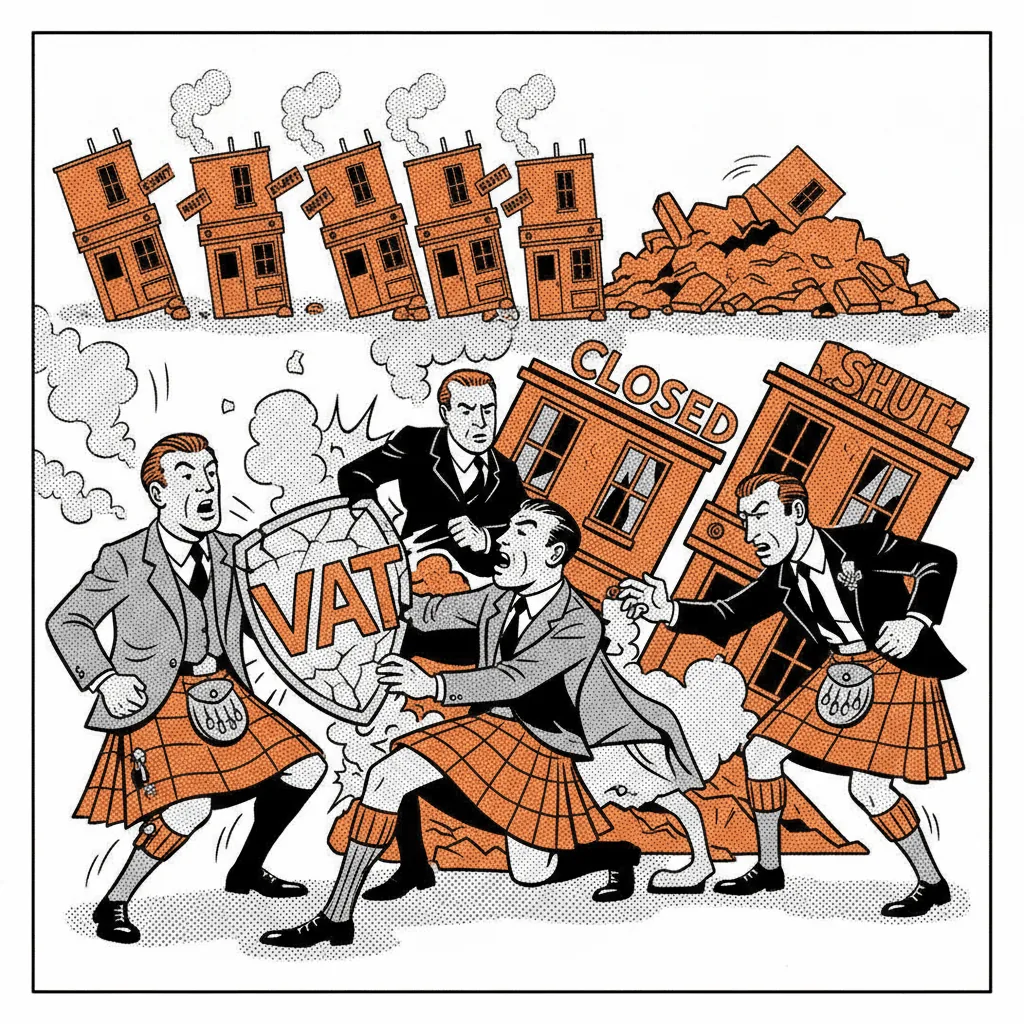
Seven pubs a month. That is the rate at which Scotland's licensed hospitality trade has been losing venues in 2026. The Scottish Beer and Pub Association (SBPA) confirmed 62 closures across the first nine months of the year, a figure that cuts well beyond the usual churn of premises changing hands or refurbishing. These are pubs that have shut for good.
The SBPA is calling for a permanent, reduced rate of VAT for the hospitality sector, arguing that 20% VAT is simply incompatible with the margins available to a community pub or independent bar in 2026. The same call has been made repeatedly since the pandemic, when a temporary 5% rate gave many operators their first profitable quarters in years. That relief was withdrawn in stages and ended entirely in April 2022. According to UKHospitality, the trade body for the broader sector, hospitality businesses now pay more in VAT than they make in net profit across most categories of venue. That is not a sustainable equation.
Scotland's hospitality sector employs around 220,000 people, according to Scottish Government figures, and contributes roughly £5 billion annually to the Scottish economy. Pubs in particular anchor high streets, rural communities, and urban neighbourhoods in ways that are genuinely difficult to replace once they close. Research published by the Campaign for Real Ale (CAMRA) consistently shows that pub closures accelerate local economic decline; they remove footfall, reduce spend in surrounding businesses, and strip communities of a social infrastructure that does not come back once the building is converted to flats.
The structural problem is the cost stack. Since April 2025, employer National Insurance contributions rose from 13.8% to 15%, adding thousands of pounds annually to the wage bill of any business running a floor team and kitchen staff. Energy costs, while off their 2022 peak, remain well above pre-pandemic levels for commercial operators. And food input costs have tracked above general inflation for most of the past three years, according to the Office for National Statistics. Pubs cannot simply absorb these increases. Customers, squeezed by their own cost pressures, will not reliably accept higher prices before choosing to drink at home instead.
The VAT ask is directed at Westminster, not Holyrood, because VAT remains a reserved tax. The Scottish Government has limited tools available here, and Scottish ministers have repeatedly made the case to the UK Treasury for sectoral relief without visible result. The political economy is uncomfortable: reducing VAT for hospitality costs the Exchequer real money in the short term, even if the argument that it saves jobs and keeps businesses trading is well-evidenced. UKHospitality estimates that a 12.5% VAT rate for the sector would save around 10,000 UK hospitality businesses from closure over five years. The Treasury has declined to move on the policy. The SBPA's language, 'fighting a losing battle', reflects frustration with that position as much as with trading conditions.
For independent operators in Edinburgh and across Scotland, the calculation is increasingly binary. Venues that carry debt from pandemic-era borrowing, including Bounce Back Loans and CBILS facilities that many deferred rather than repaid, are now facing repayment schedules on top of every other cost pressure. Business Gateway Scotland and Scottish Enterprise both offer advisory support for hospitality businesses under financial strain, and it is worth engaging them before the situation becomes critical rather than after. The Scottish Government's Hospitality Industry Advisory Group has also been active in lobbying for sector-specific support, and keeping across its outputs is worthwhile for any operator trying to navigate what is coming next.