

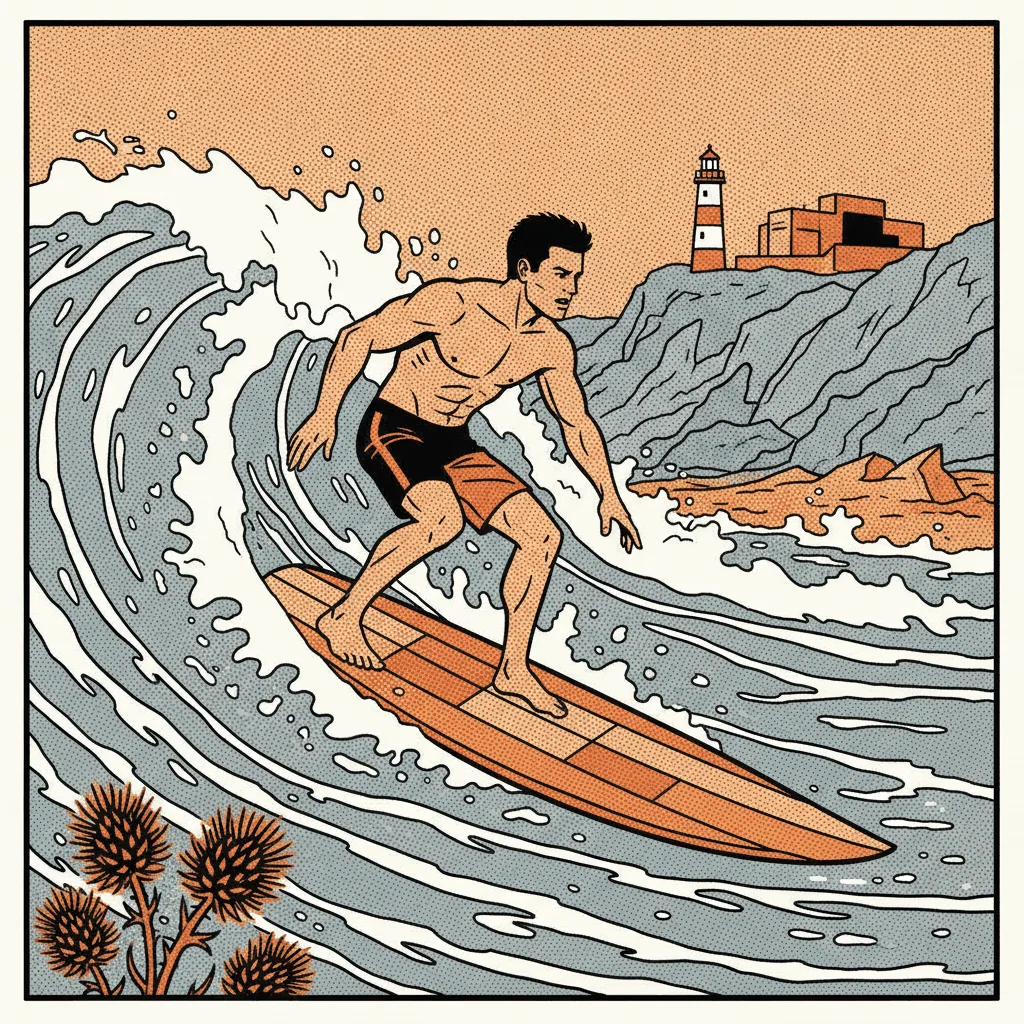
At Lost Shore Surf Resort this weekend, amid the wetsuits and wax, one board stood out. Fraser Reid paddled into the wave pool on a board he made himself, from wood, in his Fife workshop. It was not a novelty. It was craftsmanship on water.
Reid runs FAR Cabinet Makers, and alongside bespoke furniture he has built a parallel strand to the business: courses where people come to his workshop, learn the craft, and leave with a wooden surfboard they shaped themselves. That is the whole product. The skill transfer is the thing you are buying.
It fits a broader pattern in Scottish creative enterprise. According to Creative Scotland's most recent economic report, the country's craft and maker sector contributes over £200 million annually to the Scottish economy, with experiential and workshop-based businesses among the fastest-growing sub-categories. People are not just buying objects. They are buying the story of how those objects came to exist, and increasingly, they want to be part of that story themselves.
Lost Shore, which opened on the outskirts of Edinburgh and quickly became one of the more talked-about leisure developments in central Scotland, is proving to be a useful launchpad for exactly this kind of niche craft operator. By hosting makers and specialists alongside its core surf offer, it creates an ecosystem where small businesses get visibility they would struggle to generate alone. A cabinet maker from Fife gets in front of a crowd that already self-identifies as adventurous and experiential. That is a decent marketing arrangement.
The wooden surfboard is also, quietly, having a moment. The global surf industry has been wrestling with the environmental footprint of foam and fibreglass construction for years. Sustainably sourced timber boards, shaped by hand, sit at the opposite end of that spectrum. Whether Reid is riding a cultural wave as much as a physical one is an open question, but the timing does not look accidental.