

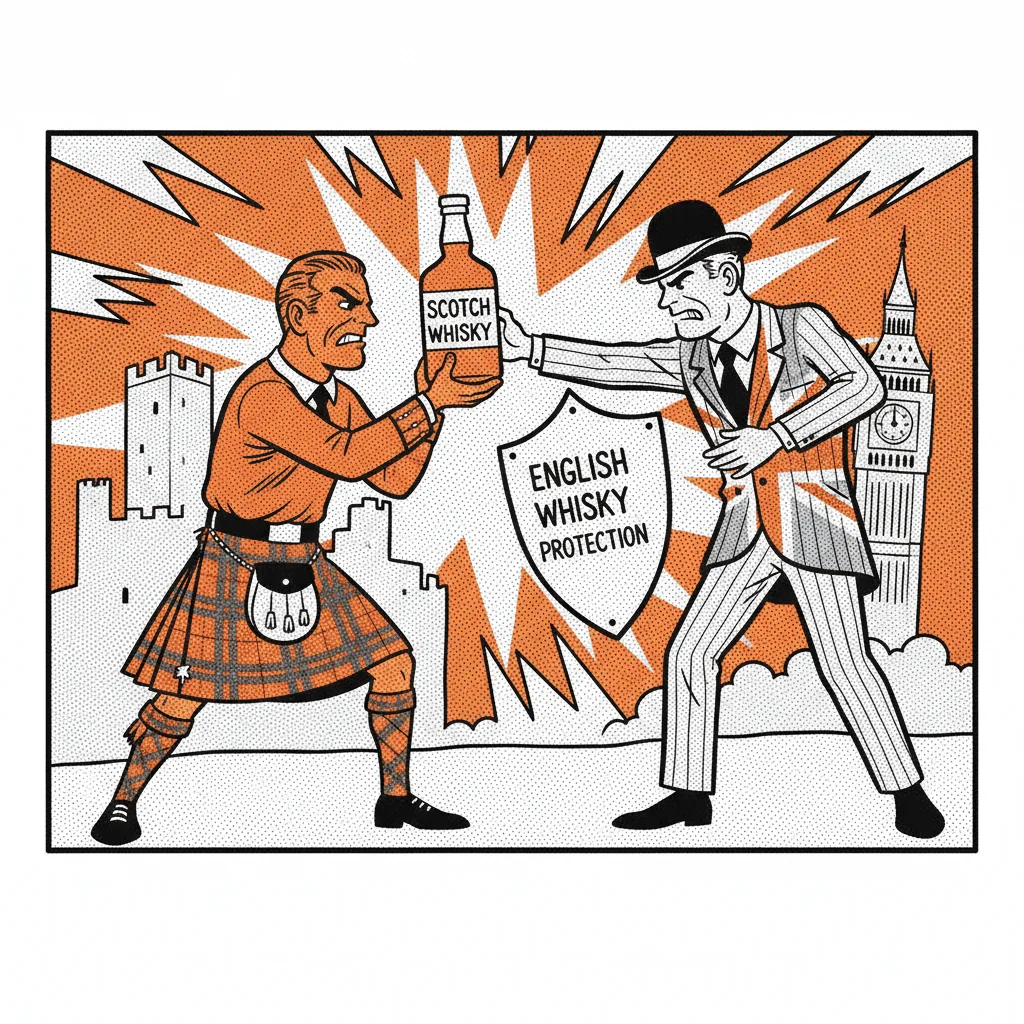
Scotland's whisky industry generates more than £5 billion in export value annually, according to the Scotch Whisky Association's own trade data, making it the UK's single largest food and drink export. Now the SWA is in the appeals process after taking issue with regulatory protections extended to English whisky producers, which it argues risk diluting the geographical and quality standards that underpin Scotch's global premium.
The dispute centres on Geographical Indication protections: the legal framework that ties a product's name to its place of origin. Think Champagne, Parmigiano-Reggiano, or Melton Mowbray pork pies. These are not marketing gimmicks; they are enforceable intellectual property rights with real commercial weight. For Scotch whisky, those protections are the reason a bottle commands a premium in Tokyo, New York, or Dubai. Any blurring of what constitutes a protected British whisky category is, from the SWA's perspective, a direct threat to brand integrity built over more than a century.
The English whisky sector has grown quickly. The Whisky Exchange estimates there are now more than 50 English distilleries in operation, many producing well-regarded single malts and blends. That growth is a good-news story for British drinks manufacturing overall, but it raises a pointed question: when the term 'British whisky' is used in marketing or regulation, where does Scotch end and everything else begin? The SWA's position is that any regulatory framework must maintain unambiguous distinctions, not smooth them over for administrative convenience.
This is also a post-Brexit story. Before 2021, Geographical Indication disputes involving UK products were adjudicated under EU frameworks, which offered a well-tested appeals structure. The UK's domestic GI regime, still relatively young, is being stress-tested by exactly this kind of cross-border industry dispute. According to the UK Intellectual Property Office, the domestic GI register now carries hundreds of products, but the legal precedents for enforcement and appeals remain thin. The SWA's challenge, whatever its outcome, will help shape how those rules bed in.
For Scottish businesses beyond the distilling sector, the case is worth watching closely. Scotland's food and drink sector, worth more than £15 billion to the Scottish economy according to Scottish Government figures, depends heavily on provenance as a commercial differentiator. From Arbroath Smokies to Stornoway Black Pudding, the ability to say 'this is genuinely Scottish' and have that backed by enforceable law is a competitive advantage. If the appeals process produces a weaker or muddier GI framework, that advantage erodes, not just for whisky, but for every Scottish producer whose product commands a premium because of where it comes from.