

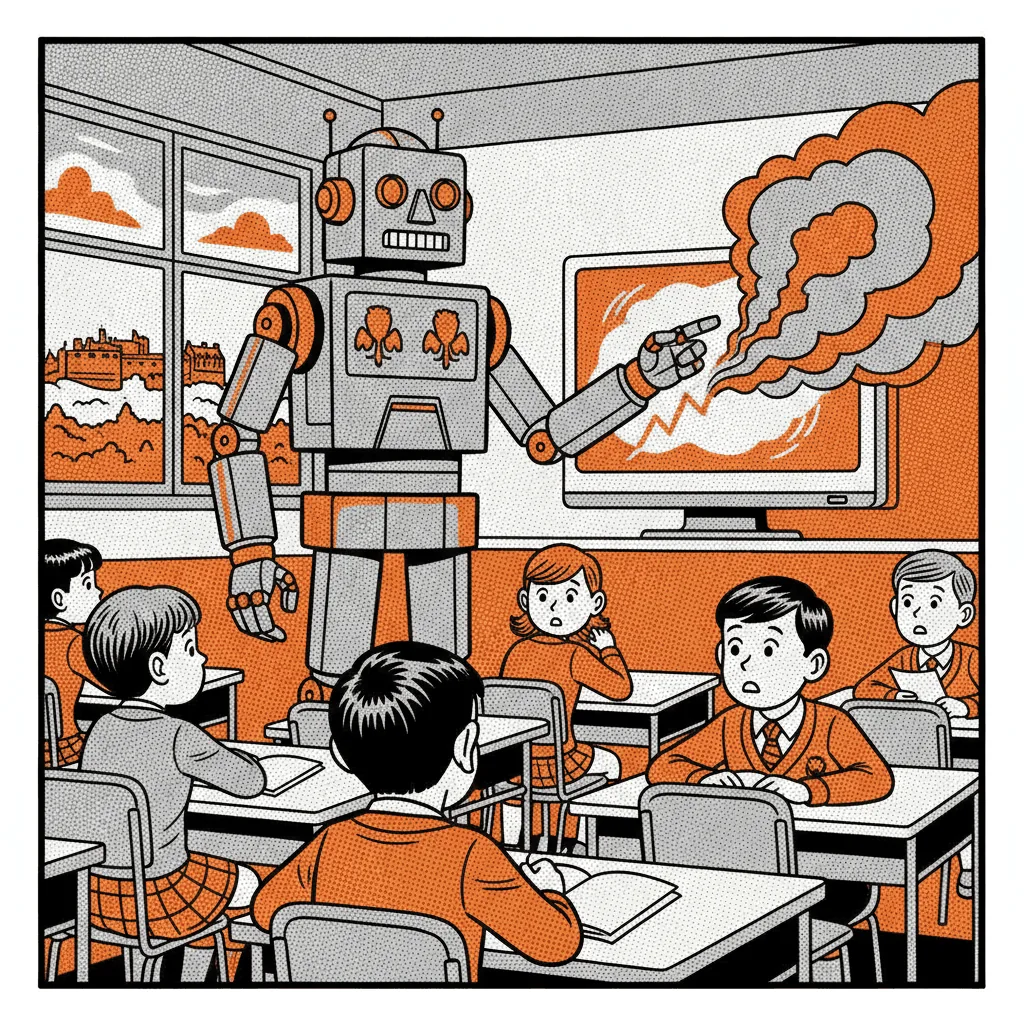
Jamie Laycock holds what is believed to be Scotland's first dedicated AI teaching role, and the headline message from his classroom isn't "use AI for everything." It's the opposite. His students are learning to interrogate AI outputs, spot hallucinations, question sourcing, and understand when the tool is useful and when it's confidently wrong. That's the literacy gap that most adult workplaces haven't closed yet.
Laycock's approach reflects a growing consensus in education research. The OECD's 2024 report on AI in schools found that critical evaluation of AI-generated content is now considered a core digital literacy skill, on par with reading comprehension. Meanwhile, research from the University of Edinburgh's Moray House School of Education has flagged that Scottish pupils are arriving at school already using AI tools, often without any structured guidance on their limitations. Laycock is building that framework from the ground up.
The stakes extend well beyond the classroom. According to the Scottish Government's Digital Strategy, Scotland needs to produce a digitally confident workforce capable of working alongside AI systems in healthcare, public services, and business. That ambition lives or dies on whether young people can think critically about what AI tells them, not just operate it. A pupil who accepts every AI output at face value is a liability in any knowledge-based job. One who can evaluate, edit, and direct it is a genuine asset.
For Scottish SMEs, this is quietly significant. The businesses hiring in five years will be drawing from a talent pool shaped by teachers like Laycock. If that cohort arrives already trained to use AI as a thinking tool rather than an answer machine, the productivity gains compound fast. The reverse is also true: staff who over-rely on AI without checking outputs create compliance risks, client trust issues, and expensive errors. The BBC Scotland report notes that Laycock is explicit with pupils about this, telling them directly not to trust everything AI tells them.
Scotland has an opportunity to get ahead of the rest of the UK here. England's AI in education provision remains patchy, with no equivalent dedicated role at this scale reported elsewhere. If Scottish schools embed this kind of structured AI literacy early, backed by the Scottish Government's curriculum development work, the country produces graduates who are genuinely more employable and more entrepreneurially capable. That is a competitive advantage worth naming.