

Roughly one in three eighth-grade students in the United States currently lacks basic reading skills, according to the most recent National Assessment of Educational Progress, the largest proportion ever recorded in the test's history. High school seniors fared no better: average reading scores in 2024 dropped to their lowest point in a generation. The causes are well-documented, pandemic school closures, chronic absenteeism, and a systemic underinvestment in early reading intervention. The consequences, for individuals and for economies, are severe.
Scotland is not watching from a comfortable distance. The Scottish Government's own Programme for International Student Assessment data shows persistent attainment gaps between pupils from the most and least deprived backgrounds, gaps that widened during Covid and have proved stubbornly slow to close. According to the Scottish Attainment Challenge progress reports, literacy and numeracy remain the two areas where the gap is most pronounced and most consequential. These are not abstract statistics. They are the children who will become the workforce, the patients, the voters, and the entrepreneurs of the next twenty years.
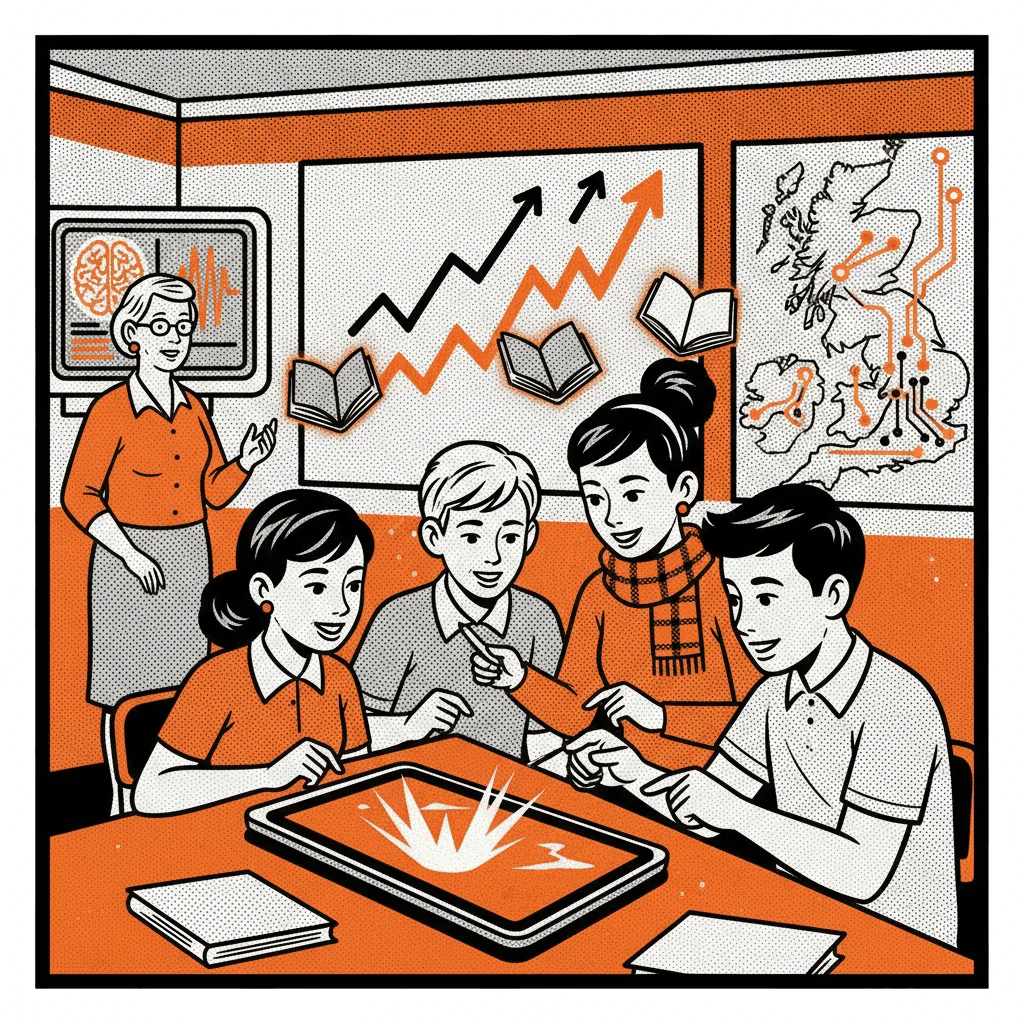
What American districts are finding is that AI literacy tools, deployed thoughtfully, can do something human-only classrooms struggle to do at scale: give every child a personalised reading experience, at exactly their level, with immediate feedback. Platforms that use adaptive algorithms to adjust text complexity in real time, tools that analyse oral reading fluency through a tablet microphone and flag where a child is stumbling, and AI-generated reading comprehension exercises tailored to a pupil's interests, are all now in active classroom use across US districts. The results being reported are not marginal. Some districts cite measurable reading age gains within a single semester of consistent use.
The University of Edinburgh's Moray House School of Education has been tracking EdTech adoption in Scottish classrooms and has consistently noted that the barrier is rarely technological. It is training, confidence, and procurement. Teachers who understand what an AI reading tool actually does, and why, integrate it effectively. Those handed a login and a PDF guide largely do not. The tools are only as good as the professional development wrapped around them. That is a solvable problem, and it is one that Local Authority digital leads, Business Gateway-supported EdTech startups, and organisations like Education Scotland are well-placed to address together.
For Scottish schools and education authorities, the practical playbook emerging from the US experience is clear. Start with diagnostic tools that identify specific gaps rather than general underperformance. Use AI reading assistants as structured supplements to direct teacher instruction, not replacements for it. Prioritise tools that generate data teachers can actually act on within the school week, not end-of-term reports nobody has time to read. And look at what is already available: platforms like Lexia, Freckle, and Reading Plus are operating in UK schools now, with pricing models that work for Scottish Local Authority procurement frameworks.