

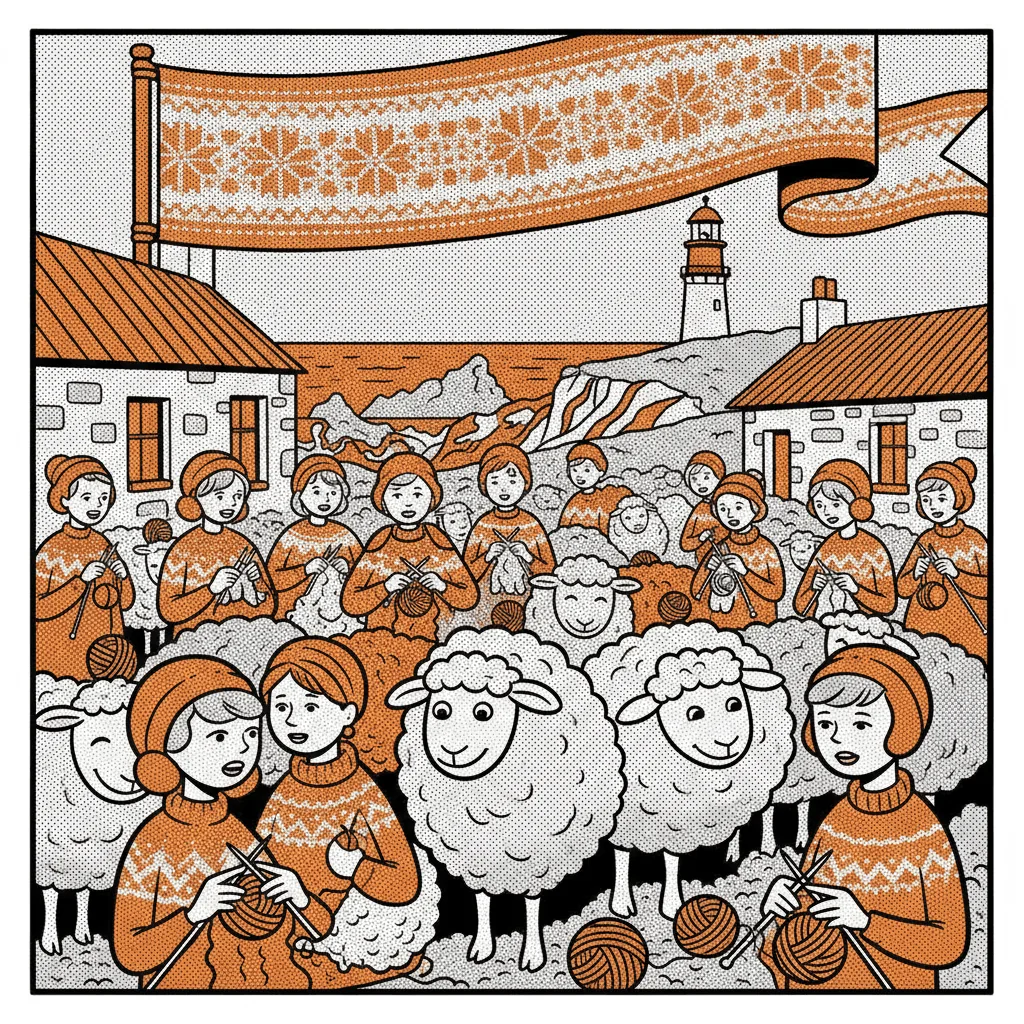
Shetland Wool Week is not a trade fair. It is not a festival in the conventional sense. It is, at its core, a community deciding that what it knows and makes is worth celebrating loudly enough for the world to hear. And the world, it turns out, agrees. Knitters, textile designers, and craft tourists travel from North America, Japan, Australia, and across Europe every autumn to spend a week on an archipelago of fewer than 23,000 people, learning to work with wool from sheep that have grazed these islands for centuries.
The event, now in its 17th year, is organised by Shetland Amenity Trust and has become a masterclass in destination tourism built entirely around authentic local identity. According to VisitScotland, craft and heritage tourism is one of the fastest-growing segments of the Scottish visitor economy, with rural and island destinations increasingly competing on distinctiveness rather than infrastructure. Shetland Wool Week has distinctiveness in abundance.
Each year the event selects a Patron, typically a Shetland knitter whose work represents the living tradition of Fair Isle and Shetland lace. Workshops sell out months in advance. Attendees book accommodation a full year ahead. Local producers, yarn dyers, and makers see a concentrated surge in sales and commissions that, for some small businesses, represents a significant portion of their annual income. This is community-rooted commerce, functioning exactly as it should.
The Scottish Government's Culture Strategy, published in 2019 and refreshed since, identifies craft and making as central to Scotland's cultural economy, not as nostalgia but as living industry. Shetland Wool Week sits squarely in that framing. The Shetland textile sector supports employment across spinning, dyeing, design, retail, and export, with producers like Jamieson and Smith supplying yarn to makers worldwide. The week amplifies all of it.
There is also a straightforward lesson here for any Scottish small business wondering how to build an audience beyond its immediate geography. Shetland Wool Week did not find its global following through paid advertising. It built something real, told the story honestly, and let the community of interest do the rest. In 2024, that is a content and brand strategy. In Shetland, it is simply how things have always been done.