

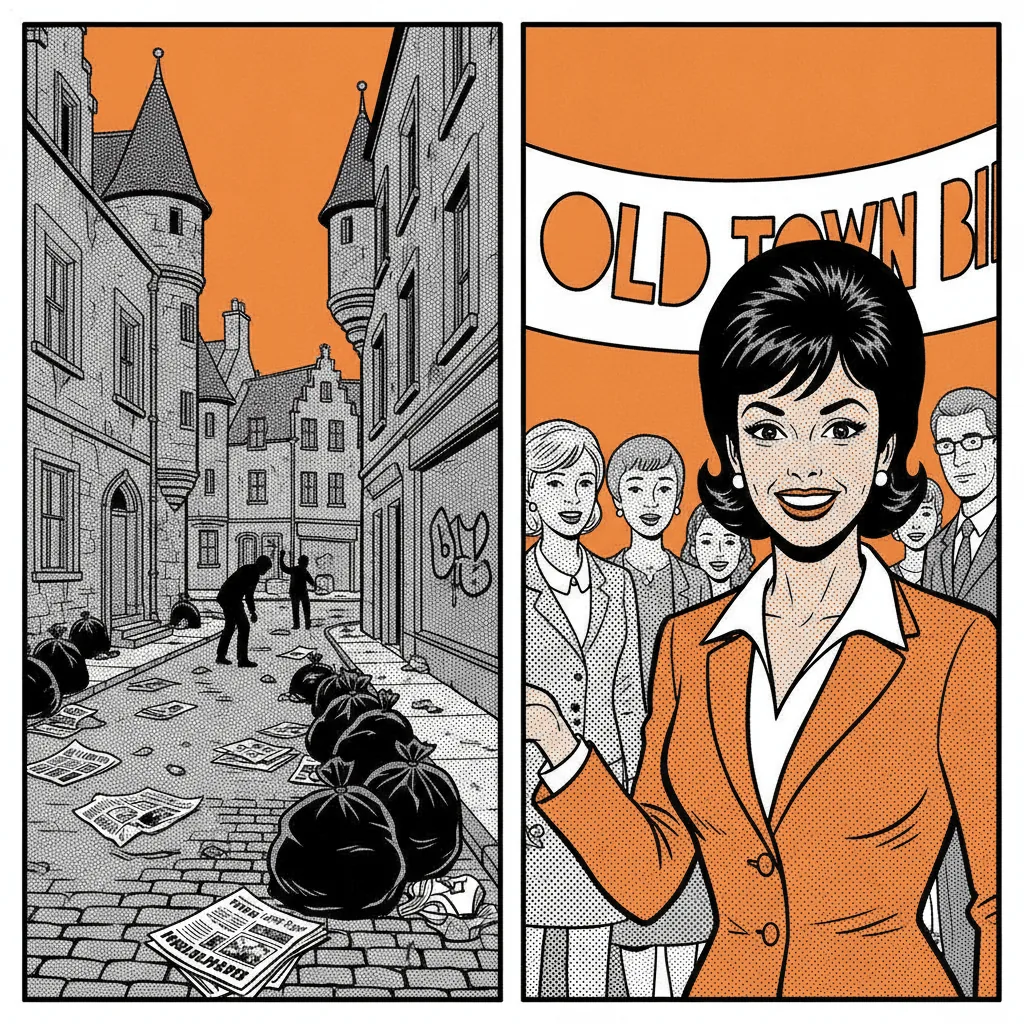
The campaign to establish a Business Improvement District in Edinburgh's Old Town is moving into its next phase, with the co-chair of the initiative saying she is 'encouraged' by the level of support already expressed by businesses in the area. That support is not unconditional. When traders were asked what they needed fixing, two issues dominated: streets that are too dirty and anti-social behaviour that is deterring both customers and staff.
A BID works by levying a small, ring-fenced charge on eligible businesses within a defined area, then pooling that money to fund services and improvements that the local authority either cannot or does not provide. There are currently around 300 BIDs operating across the UK, according to the British BIDs industry body, and the evidence broadly shows that well-run BIDs increase footfall, reduce vacancy rates, and give independent traders a collective voice they rarely get on their own. Edinburgh already has BIDs operating in the Rose Street and Grassmarket areas, so the model is not untested here.
The Old Town case is particularly pointed. This is one of Scotland's most visited corridors, pulling millions of tourists past the closes and closes of the Royal Mile every year, yet the businesses that service those visitors have long complained that the environment they are trading in does not reflect the premium experience visitors expect. Litter, rough sleeping, and late-night disorder are not new complaints, but they are persistent ones, and the BID process gives traders a formal mechanism to do something about them beyond writing letters to the council.
The City of Edinburgh Council has faced sustained pressure on its cleaning and enforcement budgets. According to Keep Scotland Beautiful's most recent National Litter and Littering Attitude Survey, Scotland's town and city centres remain among the areas where litter perception is worst, with high-footfall tourism zones consistently flagged. Meanwhile, research from the Association of Town and City Management shows that businesses in areas with active BIDs report measurably higher confidence in their local trading environment than those without. Those are not abstract statistics for a café owner on the Canongate or a bookshop on the Lawnmarket; they translate directly to whether people choose to spend time, and money, in the area.
The BID ballot, when it comes, will require a majority of businesses both by number and by rateable value to vote yes before it can proceed. That means smaller independents have genuine democratic weight here, not just the large hotel chains and chain retailers. The campaign team is currently in consultation mode, and this is the window in which individual business owners can shape what the BID actually does: its budget priorities, its enforcement focus, its cleaning contracts. Waiting until after the ballot is too late to influence the brief.