

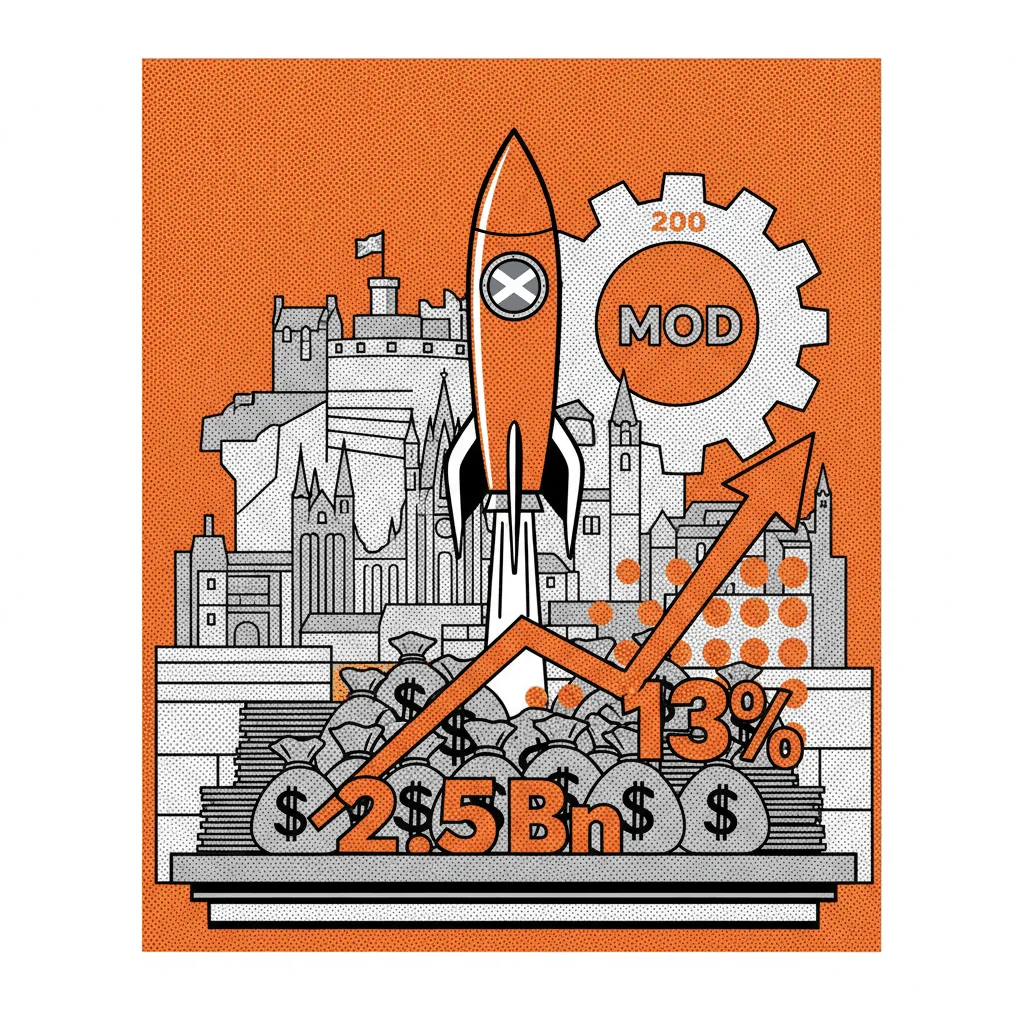
The Ministry of Defence spent £2.5 billion in Scotland in a single financial year, according to figures released by the MoD itself, a 13% increase in real terms and the highest figure on record. That is not a rounding error. It is a significant and deliberate injection of public money into the Scottish economy, and a substantial share of it moves through private sector supply chains before it reaches its end point.
Defence spending at this scale does not stay inside the wire. It reaches fabricators in Fife, IT firms in Edinburgh, logistics operators in Aberdeen, facilities managers in Argyll. According to the Scottish Government's economic data, defence and aerospace already support tens of thousands of jobs across Scotland, many of them in SMEs operating two or three steps removed from the prime contractor. A record headline figure at the top means more work filtering down.
The timing matters. NATO members are under sustained pressure to increase defence expenditure toward 3% of GDP, and the UK Government has committed to raising its own defence budget significantly over the coming years. Analysts at the Royal United Services Institute (RUSI) have noted that this uplift will disproportionately benefit regions with existing defence infrastructure, which puts Scotland, home to Faslane, Lossiemouth, Leuchars, and a dense cluster of defence-adjacent manufacturers, in a strong position to capture further spend.
The practical entry point for Scottish SMEs is the MoD's Defence Sourcing Portal (DSP), the UK Government's primary procurement gateway for defence contracts. It is publicly accessible, free to register on, and lists opportunities from facilities management and catering through to cyber security, engineering support, and professional services. Scots Business Gateway and Scottish Enterprise both offer specific support for SMEs exploring public sector and defence procurement routes, including help navigating security vetting requirements and framework agreements.
There is a broader point here worth sitting with. Defence budgets are, politically, among the most durable in any economic environment. When public spending tightens, health and defence tend to hold their ground while other departments absorb cuts. For Scottish SMEs looking to reduce revenue concentration risk, a foothold in defence supply chains offers a degree of counter-cyclical stability that few other sectors can match. The record £2.5 billion figure is a signal, not a ceiling.