

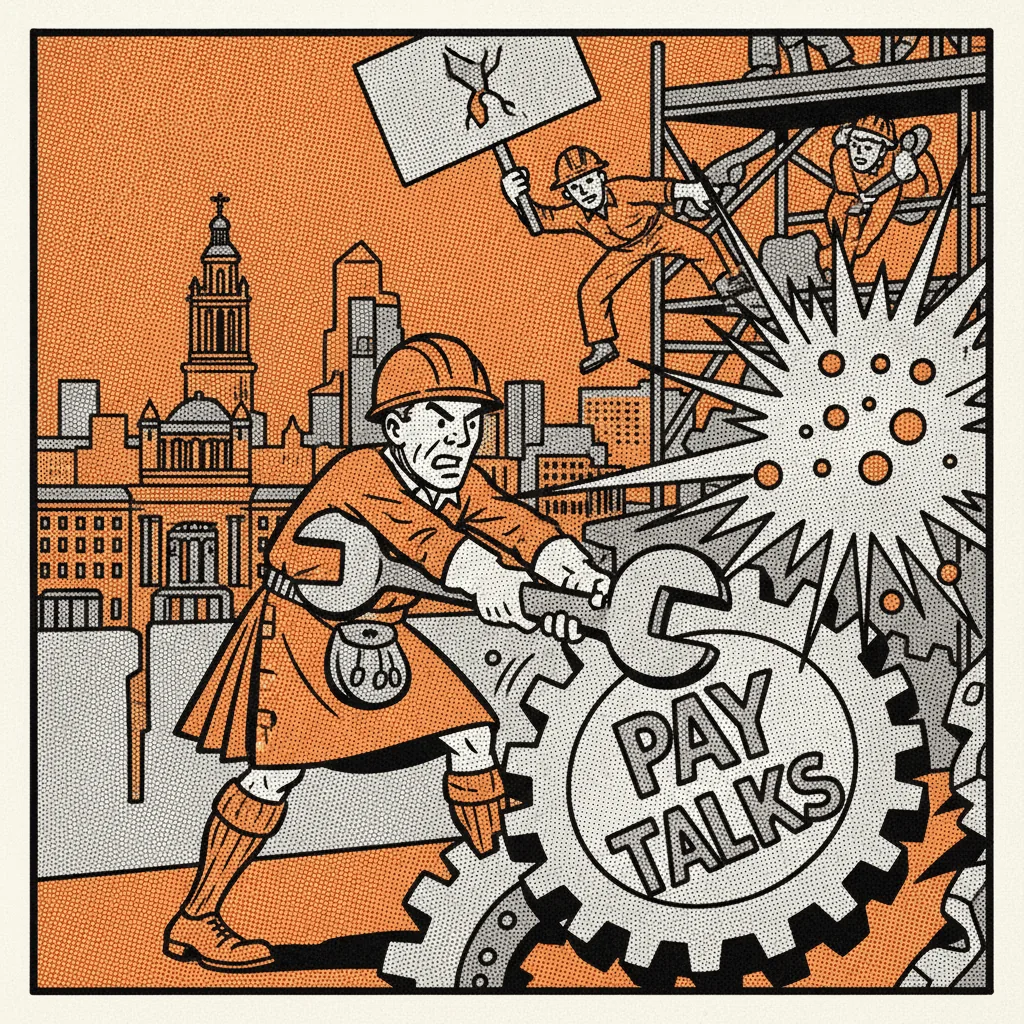
Glasgow City Council has confirmed it intends to issue dismissal and re-engagement notices to all 24,000 of its staff after pay talks with trade union Unison broke down without agreement. The move, reported by The Scotsman, is the largest fire-and-rehire operation ever attempted by a Scottish public body, and one of the most significant in UK labour relations history. The council says it has no other route to implement new terms and conditions. Unison says it is a betrayal of workers who kept the city running through years of austerity and a global pandemic.
Fire and rehire, as a tactic, sits in a legal grey area. It is not banned in Scotland or the UK, despite a Private Member's Bill that would have restricted the practice failing to pass Westminster in 2021. The practice allows an employer to change contractual terms by ending existing contracts and offering new ones, often on less favourable terms. Employees who refuse the new contract are effectively dismissed. According to the Chartered Institute of Personnel and Development, one in ten UK employers used or threatened to use fire-and-rehire tactics during the pandemic period alone, a figure that shocked employment lawyers and union officials across the country.
The immediate risk for businesses in Glasgow is supply chain and service disruption. A city council employs refuse collectors, social workers, school staff, roads maintenance crews, and hundreds of administrative functions that underpin the daily running of a major city. If workers strike, go slow, or simply disengage in the way workers often do when they feel betrayed, the knock-on effects for SMEs operating in Glasgow are real. Construction timelines that depend on planning approvals, hospitality businesses relying on waste collection running on schedule, care businesses dependent on council-commissioned services, all of it gets harder when the machinery of local government seizes up.
For Scottish SMEs more broadly, this story is a signal about where wage and employment pressures are heading. The council's position is essentially that it cannot meet current pay demands within its budget envelope. That same pressure, the gap between what workers need to live on and what employers can afford to pay, is being felt in every sector across Scotland. The Scottish Government's Fair Work agenda, which Scottish Enterprise actively champions as a condition of some public funding, sets expectations around pay, voice, and security at work. A public body attempting fire and rehire sits uncomfortably against that framework, and the political fallout will run for months.
Unison Scotland has called the move an attack on workers' rights and is considering its legal options. Employment law specialists point out that while fire and rehire is technically lawful in specific circumstances, it carries significant reputational risk and can constitute unfair dismissal if a tribunal finds the employer did not genuinely exhaust alternatives. According to ACAS guidance updated in 2021, employers are expected to explore all reasonable alternatives before resorting to dismissal and re-engagement, and tribunals look carefully at whether good faith bargaining actually took place. Glasgow City Council will need to demonstrate it did everything else first. Whether that case holds up remains to be seen.