

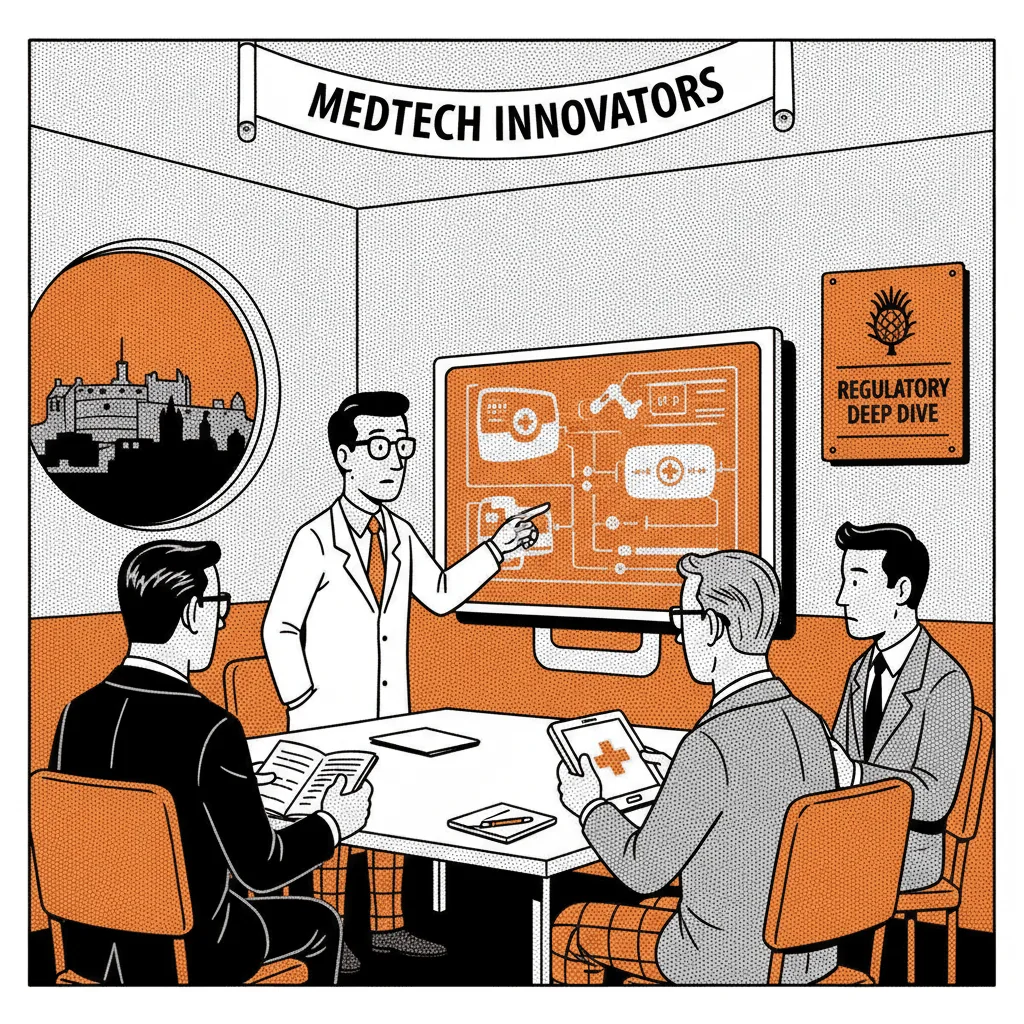
Scottish MedTech is a serious sector. According to the Scottish Government's health innovation strategy, Scotland's medical technology industry contributes over £1.8 billion to the economy and employs more than 10,000 people, with a cluster of early-stage companies growing quietly around Edinburgh and the central belt. The problem is not talent or ambition. The problem is regulation, and more precisely, founders who cannot explain it clearly to investors who are allergic to compliance risk.
The workshop, hosted in Edinburgh, is designed to close that gap. The format offers a structured, expert-led deep dive into the regulatory frameworks governing medical devices and health technology products, with a specific focus on what investors actually need to see before they will write a cheque. That means covering the UK Conformity Assessed marking process that replaced CE marking post-Brexit, MHRA approval pathways, clinical evidence requirements, and the quality management standards that institutional investors treat as baseline hygiene.
This matters more than most founders realise. Research from the Medilink network, which supports UK health-tech businesses, consistently finds that regulatory unpreparedness is one of the top three reasons early-stage MedTech deals stall or collapse entirely. It is rarely about the technology. It is about whether a founder can stand in front of a due diligence team and demonstrate that they understand the path to market, the risks on that path, and the costs involved in navigating them. Investors are not looking for perfection; they are looking for competence and clarity.
For Scottish founders, the post-Brexit regulatory environment has added a genuine layer of complexity. The UK's divergence from EU MDR and IVDR rules means that a product roadmap now needs to account for two separate regulatory territories if founders intend to sell across Europe. The Medicines and Healthcare products Regulatory Agency has been working through a significant reform programme, and keeping pace with that while also building a product and pitching investors is, frankly, brutal for a small team. Events like this one exist precisely because most founders cannot afford a full-time regulatory affairs director at seed stage.
Scottish Enterprise and Highlands and Islands Enterprise have both identified health innovation as a priority sector for inward investment and domestic scale-up support. Business Gateway Edinburgh runs a programme of events supporting early-stage founders, and the wider Scottish health innovation ecosystem, including NHS Scotland's innovation hubs and the Edinburgh BioQuarter, provides a genuinely strong foundation for MedTech businesses that get the fundamentals right. Knowing your regulatory position is, at this point, a fundamental. Investors across the sector know it, and founders who walk into a pitch without that clarity are leaving money on the table.