

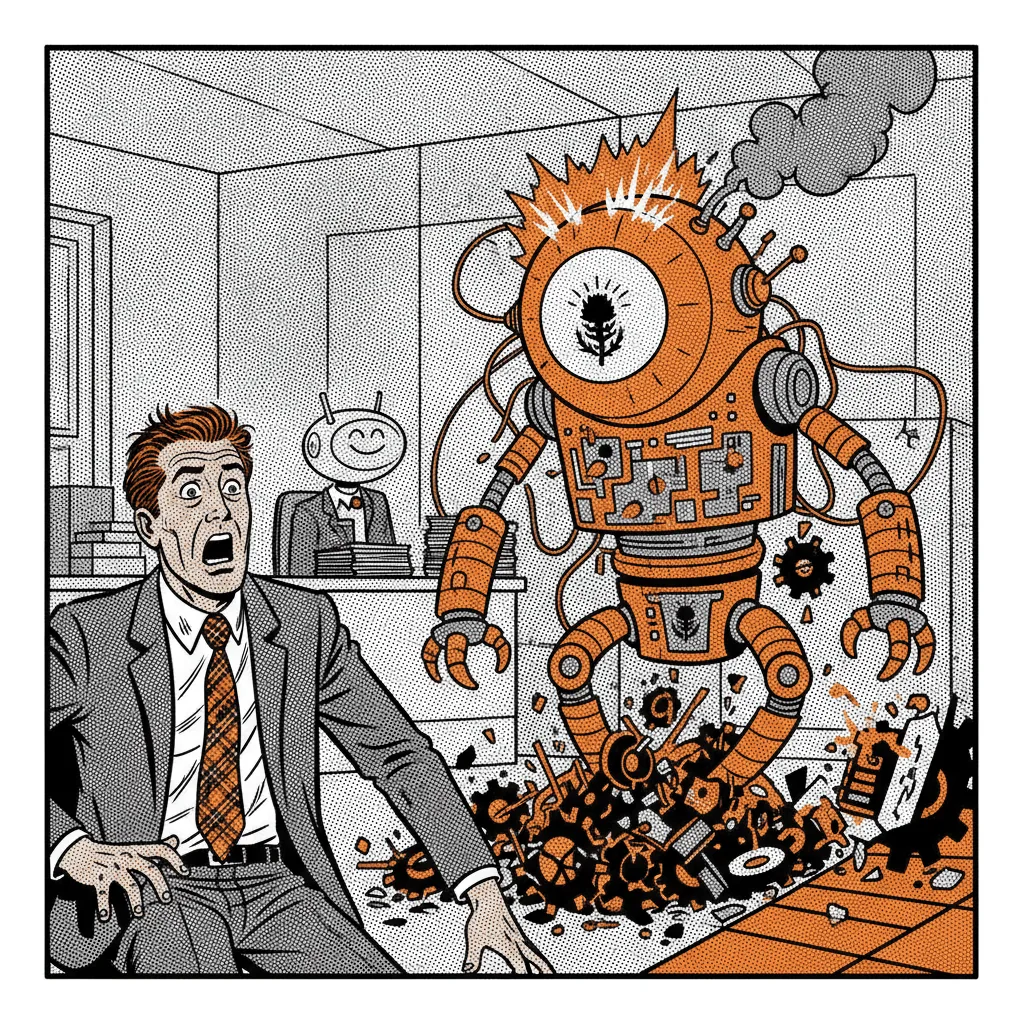
The AI arms race is real, but it isn't your race to run. GPT-4 gave way to GPT-4o. Claude 3 became Claude 3.5 Sonnet, then Claude 3.7. Gemini is on its third major iteration. Each launch arrives with claims of superior reasoning, faster output, and better context handling, and each one tempts businesses into the upgrade cycle before they've finished learning the last tool. According to research from the Stanford HAI 2024 AI Index, the pace of new frontier model releases has more than doubled since 2022. For a solopreneur in Leith or a five-person healthcare admin team in Dundee, that pace is not a gift. It's a trap.
The core problem is that "technically superior" and "better for your specific work" are not the same thing. A model trained to outperform rivals on academic reasoning benchmarks may be slower, more expensive, and frankly overkill for a GP practice that needs AI to draft patient letters and summarise referral notes. According to analysis by the UK's Alan Turing Institute, most enterprise AI adoption failures trace back to mismatched capability, not insufficient technology. Businesses bought power they couldn't use, paid for complexity they didn't need, and then blamed AI when the ROI didn't materialise.
Cost is the piece most SME owners underestimate. Frontier models, the absolute latest, highest-performing releases, consistently carry premium API pricing. OpenAI's GPT-4o, for example, costs roughly ten times more per token than GPT-3.5 Turbo for tasks where the older model performs identically. If your use case is drafting social media posts, summarising meeting notes, or triaging customer enquiries, you are likely leaving money on the table every month by running the heavyweight. The Scottish Government's own Digital Economy Strategy, updated in 2023, explicitly flags disproportionate technology spend as one of the primary barriers to sustainable digital adoption in Scottish SMEs. Cheaper, older, proven models often serve those businesses better.
The smarter question isn't "is this the best model?" It's "is what I'm already using creating a genuine bottleneck?" If your current AI tool is producing output you have to heavily rewrite, refusing tasks it should handle, or slowing your workflow down, an upgrade conversation is worth having. If it's doing the job adequately and you're simply feeling FOMO from tech newsletters, it isn't. A practical test: run the same five prompts you use every week through both your current model and the new contender. Time them. Read the outputs blind. If you can't tell the difference, you've saved yourself a subscription fee.
There is one exception worth naming. When a new model introduces a genuinely new capability, not a performance bump, but something that didn't exist before, that changes the calculation. Multimodal input (feeding an AI an image or a PDF and getting structured analysis back) was a meaningful leap. Voice-to-text reasoning was another. If an upgrade unlocks something your business literally cannot do today, that's not an upgrade, it's a new tool. Evaluate it on those terms. Everything else is a software update dressed up as a revolution, and the best thing a time-poor Scottish business owner can do is read the changelog before they reach for the credit card.