

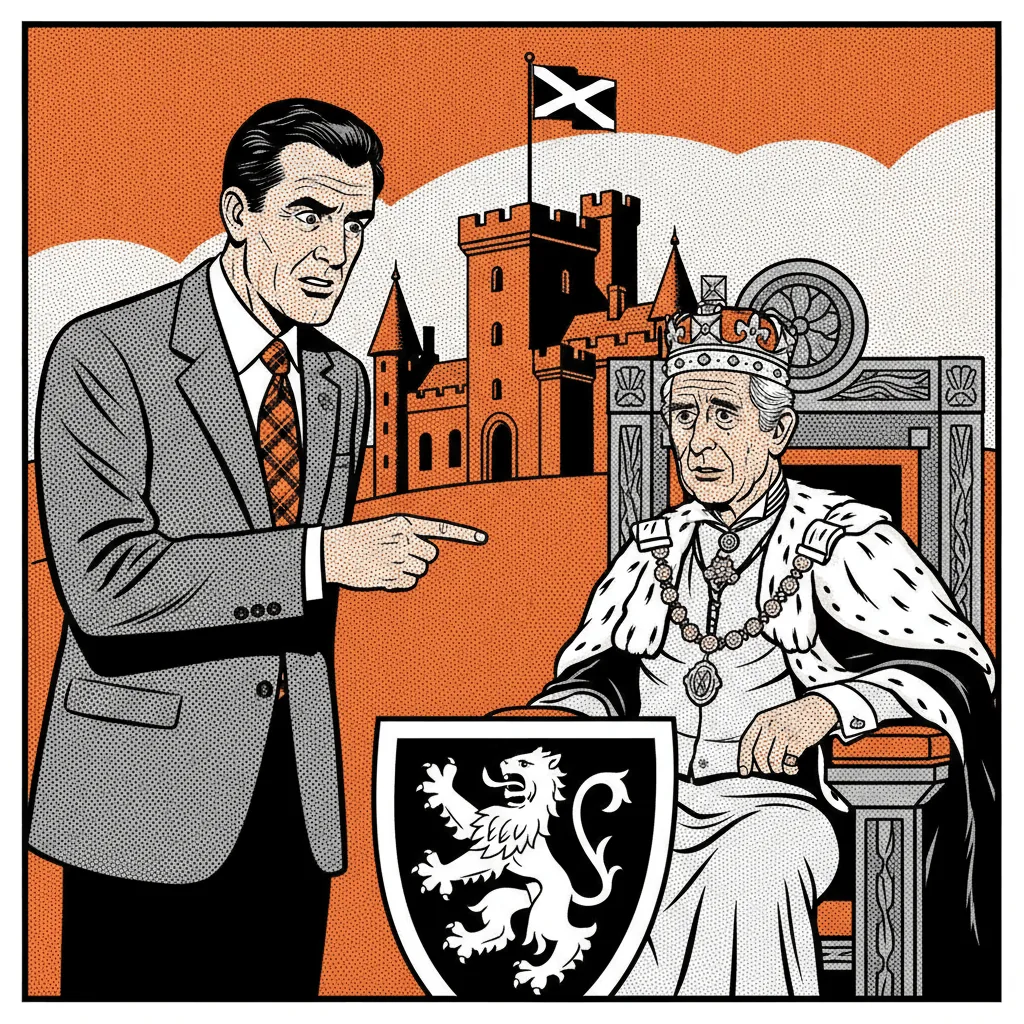
A Scottish MSP has written to King Charles asking whether Balmoral Estate is liable for Aberdeenshire Council's new 200 per cent council tax premium on second homes. The policy, introduced under powers granted by the Scottish Government, allows councils to charge up to triple the standard rate on properties not used as a primary residence. Aberdeenshire went full tilt and applied the maximum. It turns out that includes some very grand addresses.
The royal angle is good theatre, but the substance matters more. The Scottish Government's decision to grant councils this premium power, via the Council Tax (Variation for Unoccupied Dwellings) (Scotland) Regulations, was a deliberate policy lever designed to push second-home owners either into full-time residency, long-term rental, or sale. According to the Scottish Government's own figures, there are approximately 24,000 second homes registered in Scotland, concentrated heavily in rural and coastal areas: Argyll, Highland, Aberdeenshire, and the Borders. That concentration is not coincidental. It maps almost perfectly onto Scotland's most economically fragile communities, where housing stock is tightest and local wages are lowest.
For SMEs in rural tourism and hospitality, this creates a two-sided market shift. On the supply side, some second-home owners will convert properties to short-term lets to offset the tax hit, which could increase competition for established hospitality operators. On the other side, properties that move into long-term rental or sale could ease the housing crisis that has been quietly throttling Scotland's rural workforce for a decade. The inability to house staff is the number one operational constraint cited by Highland and Island hospitality businesses, according to Highlands and Islands Enterprise's recent rural economy research. Fewer empty second homes means more homes for the people who actually work in these communities.
The short-term let licensing regime, already live across Scotland and mandatory in Edinburgh since 2022, adds another layer. Any second-home owner looking to pivot to Airbnb-style letting to dodge the council tax premium now faces licence fees, safety inspections, and planning conditions in many areas. The Scottish Government has been deliberate in stacking these policies together. That is not an accident; it is a coordinated attempt to return housing stock to primary use. Estate agents in Braemar and Ballater are already reporting increased instruction levels, according to industry commentary in The Herald.
Whether Balmoral itself pays, gets an exemption, or quietly settles the matter through one of the several reliefs available under Scottish legislation is almost beside the point. The political value of an MSP asking the question publicly is that it demonstrates the policy has no carved-out aristocratic loophole, which is precisely the kind of signal that gives a tax instrument credibility. If the policy bends for a castle, it loses its teeth everywhere else. The Scottish Government will be hoping the answer, whatever it is, confirms that everyone pays.