

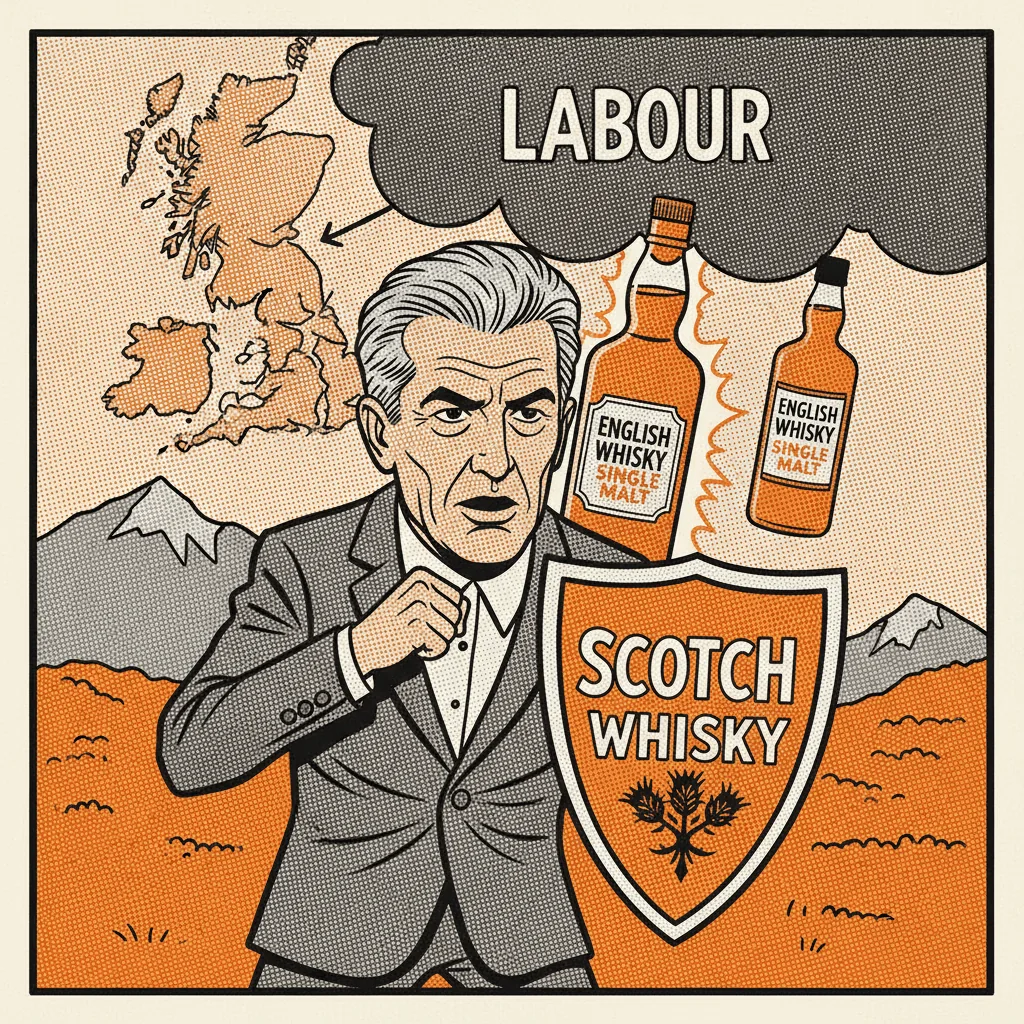
Scotch whisky generates around £5 billion in export value annually, according to the Scotch Whisky Association, making it the UK's single largest food and drink export. The term 'single malt' is not just a category description; it is a promise to a consumer in Tokyo, New York, or Seoul that what is in the bottle meets a specific, rigorously defended standard. Labour's amendment to UK spirits regulations threatens to hollow out that promise, and do so quietly, with minimal parliamentary debate.
The change allows English distillers to label their products 'single malt whisky' under a definition that diverges from the protected standards governing Scotch. The Scotch Whisky Regulations 2009 define single malt Scotch with precision: distilled at a single distillery, from malted barley, in pot stills, aged at least three years in Scotland. Those rules exist because they underpin the global premium that Scotch commands. Blur the definition, and you blur the premium. Blur the premium, and you cost Scottish businesses real money.
Lib Dem MP Alistair Carmichael, writing in The Scotsman, has called the move a direct threat to Scotch's protected status. His concern is well-founded on commercial grounds alone. The moment 'single malt' becomes a term that can be applied to spirits produced under looser standards elsewhere in the UK, international buyers and trade partners have legitimate grounds to question what the label actually guarantees. The European Union, which has its own geographical indication frameworks, will be watching closely, and the implications for post-Brexit trade negotiations around Scottish food and drink GIs are not trivial.
The Scottish Food and Drink sector supports around 120,000 jobs, according to Scottish Enterprise, and whisky is its anchor product. Independent bottlers, tourism operators running distillery experiences, exporters, and the dozens of Edinburgh-based food and drink businesses that trade on Scotland's premium provenance credentials all sit downstream of the Scotch brand. When that brand is diluted at a regulatory level, the damage does not stop at the distillery gates. It moves through the supply chain. A retailer in Frankfurt stocking both Scottish and English 'single malts' at different price points is a different commercial environment to the one Scottish producers have built their strategies around.
The deeper frustration here is structural. Scotland did not vote for this change, was not meaningfully consulted on it, and stands to absorb the commercial consequences of a decision made in Westminster to benefit an emerging English industry at the expense of an established Scottish one. According to the Scottish Government's own economic data, the food and drink sector is central to Scotland's export ambition and its rural economy. Regulations that undermine protected designations run directly counter to the trade strategy Scotland has been building. The Scotch Whisky Association has previously stated that geographical protections are 'fundamental to our commercial success.' This amendment tests that protection in a way the industry did not ask for and does not welcome.