

A consistent pattern is emerging across small and mid-sized businesses that have invested in AI: the tools get purchased, a quick demo happens, and then the team quietly goes back to doing things the old way. According to research published by McKinsey & Company, fewer than one in three large-scale technology transformations fully achieve their intended outcomes, and the primary culprit is almost never the software. It's the gap between what leadership envisions and what employees actually experience on the ground.
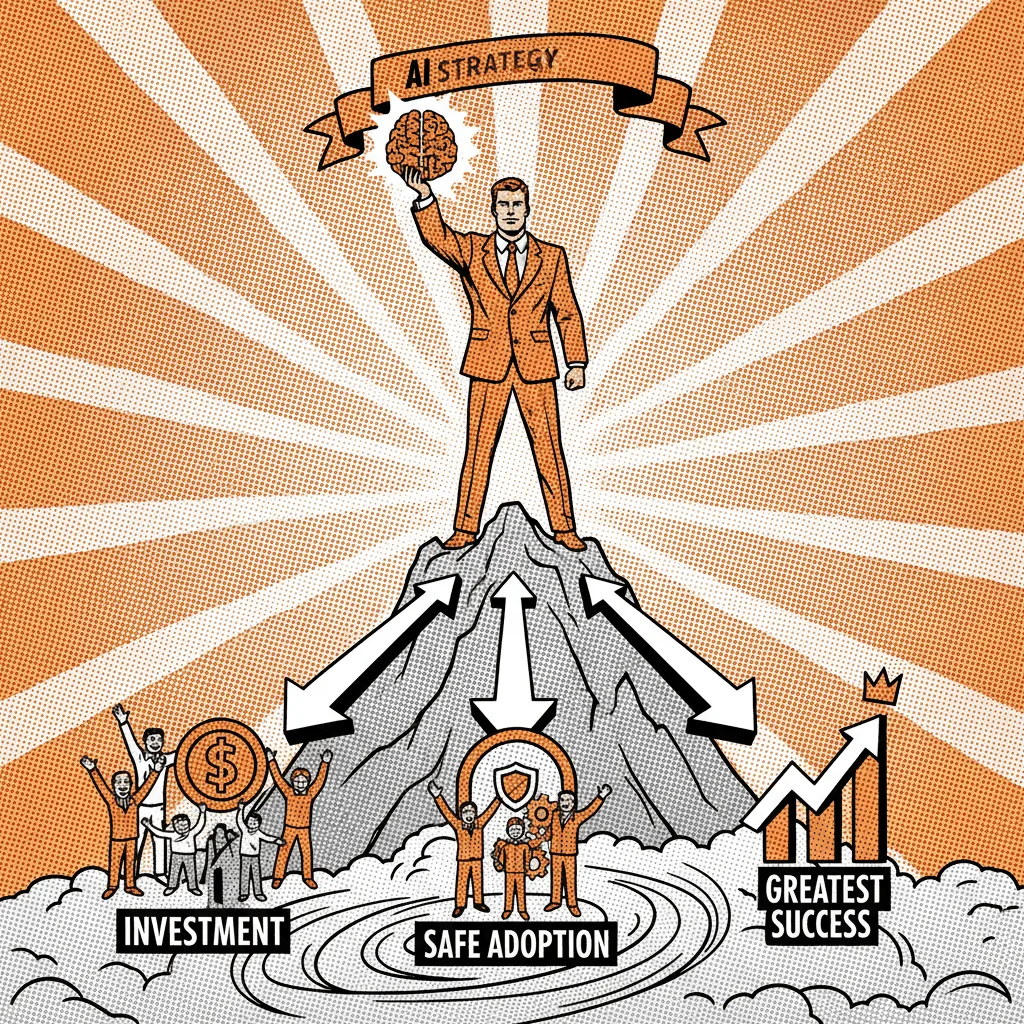
Entrepreneur.com's recent analysis of successful AI rollouts identifies three things that separate businesses where AI genuinely takes hold from those where it doesn't. First: leaders who model the behaviour themselves. When a business owner or department head visibly uses AI tools in their own work, in meetings, in decisions, in communications, it signals to the team that this isn't a tick-box exercise. It's real, it's valued, and it's expected. Employees take their cues from the top. If the boss still does everything manually, the message received is that AI is optional.
Second: framing matters enormously. Teams resist AI when they hear it as a cost-cutting measure or a veiled redundancy threat. They engage with it when it's positioned as an investment in them, a way to clear the drudgery so they can do more interesting work. The Scottish Government's own Digital Economy strategy, published in 2023, echoes this directly, noting that workforce confidence in digital tools rises significantly when people are brought into the "why" early and given genuine agency in how tools are adopted. That means involving staff in tool selection, not just tool deployment.
Third: psychological safety. People need to be able to get things wrong with a new tool without it being a career moment. If the first time a team member uses an AI writing tool or an automated scheduling assistant produces something imperfect, and they're pulled up for it, you've killed your adoption curve overnight. The businesses seeing the strongest returns from AI investment are the ones that treat the learning curve as a feature, not a failure. Citigroup's 2024 report on AI in the workplace found that organisations with structured experimentation time, even as little as 30 minutes per week, saw adoption rates double compared with those that expected proficiency immediately.
For Edinburgh SMEs specifically, the opportunity here is significant. Business Gateway Scotland offers free digital skills support and one-to-one advisory sessions that can help owners build an AI adoption plan suited to their team size and sector. And because small businesses move faster than large ones, a well-led AI rollout at a 12-person firm can outpace the implementation timeline of a 1,200-person corporate. That speed advantage is yours to take, but only if the human side of the strategy gets as much attention as the technical side.