

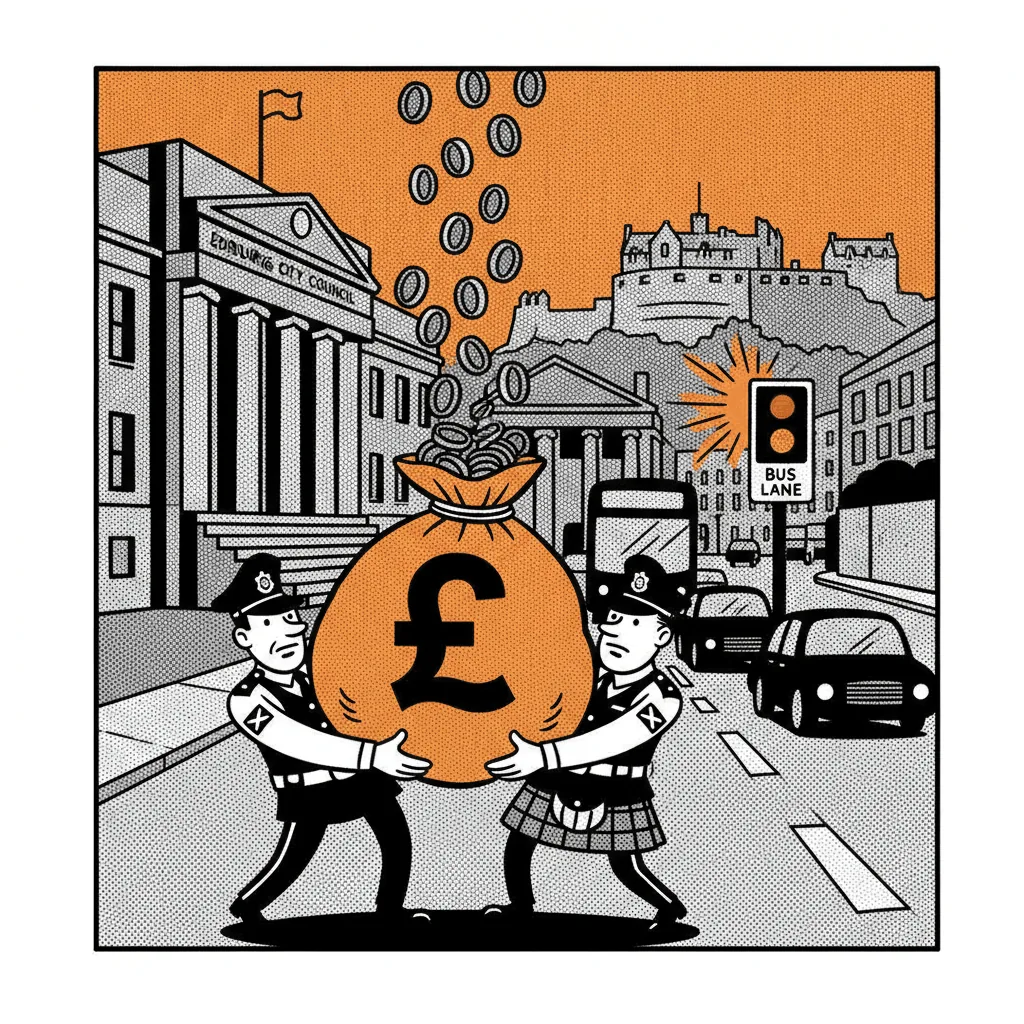
Six months. £1.1 million. Edinburgh's network of bus lane and bus gate cameras is not a passive piece of traffic infrastructure, it is an active revenue stream, and a significant one. According to data reported by the Edinburgh Evening News, the city sits second in Scotland and ninth across the UK for penalty notice charge collections in the first half of 2026. That pace, if it holds, puts the city on course to collect over £2 million from drivers by the end of the year.
For most private drivers, a penalty notice is an irritant. For an Edinburgh SME running delivery vehicles, trade vans, or staff cars on city routes, it is a recurring overhead that never appears in the budget. A single penalty notice currently sits at £60, reduced to £30 if paid within 14 days. Multiply that across a small fleet making multiple city-centre drops daily, and you are looking at a line item that can quietly eat into margins all year. According to the RAC Foundation, urban delivery vehicles are among the most frequently penalised category of road users in UK cities with active bus lane camera enforcement.
The enforcement regime in Edinburgh is deliberately tight. The city's bus gates, particularly on routes such as Nicolson Street, St Andrew Square, and Rose Street, are a persistent trap for drivers unfamiliar with the restrictions or navigating new delivery routes. The Scottish Government's Transport Scotland guidance is clear that bus lane enforcement is delegated to local authorities, who retain the revenue, with a statutory requirement that surplus funds beyond operational costs be reinvested in transport improvements. In Edinburgh's case, that reinvestment feeds into the broader Sustainable Travel Action Plan, which prioritises active travel and public transport over private vehicle access in the city centre.
The practical tension for SMEs is real. Edinburgh's city centre is becoming progressively harder to access by van or car as the council advances its transport policy, a direction broadly supported by the Scottish Government's commitment to 20-minute neighbourhood principles and net-zero transport targets. That is the right direction for the city long-term. But right now, in 2026, businesses still need to make deliveries, service clients, and move people and equipment. The enforcement camera does not distinguish between a habitual rule-breaker and a sole trader who took a wrong turn with a full van.
The practical response for Edinburgh business owners is route auditing. If your drivers use city-centre roads regularly, it is worth mapping every bus lane and bus gate restriction on your common routes now, before the next penalty lands. Transport for Edinburgh publishes bus gate locations and operating hours, and several fleet management platforms, including Samsara and Verilog, now flag known enforcement zones in real time. For very small operators, simply briefing drivers with a printed or digital route guide costs nothing. The fine, however, does.