

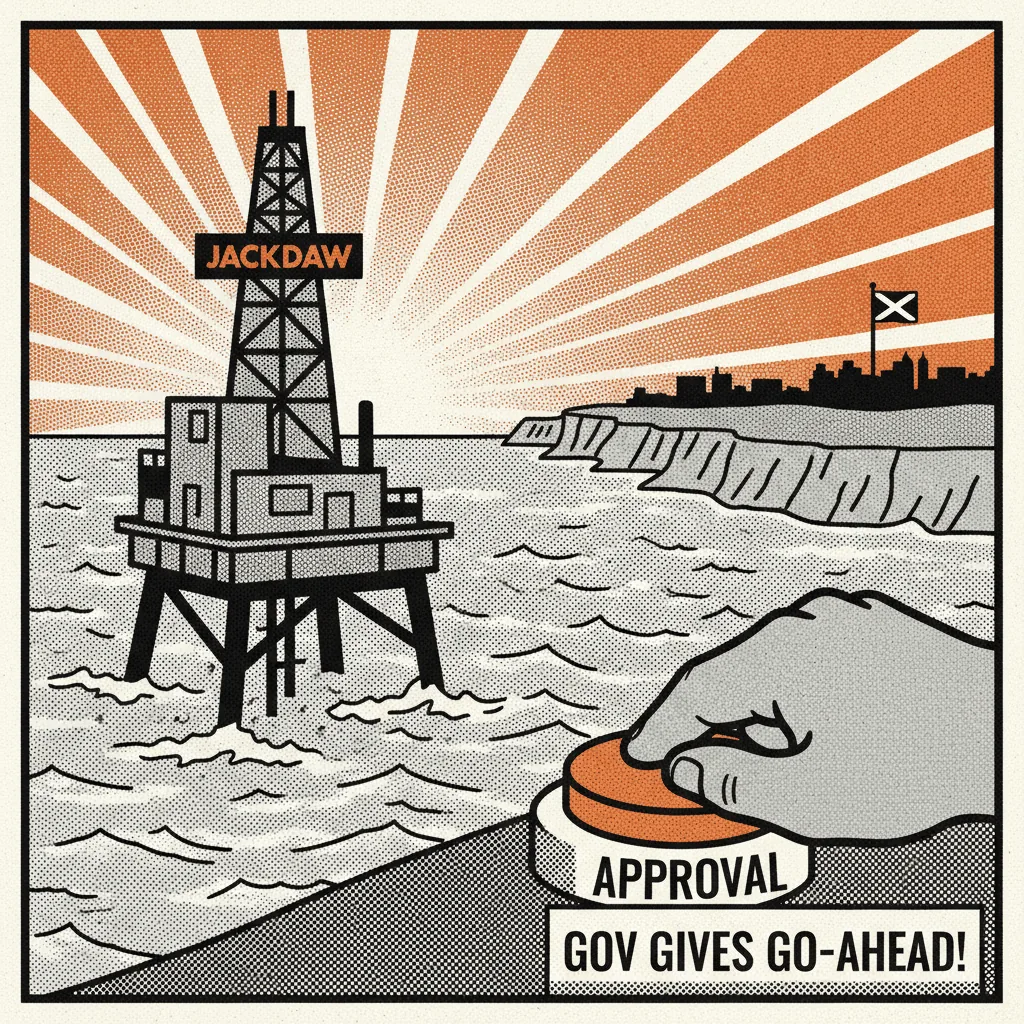
The Jackdaw gas field, operated by Shell and located around 155 miles off the Aberdeen coast, is on the verge of receiving government approval after years of legal and regulatory delay. BBC Scotland understands the green light could come within weeks, ending a drawn-out saga that began when the original consent was quashed by Scotland's Court of Session in 2022 on environmental grounds. Shell resubmitted its plans, and the North Sea Transition Authority has since recommended approval. The field holds an estimated 500 billion cubic feet of gas, enough to supply millions of UK homes.
For Scottish SMEs, particularly those in manufacturing, hospitality, and professional services who are still carrying elevated energy costs from the 2022 price shock, the Jackdaw decision matters because domestic supply directly influences wholesale gas pricing. The UK's dependence on imported liquefied natural gas surged after Russian pipeline supply to Europe collapsed. Adding North Sea capacity does not deliver overnight price cuts, but according to Ofgem's published supply analysis, increasing domestic production reduces exposure to global spot price volatility, which has been the single biggest driver of Scottish business energy bills for three years.
The approval is not without critics. Environmental groups including Friends of the Earth Scotland have argued that approving new fossil fuel extraction is incompatible with the UK's legally binding climate targets under the Climate Change Act 2008. The previous court ruling specifically found that the original environmental impact assessment failed to account for the full downstream emissions from burning the gas. The resubmitted assessment from Shell attempts to address that gap, and the government's expected approval suggests it believes it now passes legal scrutiny. That calculation may still be tested in court.
Aberdeen's economy has a direct stake. The city's oil and gas supply chain, which Scottish Enterprise estimates supports around 100,000 jobs across Scotland, has been navigating a difficult decade of price cycles, energy transition pressure, and post-pandemic restructuring. Jackdaw approval sends a signal to the industry that the North Sea remains open for business, at least in the near term. Robert Gordon University's Oil and Gas Institute has consistently argued that managed decline with ongoing investment is preferable to abrupt cessation for both jobs and energy security. Jackdaw fits that managed-decline argument.
The timing is politically loaded. The Labour government at Westminster has positioned itself as pro-clean energy but has also defended continued North Sea licensing on energy security grounds, frustrating some of its own backbenchers. From a Scottish perspective, the decision lands in a context where the Scottish Government's energy policy ambitions, centred on renewables and a just transition for oil workers, sit in an uneasy relationship with Westminster's licensing authority over the North Sea. Scotland does not control that licensing. It is a structural tension that shapes every energy debate north of the border, and Jackdaw makes it visible again.