

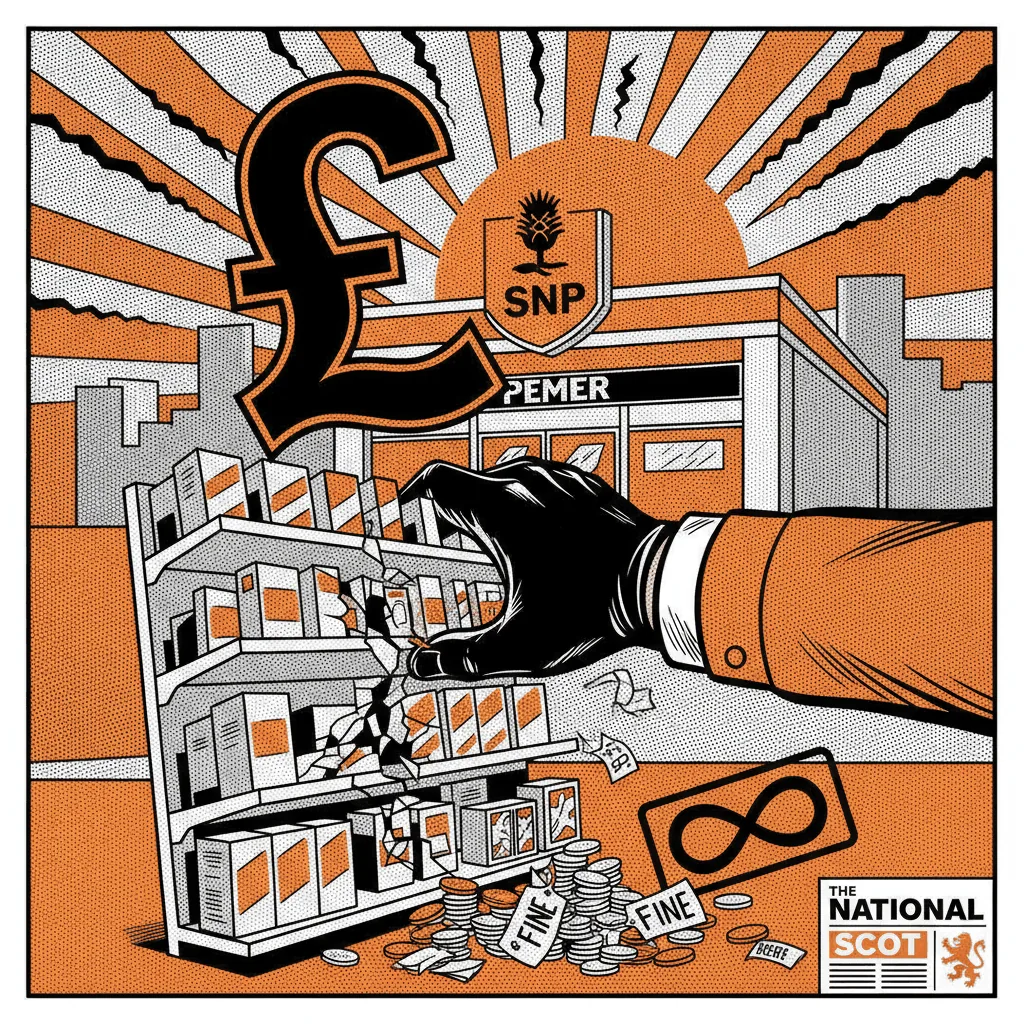
The Scottish Government is advancing legislation that would cap prices on a basket of essential food items and impose unlimited fines on supermarkets that breach those caps. The bill, brought forward by SNP MSPs, represents a significant escalation in Holyrood's approach to food affordability, moving from voluntary commitments and public pressure into hard statutory enforcement with no ceiling on penalties.
The policy has not emerged from nowhere. Scotland's food insecurity figures have been stubbornly grim. According to the Scottish Government's own data, around one in seven Scottish adults experienced food insecurity in 2023, with families in deprived urban areas disproportionately affected. The Joseph Rowntree Foundation's UK Poverty report has consistently flagged that food costs are the single largest pressure point for households on low incomes, and that inflation hit essential grocery items harder and earlier than the broader consumer price index.
Supermarkets are predictably resistant. Industry bodies including the British Retail Consortium have argued that price caps risk distorting supply chains, pushing margin pressure onto producers and suppliers who are already operating on thin margins. The concern is not hypothetical: when price controls have been introduced in comparable markets, including Canada's 2023 federal pressure on major grocers, the downstream effect on smaller food producers was swift and often punishing. Suppliers were squeezed before the ink dried on any government agreement.
That is where Scottish SMEs need to pay attention. If you operate anywhere in the food supply chain, as a producer, wholesaler, logistics provider, or specialist food retailer, this bill creates real commercial uncertainty. Large supermarkets operating under price caps have a well-established playbook: renegotiate supplier contracts downward, rationalise SKUs, and shift complexity onto the smaller players who lack the leverage to push back. The unlimited fine structure means supermarkets will be highly motivated to comply with any cap, and the easiest mechanism to do that is cost reduction across their supply base.
There is a broader constitutional dimension too. The Competition and Markets Authority, which operates UK-wide, launched an investigation into supermarket pricing in 2023 following sustained political pressure from both Westminster and Holyrood. Its findings, published earlier this year, stopped short of finding systemic price gouging but acknowledged that market concentration in UK grocery retail remains a structural problem. Scotland legislating unilaterally on price caps may create a jurisdictional tension with UK-wide competition law, and legal challenges from retailers are widely expected if the bill progresses. Edinburgh lawyers with a commercial retail practice should be watching this closely.
The bill is currently at an early legislative stage and faces scrutiny from both opposition MSPs and business groups. But the direction of travel is clear. The Scottish Government has signalled repeatedly that food affordability is a priority, and after years of asking nicely, it appears prepared to use statutory force. Whether that produces lower prices for consumers or simply reroutes commercial pressure onto Scottish food businesses depends almost entirely on how the enforcement framework is designed. The detail in the secondary legislation will be everything.