

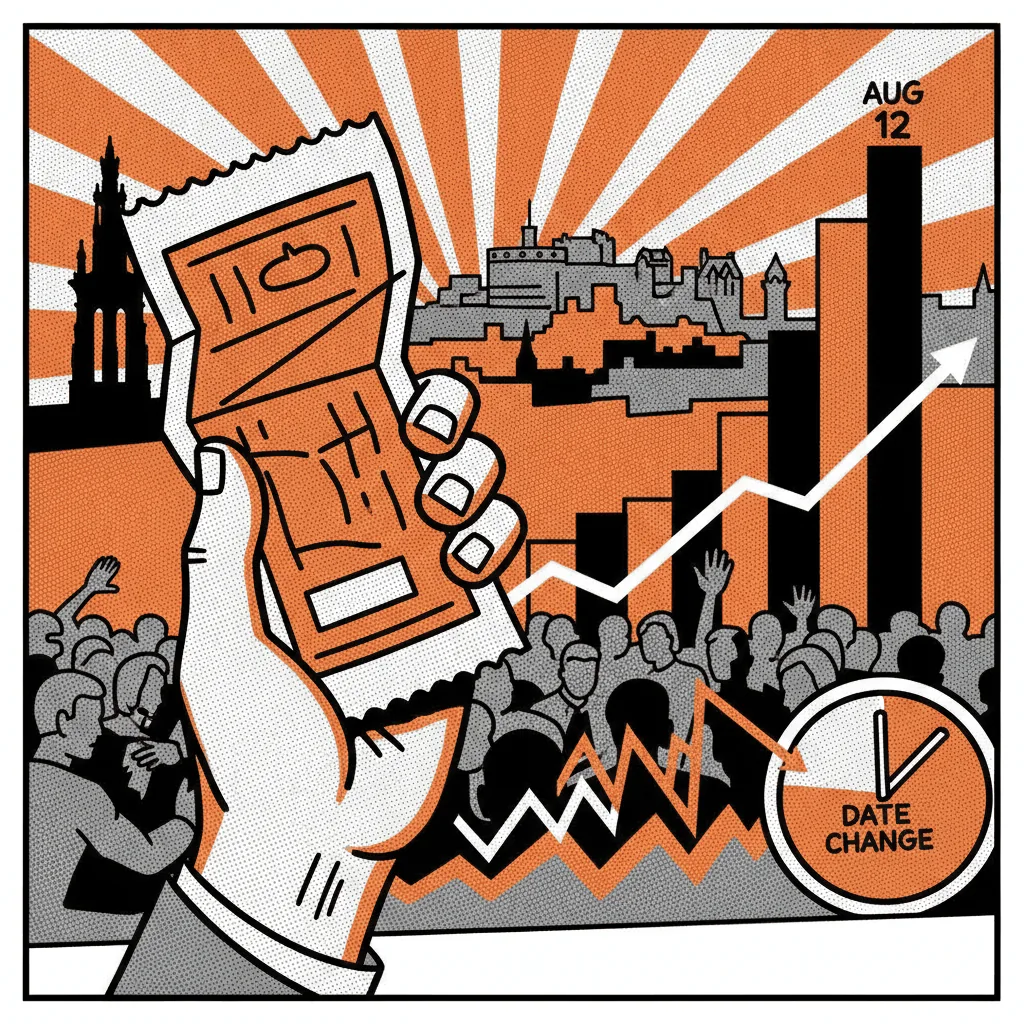
More than 164,000 tickets were issued in a single day during this year's Edinburgh Festival Fringe, the highest single-day figure the Fringe Society has ever recorded. That figure came on the second Saturday in August, historically the peak weekend of the festival, and it confirms what many Edinburgh business owners already suspected: the Fringe is not just culturally significant, it is commercially enormous.
The Fringe Society's annual figures consistently place the festival among the largest arts events on the planet. According to the Fringe Society's own economic impact research, the festival generates well over £200 million for the Edinburgh economy in a typical year, with the bulk of that flowing through hospitality, accommodation, transport, and retail in a compressed three-week window. A record-breaking single day translates directly into footfall, covers, takings, and occupancy rates across the city. For an Edinburgh café owner or a Grassmarket pub, the second Saturday of August is not a date, it is an annual financial event.
Alongside the record attendance, calls are growing louder for the Fringe to shift its dates. Critics argue that the current August slot, which overlaps with the school summer holiday window in Scotland, creates staffing pressure and pricing friction that hits smaller operators hardest. The debate is not new, but the record crowds are giving it fresh momentum. Any change to the festival calendar would have significant knock-on effects for accommodation pricing, contractor scheduling, and the broader tourism economy that Visit Scotland and EventScotland have spent years building around the August festival cluster.
Scotland's tourism sector entered 2024 already under pressure. VisitScotland's business monitor data showed that rising operating costs, energy bills, and the end of COVID-era support schemes have thinned margins across hospitality. A record Fringe is good news, but only if businesses have the capacity and the cash flow to capitalise on it. Many smaller operators report that peak festival weeks are operationally brutal: supply chains stretch, staff costs spike, and the window to make a meaningful profit is shorter than it looks from the outside.
The date-change debate also intersects with Edinburgh's longer-term ambitions as a year-round destination rather than an August phenomenon. Scottish Enterprise and EventScotland have both backed initiatives to spread visitor spend across the calendar, and a Fringe that extends into September, or shifts slightly later, could ease bottlenecks while opening the second half of August to other commercial events. None of that is decided. But Edinburgh SME owners would be wise to follow the conversation closely, because any shift in the Fringe calendar reshapes the entire year's planning cycle at a stroke.