

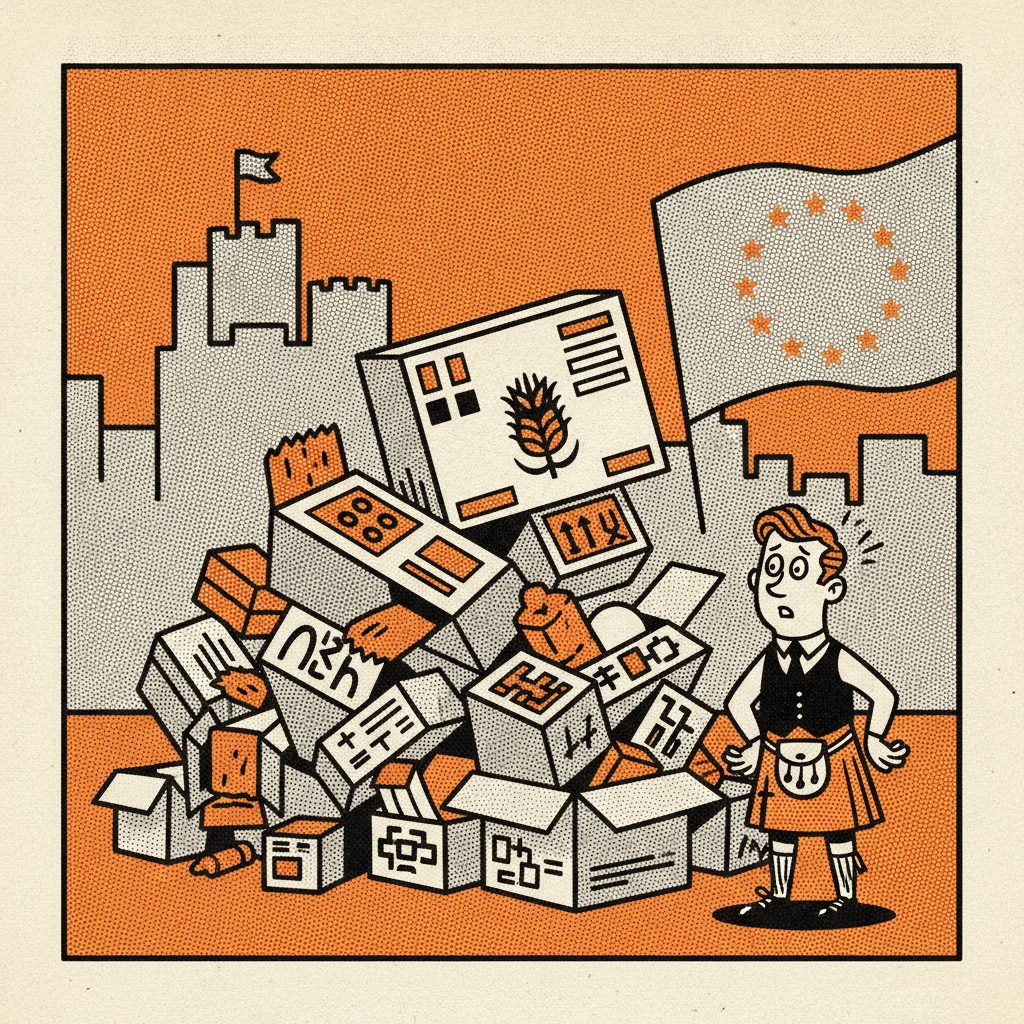
The EU's revised Packaging and Packaging Waste Regulation, known as PPWR, came into force in February 2025 and sets mandatory targets for recyclable content, reuse, and labelling across all packaging used in the European single market. That includes packaging sent in by non-EU sellers, which means every Scottish business posting products to customers in Germany, France, Ireland, or anywhere else in the bloc is now subject to rules they had no vote in shaping and no government minister actively negotiating on their behalf.
The headline requirements are significant. By 2030, all packaging sold into the EU must be recyclable. Plastic packaging must contain minimum levels of recycled content, graded by material type. Unnecessary packaging, think excessive void fill, multi-layer wrapping, or oversized boxes, will be restricted. And businesses above certain thresholds must register with national producer responsibility schemes in each EU country where they sell. For a small Edinburgh gift company or a Scottish food producer shipping to a Berlin deli, that registration requirement alone can trigger legal and administrative costs running into thousands of pounds per market.
According to the Federation of Small Businesses, compliance costs for regulatory changes of this scale fall disproportionately on smaller operators, who lack in-house legal teams or dedicated compliance budgets. The British Chambers of Commerce has also flagged that post-Brexit, UK SMEs exporting to the EU face a double burden: they must meet EU rules to sell there, while simultaneously adapting to separate UK packaging regulations at home, including the UK's own Extended Producer Responsibility scheme, which began charging businesses in 2024. Two rule books. Two sets of costs. One small business trying to do both.
Scotland's export profile makes this particularly pointed. Scottish Enterprise data shows that the EU remains Scotland's largest export destination, accounting for around 60 per cent of international goods exports. Food and drink, textiles, craft goods, and specialist manufacturing, all sectors with significant packaging considerations, are central to that trade. A Highlands distillery sending whisky to a Copenhagen retailer, or a Scottish skincare brand fulfilling orders through a German marketplace, now needs to audit its packaging against PPWR requirements before its next shipment, not its next annual review.
The practical route through this is not as opaque as it first appears. The EU's PPWR compliance obligations depend heavily on your annual sales volume into each member state, so many micro-businesses and very small exporters will fall below the threshold for producer registration, for now. But labelling requirements apply regardless of size, and those kick in on a rolling basis through 2025 and 2026. The European Commission has published guidance on the regulation at ec.europa.eu, and the UK's own Business and Trade department has produced a basic exporter checklist. Scottish Enterprise's trade advisers and the Business Gateway export team can also help Scottish businesses map their specific exposure. Use them. That is what they are there for.