

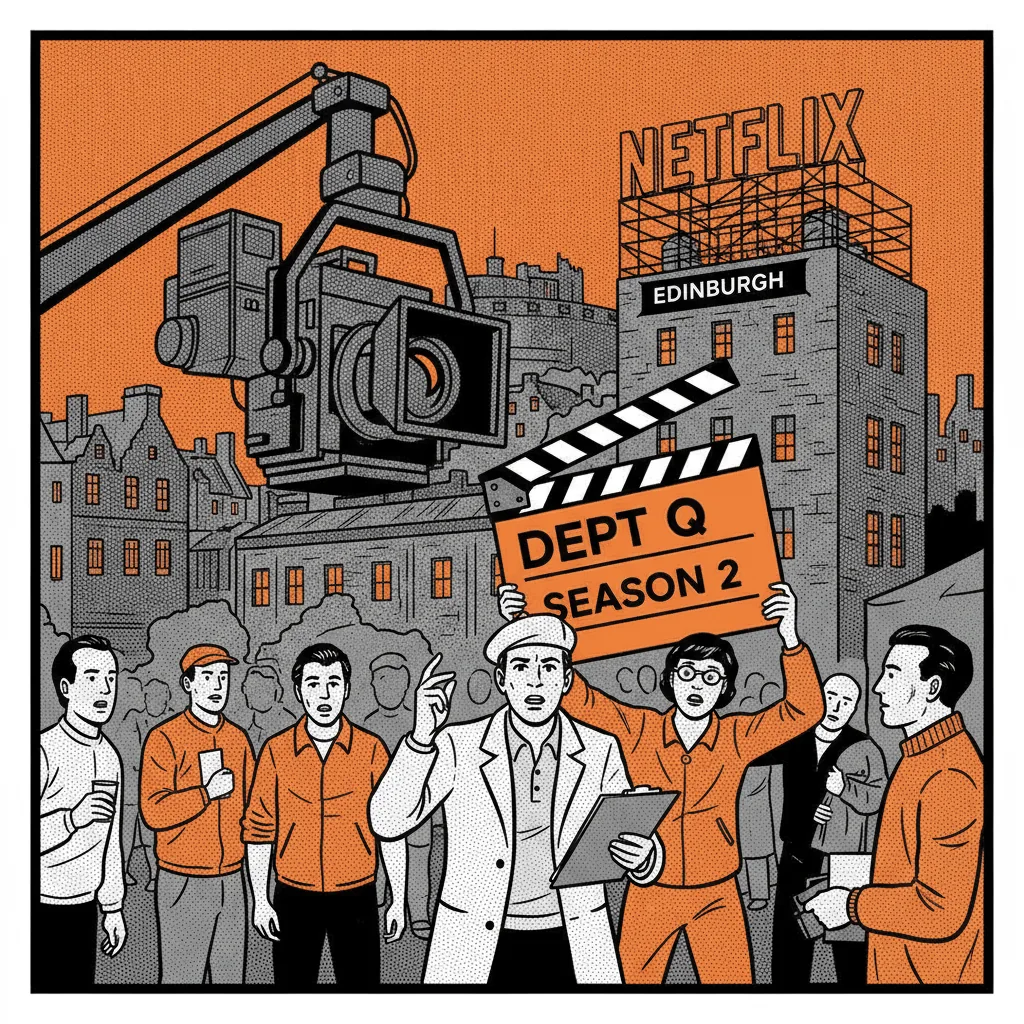
Netflix's Department Q, the Scottish-Danish crime drama that quietly became one of the streamer's more talked-about European exports, returned to Edinburgh for its second series in June. Filming is scheduled to continue until October, giving the production a four-month footprint in the city. That is not a weekend shoot. That is a small economy moving through Edinburgh's streets, hotels, cafés, and supplier networks.
Screen Scotland, the body that champions film and television production north of the border, has been instrumental in attracting productions of this scale. According to Screen Scotland's own figures, the screen sector contributed over £567 million to the Scottish economy in 2022, with inward investment from international productions making up a significant share. A returning Netflix series, one already proven to draw audiences and press attention, sits squarely in that category. The production employs local crew, books local accommodation, and feeds people three times a day for months.
The British Film Commission, which works alongside Screen Scotland to draw international shoots to the UK, notes that high-end television drama generates some of the highest spend-per-day figures of any production format. A drama at this budget level typically supports dozens of local businesses simultaneously, from transport and catering contractors to costume hire, props sourcing, and post-production services based nearby. Edinburgh's Georgian streets and distinctive architecture have always been a draw for producers; what is changing is the city's ability to keep productions coming back, which is the harder and more valuable trick.
For Edinburgh residents, there is also the simpler fact that the city is being written into global popular culture. Department Q's first season introduced Edinburgh to audiences across Europe and beyond who may never have considered it as a destination. Tourism economists at VisitScotland have long tracked what they call the "screen tourism" effect, where filming locations see measurable visitor uplifts in the years following a major production's release. Edinburgh already benefits from that effect via Outlander and Rebus; a Netflix original adds a different tier of international reach.
The cast and crew presence through summer and into autumn matters most quietly to the businesses that rarely get mentioned in press releases: the sandwich suppliers, the van hire companies, the dry cleaners, the hardware shops that get a surge order on a Tuesday morning because a set needs something specific by noon. This is where film production money actually lands in a city, and four months is enough time to build a real relationship with a production's logistics team.