

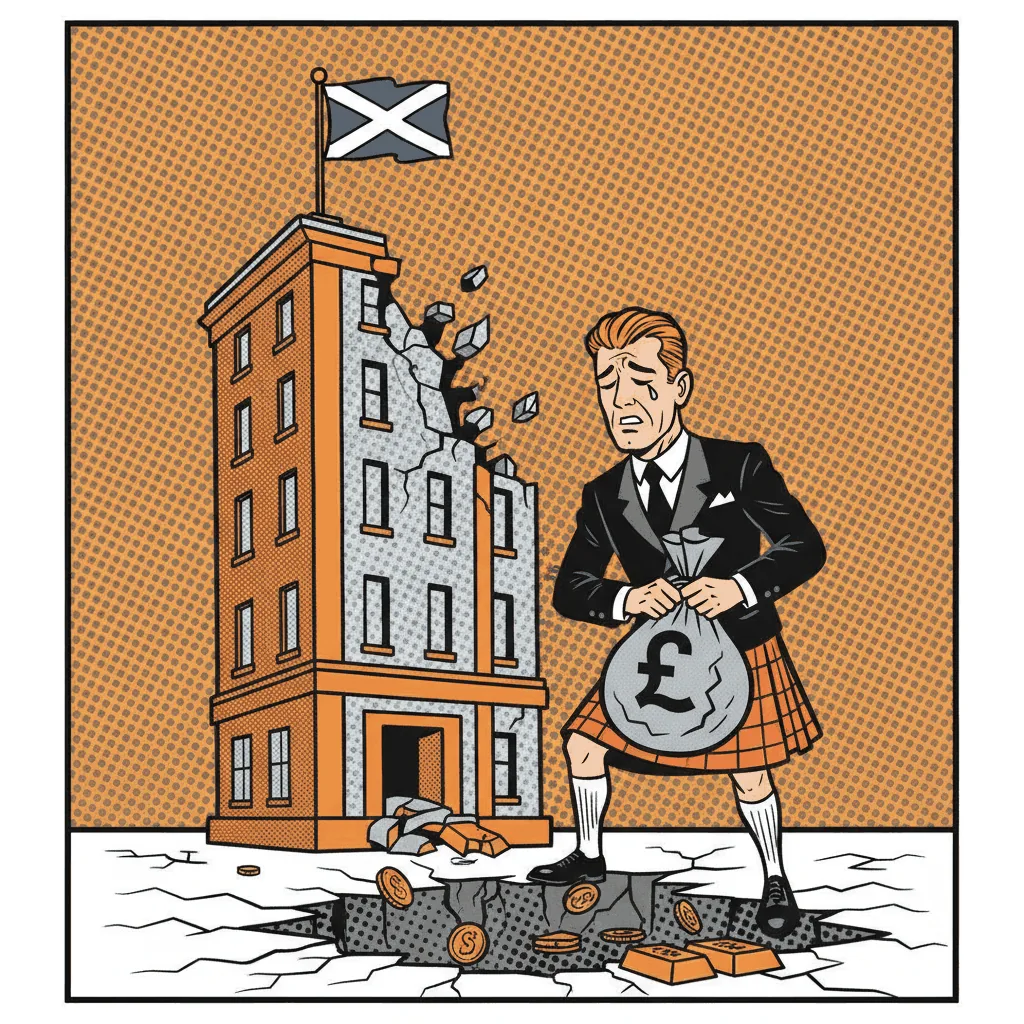
The Scottish National Investment Bank, established in 2020 with a mandate to back businesses that commercial lenders won't touch, has reported substantial losses that its own leadership has described as painful. The figures, covered by the Daily Business Group, land at a sensitive moment: Scottish SMEs and early-stage founders are navigating tighter credit conditions, a cautious venture market, and an economic backdrop that has made external funding genuinely hard to secure.
The SNIB was never designed to be a profit machine. Its founding mission, enshrined in the Scottish National Investment Bank Act 2020, was to provide patient, mission-led capital, targeting net zero, place-based investment, and inclusive growth in areas the private sector routinely ignores. Losses on a development bank's books are not automatically a scandal. The British Business Bank, its closest UK equivalent, also carries impairments on its balance sheet as the direct cost of backing higher-risk ventures. According to the British Business Bank's 2024 annual report, it deployed over £12.6 billion to smaller businesses, accepting that a portion of that capital would not return in full. That is the model. The question is whether the losses at the SNIB are within the expected range for a bank doing its job, or a signal of portfolio misjudgements that need correcting.
Context matters here. Scottish Enterprise data consistently shows that the equity funding gap for Scottish SMEs remains one of the most stubborn barriers to growth, particularly outside Edinburgh and Glasgow. Research published by the Fraser of Allander Institute has highlighted that Scottish businesses raise significantly less venture and growth capital per head than their counterparts in London and the South East. The SNIB was created precisely to close that gap. If it pulls back from risk in response to losses, the gap widens again, and the businesses that suffer first are the ones with no alternative route to capital.
The Scottish Government has committed to the bank's long-term capitalisation, and ministers have been clear that SNIB's mandate remains unchanged. That matters. A development bank that retreats to safer bets after early losses stops being a development bank and becomes an expensive bureaucracy. The more useful question for founders is not whether the SNIB is in trouble, but whether it remains open for business, and on current evidence, it is. The bank continues to make new investments, including in renewable energy infrastructure and Scottish tech businesses, though deal timelines remain longer than many founders would like.
For SMEs and startups watching this, the practical read is straightforward: do not build a funding plan that relies solely on SNIB. Use it as one instrument in a broader capital stack. Scottish Enterprise, Highlands and Islands Enterprise, the Scottish EDGE fund, Innovate UK, and the growing network of Scottish angel syndicates all remain active. The SNIB losses are a reminder that public development finance is a blunt, slow tool, valuable, but not a substitute for a diversified approach to raising money. If your growth plan depends on a single public funder, the risk is yours as much as theirs.