

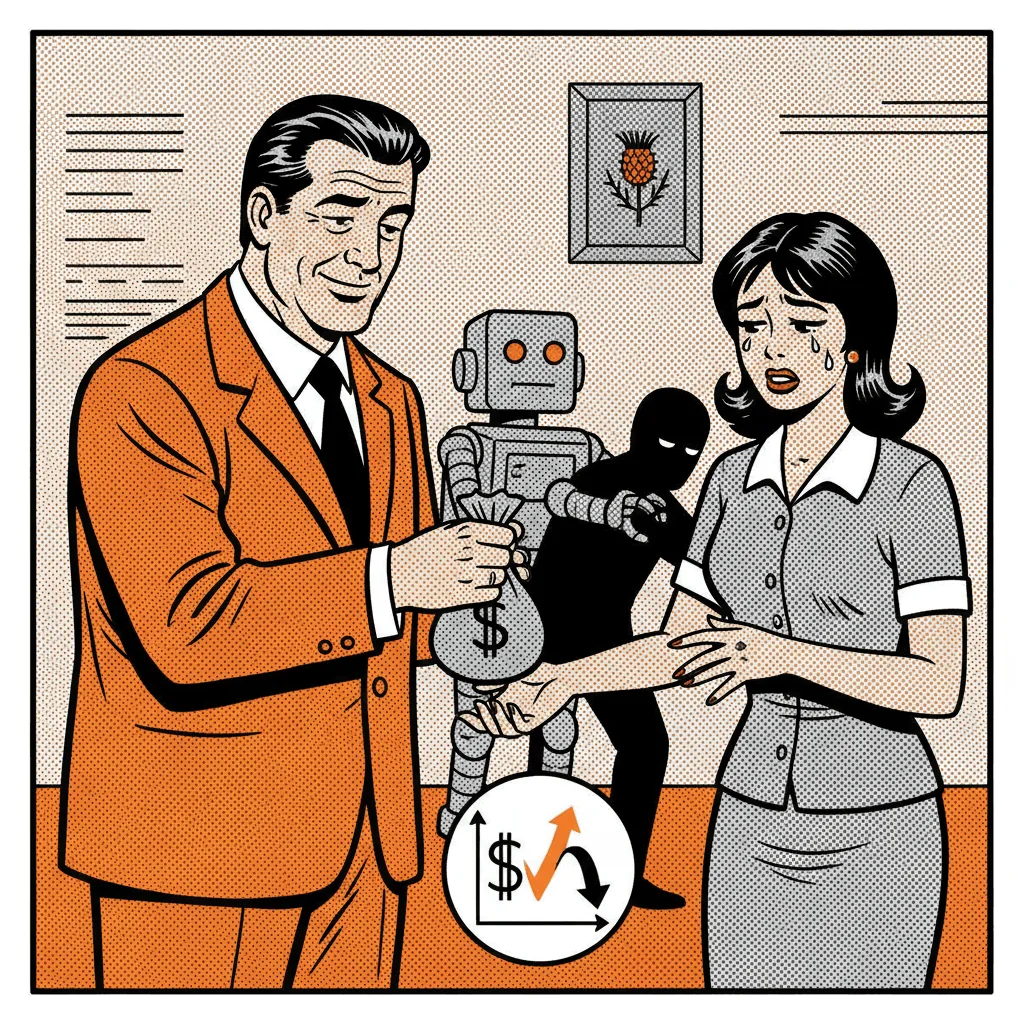
More than half of employers who made AI-attributed redundancies now regret the decision. That's the finding from Forrester Research, which reports that 55% of those companies wish they hadn't done it, and expects roughly half of all AI-driven layoffs to be quietly reversed over the coming years. The jobs are coming back, but the workers are returning to worse conditions: lower wages, reduced status, and the awkward knowledge that they were let go for a machine that didn't quite deliver.
The pattern is uncomfortable reading for any business that treated headcount reduction as the obvious first move in an AI strategy. What Forrester's data actually shows is that organisations underestimated how much institutional knowledge, client relationship management, and adaptive problem-solving their people carried. AI tools are genuinely powerful, but they are tools. They don't know your customers, your quirks, or why that one supplier always needs a phone call rather than an email. The humans who left took all of that with them.
The regulatory picture is shifting too, particularly in Europe. The EU is revising its Works Council directive to require meaningful consultation with employees before companies make significant AI-driven structural changes, backed by financial penalties for non-compliance. While the UK sits outside that framework post-Brexit, ACAS and the Chartered Institute of Personnel and Development have both published guidance urging employers to consult staff before implementing automation that affects roles. Ignoring that isn't just ethically questionable; it creates tribunal exposure that no small business needs.
For Scottish SMEs, the broader context matters. Scotland's labour market remains relatively tight in skilled sectors, according to the Fraser of Allander Institute's most recent economic commentary. Losing a trained member of staff and then rehiring them at a reduced rate, or replacing their expertise with a tool that needs constant supervision, is not a productivity win. It is a false economy dressed up as modernisation. The businesses doing well with AI right now are almost universally the ones that kept their people and gave them better tools, not the ones that cut first and asked questions later.
There is a more optimistic way to read the Forrester finding, and it's the one worth holding onto. The fact that companies are reversing these decisions means the market is self-correcting. The model that works, the one that the evidence consistently supports, is augmentation rather than replacement. One skilled person with a well-integrated AI workflow can comfortably do the productive output of three or four. That's not a threat to employment; that's a competitive advantage for any independent business willing to invest in its people alongside its tools. The race was never humans versus AI. It's always been about which businesses figure that out fastest.