

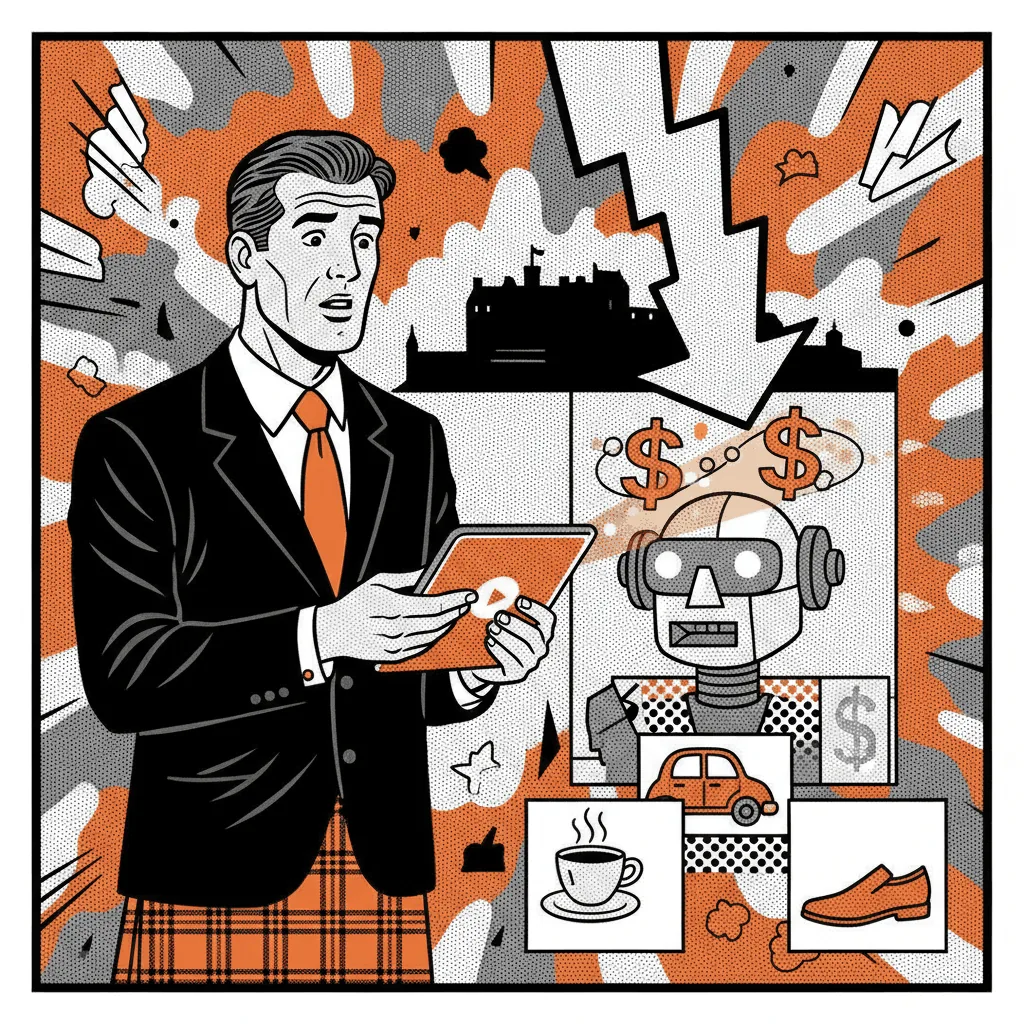
OpenAI has begun running advertising inside ChatGPT. Not with a press release, not with a fanfare, but quietly, as a revenue experiment, the kind of move that tends to go unnoticed until it starts affecting the outputs your business depends on. If you have used ChatGPT to draft product descriptions, answer customer queries, or research competitors, you are now using a tool that may weave sponsored content into its responses.
The mechanism is not yet fully public, but reporting from Entrepreneur.com confirms that OpenAI has been testing an ad model in which brand partners can influence or appear within ChatGPT's responses. This is structurally different from a Google ad sitting visibly above search results. In a conversational AI interface, the line between editorial output and paid placement is far harder for a user to spot. That distinction matters enormously for anyone using ChatGPT as a trusted research or content tool.
For context, this follows a well-worn path. According to the Reuters Institute's 2024 Digital News Report, audiences consistently struggle to identify paid content when it appears in editorial formats. The same cognitive blind spot applies in AI chat interfaces, arguably more so, because users approach ChatGPT with a higher trust assumption than they bring to a search engine. Research from the University of Edinburgh's Bayes Centre has highlighted how AI-generated content shapes perception at speed, which is precisely why the introduction of commercial incentives into that content stream deserves scrutiny.
For Scottish SME owners, there are two immediate questions worth asking. First: if your business is not among the brands with a relationship with OpenAI, could a competitor's product now be recommended in a chat session where your category comes up? Second: if you are producing customer-facing content with ChatGPT's help, do you know whether the tool's outputs are being shaped by commercial relationships you are unaware of? Neither question has a clean answer yet, but both are worth putting on the agenda. The Interactive Advertising Bureau UK has flagged AI-driven ad formats as one of the most significant transparency challenges the industry faces in 2025, and this development lands squarely in that debate.
The practical response is not to abandon ChatGPT, it remains one of the most powerful free tools available to a small business. It is to use it with the same scepticism you would apply to any platform with a commercial model. Verify product recommendations it makes. Do not treat its outputs as neutral when they touch on purchasing decisions or competitor comparisons. And if you are using it to research suppliers, pricing, or market positioning, cross-reference against sources with no skin in the game. The tool is still enormously useful. It just has interests now, and those interests may not always align with yours.