

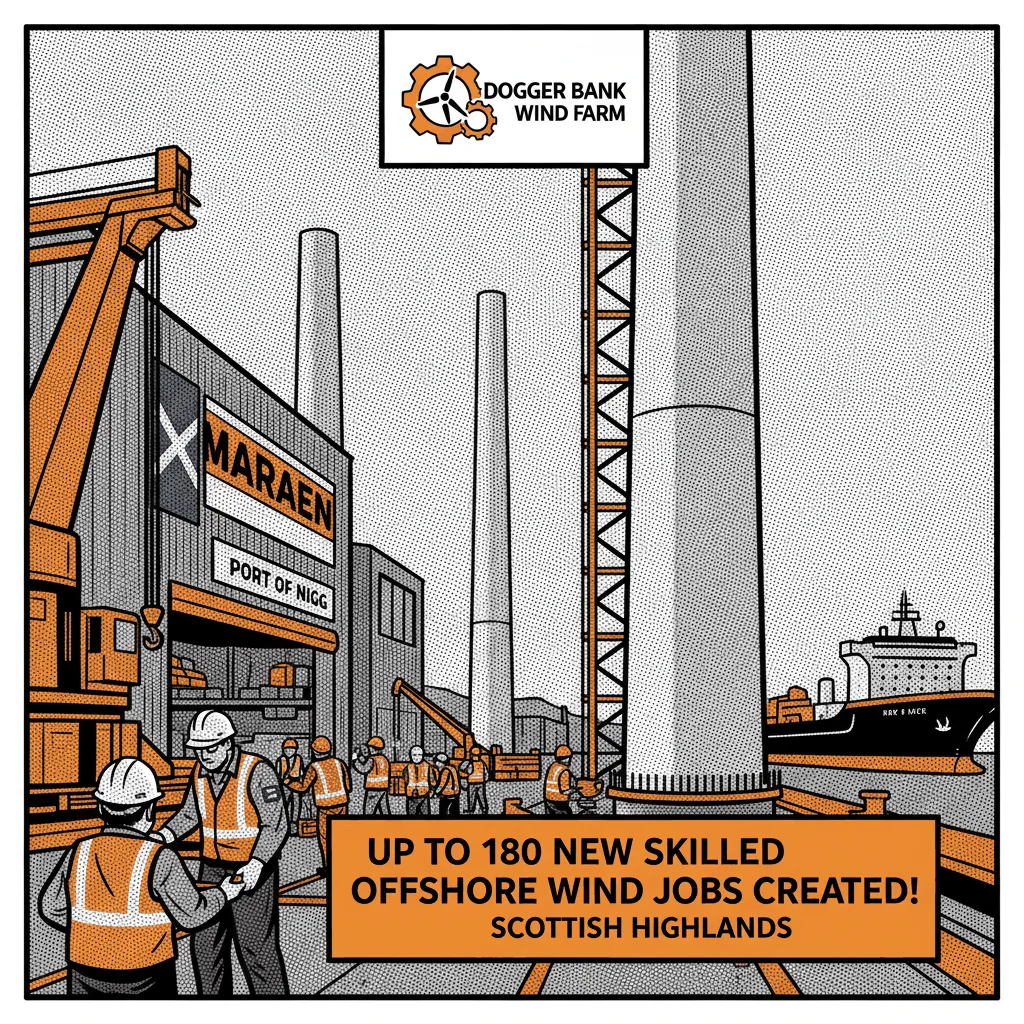
Up to 180 skilled jobs are being created at Maraen Port of Nigg in Easter Ross, as operations ramp up in support of the 3.6GW Dogger Bank Wind Farm. The roles are direct and supply-chain positions tied to one of the most significant infrastructure projects in the UK right now, a development that, when fully operational, will generate enough electricity to power around six million British homes.
Dogger Bank is a joint venture between SSE Renewables, Equinor, and Vårgrønn, being built in three phases roughly 130 kilometres off the Yorkshire coast. The Port of Nigg, operated by Maraen, has been confirmed as a key operations and maintenance hub for the project, a strategic decision that puts the Highlands at the operational centre of the UK's largest single offshore wind asset. According to the Crown Estate Scotland, the wider ScotWind leasing round could unlock over £25 billion in investment across Scotland by 2030, and Nigg's role in Dogger Bank is an early signal of where that supply chain infrastructure is landing.
The Scottish Government's Energy Strategy and Just Transition Plan sets a target of 20GW of offshore wind capacity by 2030. That ambition requires port facilities, specialist fabrication, marine logistics, inspection services, and a skilled technical workforce at scale. Nigg is one of a handful of Scottish ports capable of handling the physical reality of offshore wind: deep water, large laydown areas, and proximity to the North Sea. Highlands and Islands Enterprise has consistently backed the port's development as critical regional infrastructure, and this announcement validates that long-term position.
For businesses sitting outside the immediate blast radius of Easter Ross, the implications are still substantial. Large construction programmes of this type pull in services far beyond heavy fabrication, catering, workforce accommodation, transport logistics, PPE supply, environmental monitoring, training and safety certification, marine survey work, software and data management. According to the Offshore Wind Industry Council, the UK offshore wind sector supported over 32,000 jobs in 2023 and the supply chain is explicitly being pushed to diversify away from a handful of dominant contractors. Scottish businesses that can demonstrate reliability, compliance, and capacity are being actively courted.
The timing matters. ScotWind's full build-out pipeline will require contractors and suppliers to be credentialled and audit-ready before the next wave of procurement opens. Businesses that start the process of getting onto approved supplier lists now, whether through the Renewable UK Supply Chain directory, the INTEND platform, or directly through tier-one contractors like Saipem and Vestas, will be ahead of competitors who wait for tenders to land in their inbox. Scotland built the oil and gas supply chain over decades. Offshore wind is moving faster. The window to get in early is not wide.