

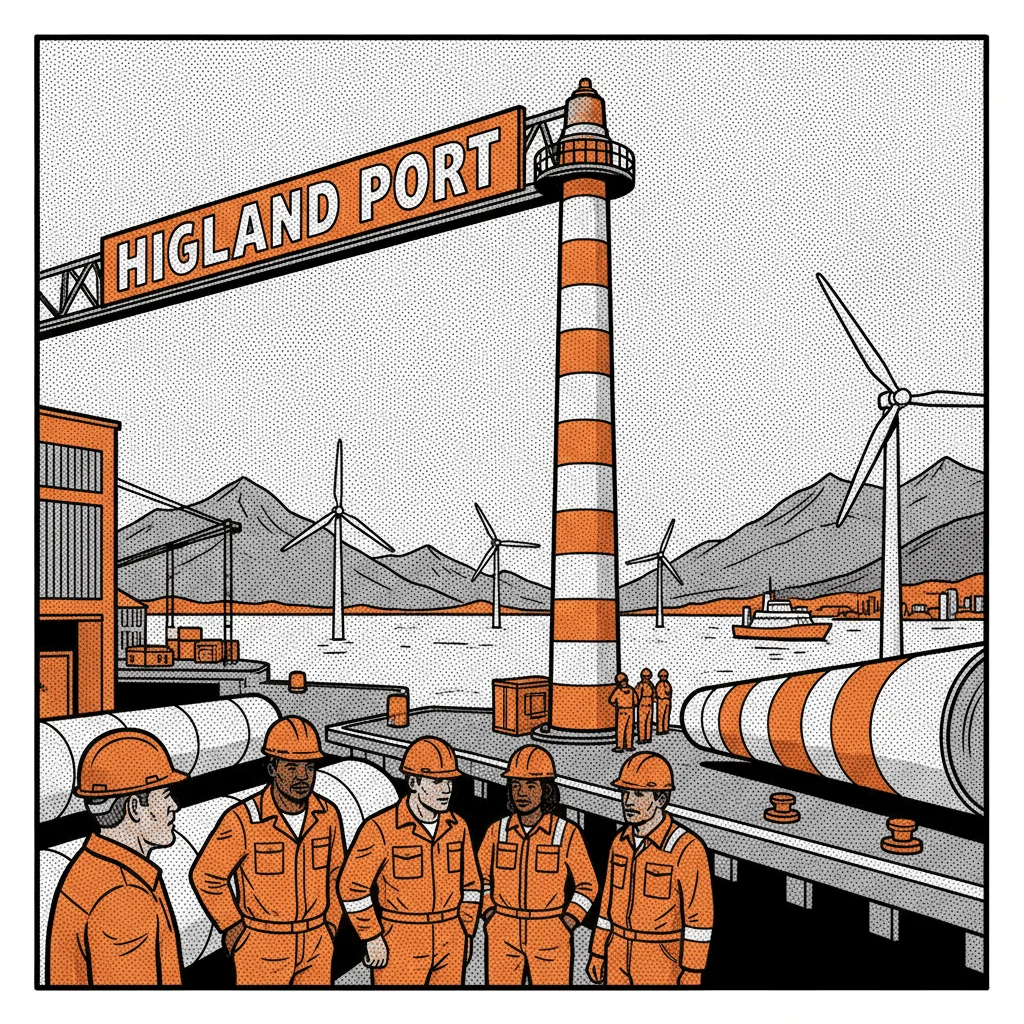
Wick's Scrabster Harbour is at the centre of a new offshore wind supply chain push, with 180 jobs confirmed to support the preparation and marshalling of turbine components destined for Dogger Bank, the vast North Sea wind farm that, when complete, will be the largest of its kind in the world. The turbines themselves are manufactured in the north of England, but it is Scottish ports doing the critical logistics work before they hit the water.
Dogger Bank Wind Farm, a joint venture between SSE Renewables, Equinor, and Vårgrønn, is being built in three phases with a combined capacity of 3.6 gigawatts, enough to power around six million UK homes. According to SSE Renewables, Scottish ports and supply chain partners have been central to the project's delivery strategy from the outset, and Scrabster's role confirms that the Highlands are not just watching this sector grow from a distance.
Highlands and Islands Enterprise has consistently identified offshore wind as a priority sector for the region, and this announcement is a validation of years of infrastructure investment in northern Scottish ports. The Scottish Government's Energy Strategy sets an ambition of 20 gigawatts of offshore wind capacity by 2030, and projects like Dogger Bank, alongside ScotWind developments closer to home, are what that ambition looks like in practice.
For Scottish businesses, the significance here goes beyond the headline number. According to the Offshore Wind Industry Council, the UK offshore wind sector is expected to support 100,000 jobs by 2030, and a substantial portion of the supply chain opportunity sits in logistics, marine services, engineering support, fabrication, and specialist inspection work. Scotland's geography, port infrastructure, and skills base position it to take a meaningful share of that work if businesses are actively pursuing it.
The timing matters. ScotWind, the Scottish Government's offshore leasing round, awarded development rights across 25 sites representing over 24 gigawatts of potential capacity. Many of those projects are now moving through planning and procurement phases, which means supply chain contracts are beginning to be awarded. Scottish SMEs with relevant capabilities in engineering, fabrication, safety services, transport, catering, or marine operations are sitting inside a procurement window that will not stay open indefinitely.