
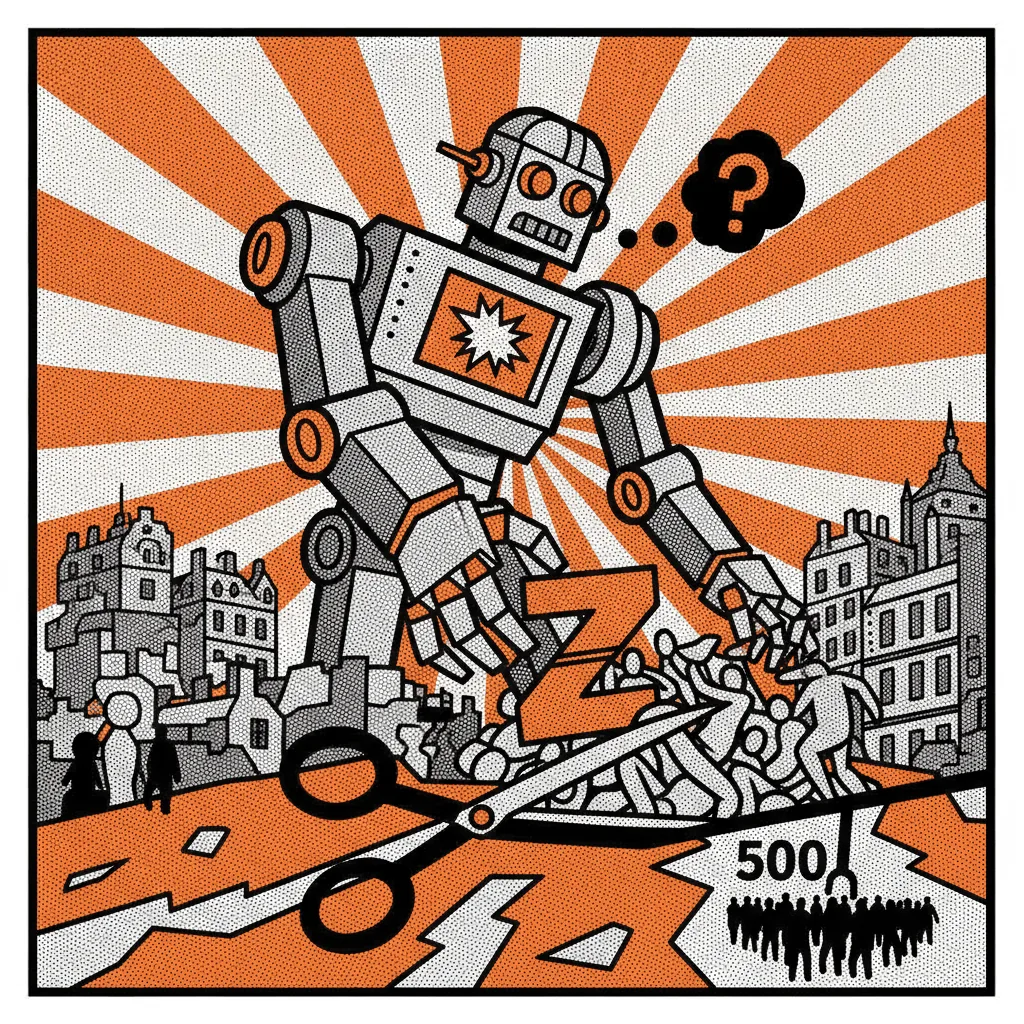
Zillow laid off more than 500 people this week, roughly 7% of its global workforce, in the largest single cut the Seattle property company has made all year. The timing was pointed: the announcement came the day before the firm reported quarterly earnings to investors. Zillow has spent 2024 telling those same investors it is transforming into an 'AI-native' company. When journalists asked whether AI automation was behind the job losses, the company declined to answer. That silence is the story.
This is a pattern worth watching. Across US tech, the phrase 'AI-native' has become a reliable precursor to restructuring. It gives the redundancy round a strategic veneer, the company isn't cutting costs under pressure, it's becoming leaner and smarter by design. The distinction matters enormously to investors. It matters rather less to the 500 people clearing their desks. According to research from the Brookings Institution, AI-related restructuring announcements correlate strongly with periods of investor pressure on margin, not with genuine productivity transformation. The rebranding often follows the decision, not the other way around.
The McKinsey Global Institute's 2024 State of AI report found that fewer than 30% of companies deploying AI tools could demonstrate a measurable impact on their cost base within 12 months. The majority reported gains in speed or output quality rather than headcount reduction. That is a very different story to the one Zillow appears to be selling. Real AI adoption in a business tends to look like two people doing the work of five, not five people being replaced after a rebranding exercise.
For Scottish SMEs, the lesson isn't that AI causes job losses. It's that performing AI adoption is more dangerous than doing nothing at all. A small Edinburgh architecture practice, a Leith-based accountancy, or a Dundee healthcare admin team that uses AI tools to genuinely reclaim hours, drafting, scheduling, summarising, data entry, will see real gains. Those gains compound quietly. The gains from announcing you're 'AI-native' to your bank or your investors, without changing how you actually work, compound into nothing, and eventually into a credibility problem. The Scottish Government's Digital Economy Business Survey 2023 found that SMEs citing AI productivity gains were overwhelmingly those that had started with a single, specific operational problem rather than a broad strategic ambition.
There's also a talent dimension here that gets overlooked. Zillow's 500 redundancies will include people who understood the product, the market, and the customers. AI tools don't carry institutional knowledge. They don't know why a decision was made three years ago or what a particular client actually means when they say something. The companies that are genuinely thriving with AI are treating it as augmentation, not substitution. They're asking: what takes our best people the longest, and can we give that time back? That's a small-business question. It scales well. 'We're AI-native now' is a large-company press release. It scales poorly.