

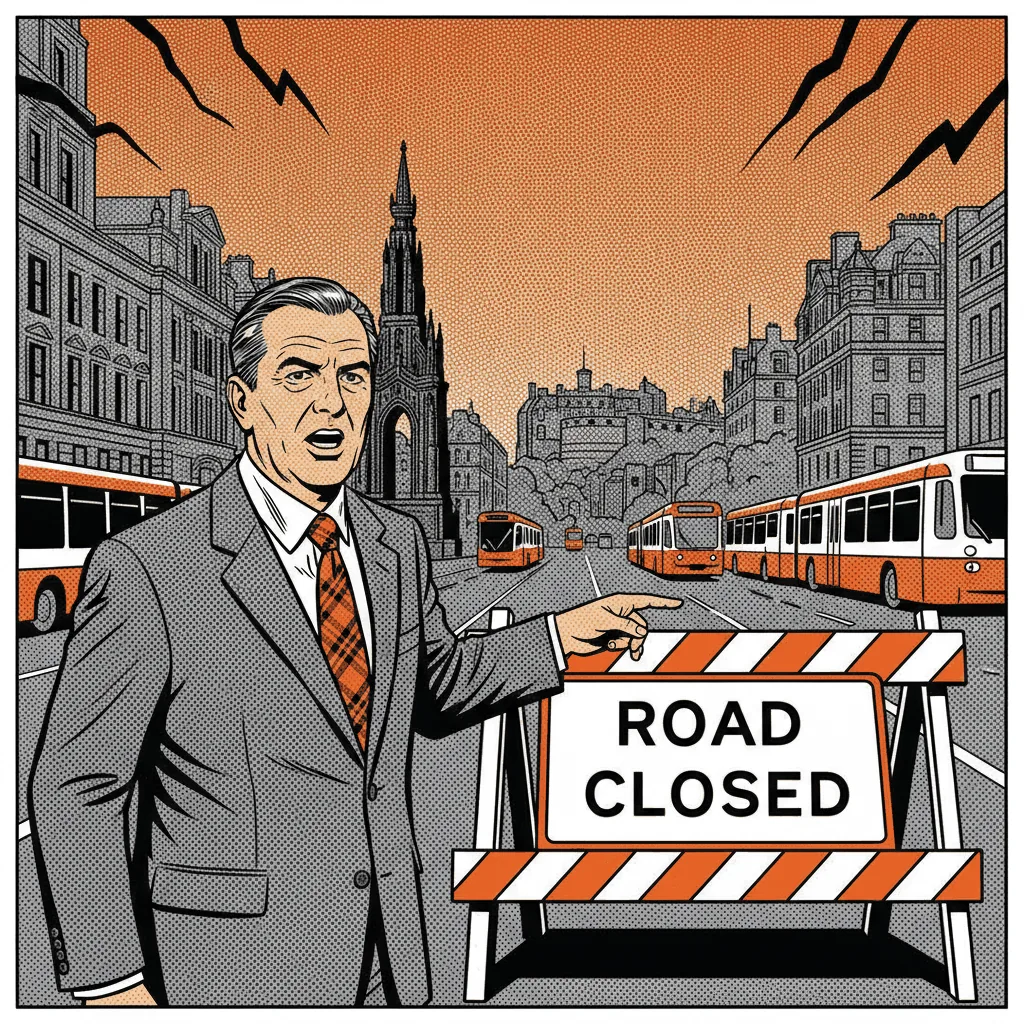
Princes Street is not just a postcard. It is the commercial spine of Edinburgh's city centre, and when it closes for weeks at a time because of a single incident, the financial damage ripples through every business within walking distance. Councillor Kevin Lang has now said publicly what many traders have been saying quietly: prolonged closures of this kind are unacceptable, and the city's emergency response plans need a root-and-branch review.
Lang's position is straightforward. Edinburgh cannot absorb a situation where its main street is shuttered for weeks due to one event, with no clear framework for minimising commercial disruption or communicating with affected businesses. The call for a review is not just procedural tidiness. It reflects a real gap between how emergency responses are managed and how quickly the economic consequences compound for independent operators who have no buffer.
The Federation of Small Businesses Scotland has consistently highlighted that city-centre SMEs are disproportionately exposed to footfall shocks. A week of reduced access can wipe out margins that took a month to build. Research from the Centre for Cities think tank shows that high streets in major UK cities lose an estimated £1.4 billion annually to unplanned disruption events, including infrastructure incidents, cordons, and utility works. Edinburgh, as one of the UK's most visited cities, carries particularly high stakes.
Business interruption insurance exists precisely for scenarios like this, but uptake among Scottish SMEs remains patchy. According to the Association of British Insurers, fewer than a third of UK small businesses carry adequate business interruption cover, and many policies exclude losses caused by public authority decisions rather than direct physical damage. That is a distinction that matters enormously when the closure is a cordon decision rather than a burst pipe in your own building.
The broader issue is coordination. When an emergency shuts a major street, the response tends to be managed through a public safety lens, correctly, but with little structured consideration of commercial recovery. A review of Edinburgh's emergency response plans could change that by building in faster communication with Business Improvement Districts, quicker decisions on partial access or managed diversions, and clearer timelines for traders who need to make immediate staffing and stock decisions. Glasgow has piloted frameworks along these lines following its own high-street incidents, and Edinburgh has every reason to follow suit before the next disruption arrives.