

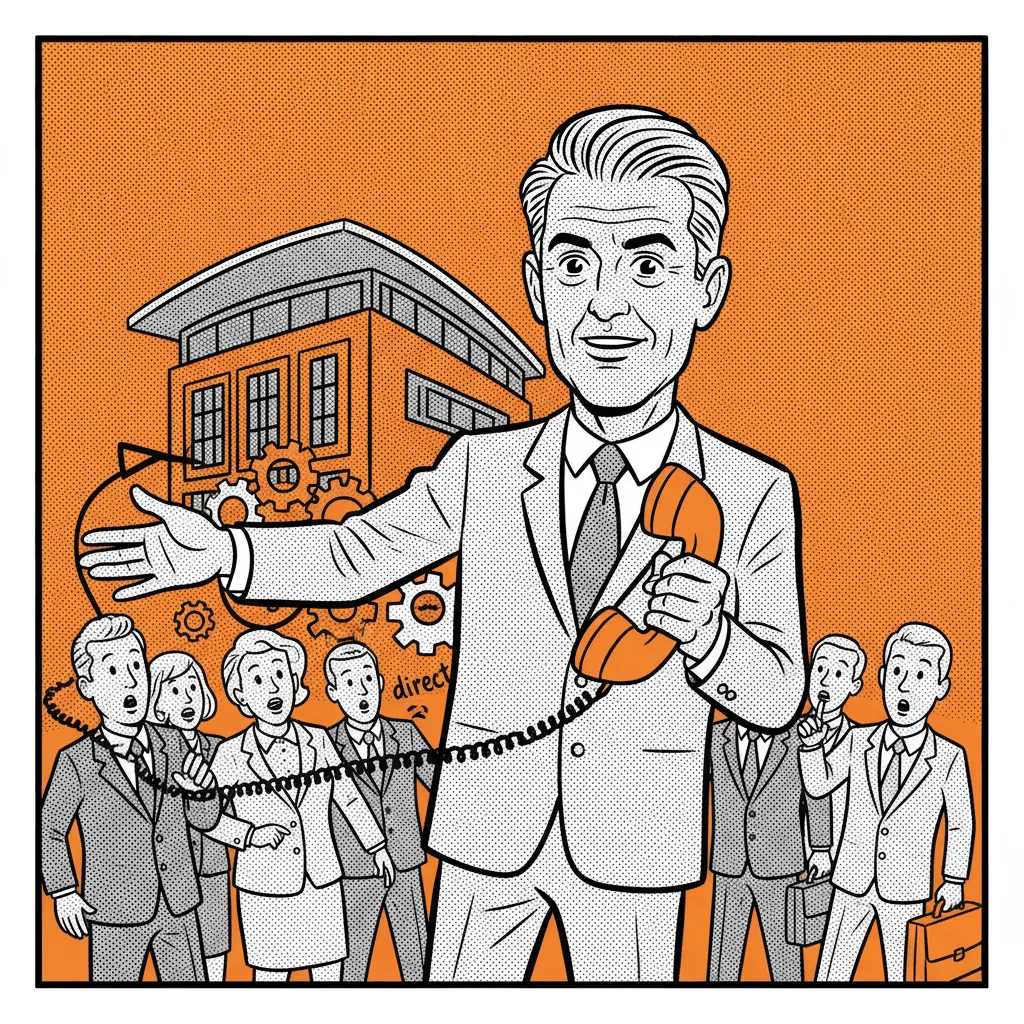
The Scottish Government has announced a new mechanism that gives businesses direct access to decision-makers at the top of government. First Minister John Swinney is establishing what is being described as a structured direct line between the business community and ministerial decisions, cutting through the usual layers of consultation fatigue and policy-by-press-release that has frustrated Scottish SME owners for years.
The move comes at a moment when Scottish business sentiment is under pressure. According to the Scottish Chambers of Commerce Quarterly Economic Indicator, confidence among Scottish firms has been uneven across sectors, with cost pressures, energy pricing, and workforce availability all weighing on operators. A genuine feedback loop into government, rather than a form filed and forgotten, would be a material change to how policy gets shaped.
Scotland already has a framework for business engagement through bodies like Scottish Enterprise, Business Gateway, and the Scottish Council for Development and Industry. But those channels have historically been advisory in nature, offering information rather than influence. What Swinney appears to be proposing is something with more teeth: a process where business input shapes decisions before they are made, not after they are announced.
The Federation of Small Businesses Scotland has long argued that SMEs are policy takers, not policy makers, absorbing decisions on rates, procurement, planning, and employment law with little prior input. If this new channel is designed with small and medium businesses in mind, rather than the lobbying capacity of large corporates, it could shift that dynamic. The Scottish Government's own figures show that SMEs account for over 99% of all businesses in Scotland and employ around 1.2 million people, nearly half the private sector workforce.
The detail that matters most is who gets access and how. A direct line that routes through trade associations and industry bodies will, in practice, amplify the voices that are already loudest. The test of this policy will be whether an independent retailer in Leith or a healthcare practice in Aberdeen can get the same hearing as a major employer in the central belt. Swinney's government has the structure to make this work; the question is whether the design reflects the diversity of Scottish enterprise or defaults to the usual suspects.