

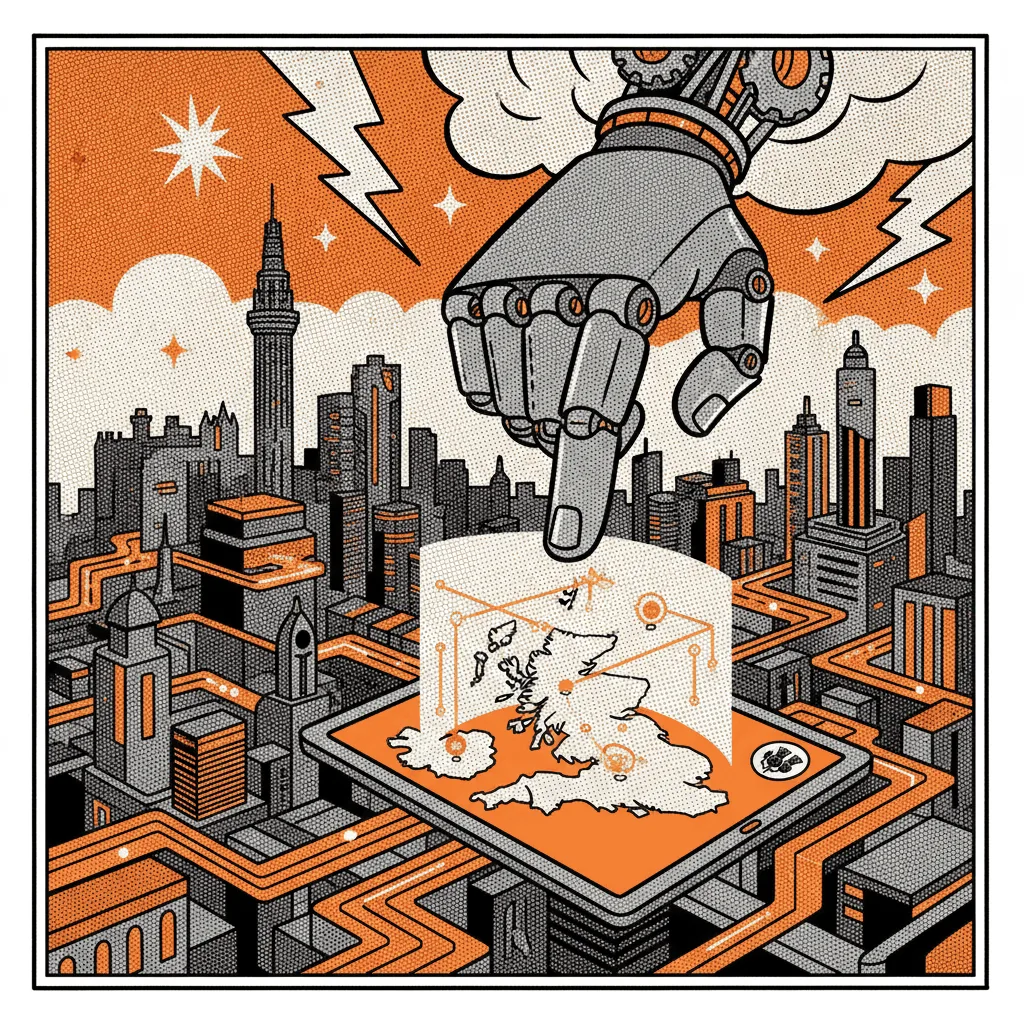
Scotland's National Health Service is not waiting. Across all fourteen regional health boards, digital transformation programmes are accelerating, not as a future aspiration, but as operational reality on the ground right now. HTN's special report, one of the most granular examinations of Scottish health tech adoption published this year, documents how teams from NHS Grampian to NHS Lothian are deploying AI tools, integrated data platforms, and digital triage systems that are measurably cutting waiting times and administrative load.
The scale matters. NHS Scotland employs around 160,000 people and serves a population of 5.5 million across some of the most geographically challenging terrain in the UK. According to the Scottish Government's Digital Health and Care Strategy, the goal is a system where citizens can access services seamlessly, clinicians spend more time on care than on paperwork, and data flows safely between providers. That is not a distant target. Parts of it are already live.
What the HTN report makes clear is that the biggest gains are coming not from headline-grabbing AI diagnostics, but from quieter, unglamorous automation: appointment reminders that actually work, discharge letters generated in seconds rather than hours, clinical coding assisted by machine learning so consultants are not drowning in admin at 10pm. Research from the University of Edinburgh's Usher Institute has consistently shown that clinician burnout is driven more by administrative burden than by clinical complexity. Cut the admin, and you free up the person doing the real work.
The geography of Scotland is also reshaping the story. NHS Highland covers an area larger than Belgium, and digital-first care is not a preference there, it is a necessity. Video consultations, AI-assisted remote monitoring, and digital prescribing have moved from pilot to standard in areas where the nearest GP is a 40-minute drive. The Health and Social Care Alliance Scotland has noted that this shift is also closing equity gaps, giving rural patients access to specialist input that was previously reserved for those who could travel to a city centre.
For anyone running a private clinic, a care home, a physio practice, or a health-adjacent SME in Edinburgh or beyond, the NHS transformation is not just interesting background noise. It sets the baseline expectation your clients and patients now carry. If NHS services can send automated pre-appointment reminders, process referrals digitally, and offer video consultations as standard, then the independent sector will be judged against the same standard. The good news is that the tools the NHS is adopting, many of them built on platforms like Microsoft Azure Health, EMIS, and various UK-developed AI triage systems, are increasingly available to smaller operators at accessible price points, often with support from NHS Digital's shared procurement frameworks.