

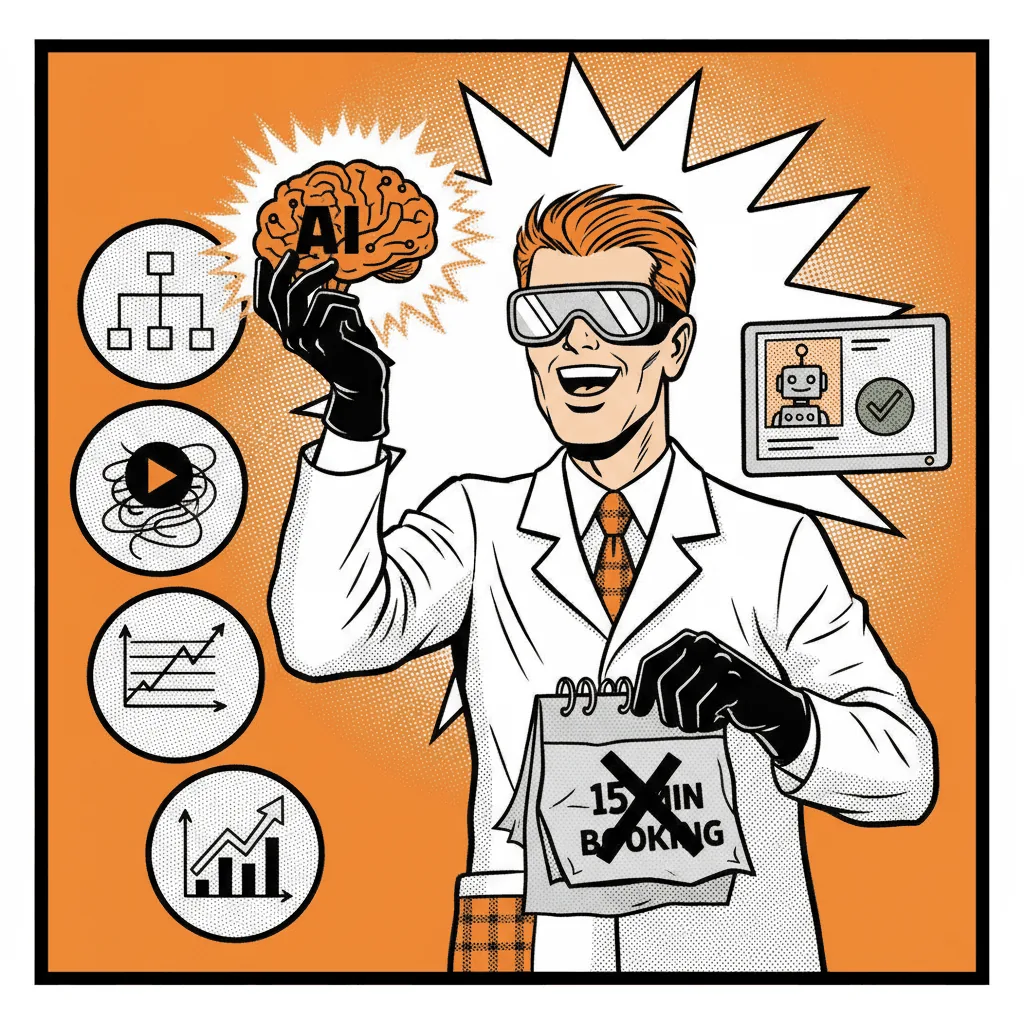
Every business has a 15-minute problem. It might be booking appointments, processing enquiries, confirming orders, or chasing availability. It feels too small to fix and too large to ignore. A detailed technical walkthrough published this week on Towards Data Science shows exactly how one developer eliminated that friction entirely, using a stateful AI agent built with LangGraph, Python, and an observability tool called Langfuse. The whole system runs on open-source components. The cost of getting started is essentially zero.
LangGraph is a framework built on top of LangChain that lets developers construct AI agents which can hold state across multiple steps in a conversation. That matters because most real customer interactions aren't a single question and a single answer. They involve back-and-forth: checking availability, confirming details, handling exceptions, looping back when something doesn't match. LangGraph handles that loop programmatically, which means the agent behaves more like a capable member of staff than a basic chatbot. According to LangChain's own documentation, LangGraph was specifically designed for production-grade, cyclical agent workflows, the kind that break simpler tools.
The practical result in this case was a booking process that previously required a human to gather information, cross-reference availability, and confirm details over roughly 15 minutes. The agent does the same job in seconds, handles multiple concurrent requests without breaking a sweat, and logs every interaction for review through Langfuse. That last part matters more than people realise. According to research from McKinsey's 2024 State of AI report, one of the top barriers to AI adoption in small and mid-sized businesses is a lack of visibility into what the system is actually doing. Langfuse solves that by giving operators a clear trace of every decision the agent made, so you're not flying blind.
For Scottish SME owners, the relevance is immediate. Hospitality businesses taking table and room bookings, healthcare clinics managing appointment slots, tradespeople handling call-out requests, tutors and coaches booking sessions: all of these are high-frequency, low-complexity workflows that eat hours every week. Business Gateway Scotland has consistently flagged admin burden as one of the biggest productivity drags on small businesses north of the border, and this class of AI agent targets that drag directly. You don't need a developer on staff to get started, either. Tools like Voiceflow and Botpress offer no-code interfaces for building similar agents, while platforms like Make and Zapier can connect them to your existing calendar or booking system within an afternoon.
The deeper shift here is that AI agents are moving from novelty to infrastructure. A single operator running a clinic, a B&B, or a freelance consultancy can now deploy a system that handles customer-facing communication around the clock, escalates edge cases to a human, and records everything for audit. That's not a large-company capability anymore. According to the Scottish Government's Digital Strategy, improving digital adoption among Scottish SMEs is a central economic priority, and practical tools like LangGraph are exactly the kind of entry point that makes that adoption tangible rather than theoretical. The gap between reading about AI and actually deploying it has rarely been smaller.